For too long, the story has been straightforward: when Delhi chokes, it’s because of farm fires from adjacent states like Punjab and Haryana that are solely to blame.
Each winter the same scenario rolls around, complete with finger-pointing and outrage (often at the farmer). But a more considered examination of the data — and of the air that we are obliged to breathe — suggests a far more complicated, state of affairs, one that is deeply troubling.
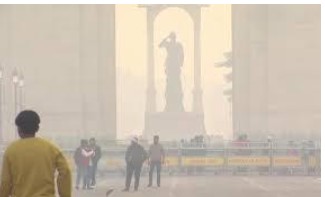
The reality is that Delhi can no longer hide behind this smokescreen. Recent studies corroborated by the Centre for Science and Environment (CSE) clearly demonstrate how, even if stubble burning can be vastly reduced, Delhi’s AQI still dips into Very Poor or Severe zone. This uncomfortable fact reveals a significant vulnerability that Delhi faces year-round: The enormous number of pollution sources that the city itself creates.
Read also:
- Delhi can stop blaming farm fires for its pollution woes
- Vladimir Putin is entertained at Delhi’s Rs 170-crore
The Silent Killer: Delhi’s Very Own Toxic Emissions
The episodic nature of farm fires, which throw pollution skyward in a matter of weeks but make it harder to mobilize against chronic, everyday poisons baked into the city’s infrastructure. It is not simply a seasonal crisis; it’s a structural breakdown.
The Reign of the Vehicle
The one true, greatest offender is staring us in the face every time we look at traffic: emissions from over-the-road vehicles. The transport sector is repeatedly ranked as the biggest local source of fine particulate matter and gaseous air pollutants (e.g., Nitrogen Dioxide, Carbon Monoxide) in Delhi. These pollutants, which echo the spikes of peak traffic times, together make an invasive toxic cocktail far worse than just particulate matter from smoke.
And with the city having an astronomical density of private vehicles, dismal public transport integration and ongoing bottlenecks, it is in reality choking on its own fumes. When cars are stuck idling in traffic, their emissions spike and smother high-density areas with pollutants.
Dust, Industry and the Fires That Don’t Stop Burning Every day in Jharia in northeastern India, fires spew clouds of toxic fumes from coal seams that have been burning for over a century.
In addition to the tailpipes, several other local sources continue to drive Delhi’s baseline pollution tragically high throughout the year:
Construction and Demolition Dust: Large quantities of PM 10 and PM 2.5 are generated by construction that occurs in hasty, frequently uncontrolled settings. The dust continues to be a dire issue in spite of bans.
Industrial Emissions: The pollution may be primarily industrial in nature with many being already told to shift on cleaner fuels such as PNG for their operations, but some still continue using extremely dirty fuel and this seems to be more common into NCR towns that share the same “his” of air.
Domestic and Waste Burning: The burning (of municipal solid waste, plastic and domestic fuels like wood and coal still used in some low-income areas) for heating or cooking also contribute to the thick, toxic haze.
Road Dust: Many roads are not maintained well and there is no mechanical sweeping in most places leading to constant dust generation, which adds up a large part of PM load.
FOCUS: Firefighting Seasonal to Reform Structural
The irrefutable reality — that Delhi’s air quality is slipping even as stubble burning has been drastically reduced — marks a key moment of reckoning. We need to look beyond the politically expedient scapegoat and at structural, long-term changes.
But dealing with Delhi’s pollution is going to be about a radical overhaul of its urban systems: It means rapidly increasing integrated public transport; ensuring strong, sustained enforcement against vehicular emissions (including scrapping the old and polluting); imposing strict norms for dust control at construction sites; and transitioning all remaining industry and homes on to cleaner energy.
A fight for breathable air is a fight for Delhi’s future. It calls for all citizens, government officials and policymakers to recognize that the real war zone isn’t out on some distant farm field but right within its city limits. It’s time for Delhi to take responsibility for its own emissions and construct a genuinely sustainable city that is healthy.

I craft sharp movie reviews and trend analysis, known for deep research, clear insights, and compelling storytelling across the latest in film and pop culture.