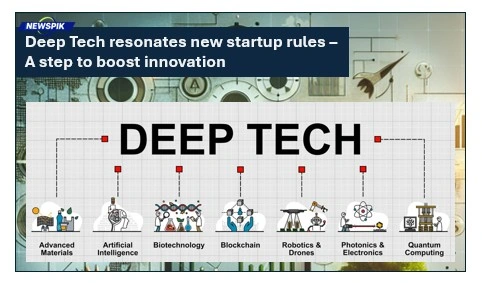

The new regulations introduced by the Indian government to the startup ecosystem, especially aimed at deep-tech startups which are defined as those based on sophisticated scientific solutions/knowledge and require long R&D durations as well as complex engineering skills. The government has moved towards changing the formal recognition framework to better align with the essential elements of these types of capital-intensive, long horizon technologies.
Extended Recognition Period to Support Long Development Cycles
The government has extended the length of time deep-tech startups can retain their designation as startups from the usual 10 years to a minimum of 20 years from the date of incorporation. This is particularly important because it recognizes that some sectors such as space, semiconductors, biotechnology and quantum computing generally take significantly longer than a typical technology startup to reach a stage of commercialisation.
Therefore, deep-tech companies will still be eligible for startup benefits, such as tax incentives and support from regulatory agencies for a period not exceeding 20 years or until they exceed specified revenue thresholds. This has been welcomed by investors and founders as a viable option for bridging the “valley of death” that science based start-ups normally face.
Revenue Thresholds Raised to Support Growth
In addition to extending timelines, significantly increasing the turnover thresholds needed to qualify for startup incentives is also underway:
- The threshold amount for regular startup companies has increased from ₹100 crores to ₹200 crores.
- The threshold amount for deep tech startups has increased to ₹300 crores as well.
- Raising these thresholds allows deep tech ventures more time to access fiscal and regulatory support throughout their growth journeys, thereby reducing their pressures to find early exits or move operations out of the country.
Formalizing a “Deep Tech Startup” category with specific qualifying criteria
A “Deep Tech Startup” sub-category has now been created within the guidelines of the Department for Promotion of Industry and Internal Trade (DPIIT) with specific criteria that need to be demonstrated by any company wishing to qualify:
- Innovative technology founded upon advanced science and/or engineering.
- An investment in significant amounts of research and development.
- The ownership and/or creation of NEW intellectual property.
- Involvement with technology that requires a long-term development cycle and represents a high level of technical risk.
This specificity helps to differentiate between hard-tech innovators versus traditional software, SaaS and/or consumer technology companies, and also helps to ensure that any company does not use an ambiguous “AI” label as a means to dilute the Government’s policy intent.
Relaxed Norms to Accelerate Early-Stage Innovation
The central government has removed the requirement for early-stage deep tech companies to have been operating for at least three years before being eligible to participate in the Department of Scientific and Industrial Research (DSIR) program as a means of assisting early-stage deep tech innovations. This change allows early stage ventures to obtain funding and assistance much earlier in their development.
Industry experts agree that this will be an important tool to develop deep tech projects that have not yet been commercially viable or are in the prototype phase because financing and reputation have historically been major challenges for these types of companies.
The new rules for funding deep tech startups also support the larger public sector commitment to capital. India’s Research, Development and Innovation (RDI) fund with an allocation of ₹ 1 trillion (≈ $11 billion), will become a source of patient capital that will allow deep tech startups that are typically ill-served by traditional venture capitalists due to long gestation periods.
While the level of private funding for deep tech technology companies in India is minimal compared to that provided in the US or China, the additional time and money made available by this policy change will draw more attention from institutional investors in the years ahead. There is a consensus among investors that the regulatory environment is moving in a positive direction and as a result they are willing to invest additional capital into advanced technology companies.
Sector Priorities: From AI to Space and Semiconductors
The new policy intentionally specifies those areas where deep technology develops best; those areas include:
- Artificial intelligence in addition to software;
- Quantum computing;
- Biotechnology/life sciences;
- Semiconductors/advanced manufacturing;
- Space technology/aerospace systems.
These types of industries all share some common traits: long lead times for developing products, high levels of technical risk and requirement for significant amounts of capital to build products; therefore, the changes in rules will help improve these types of industries.
The response from the entrepreneurial community and academia has been overwhelmingly positive. Many commentators have remarked that these regulatory changes reflect reality in deep tech with an overall “thoughtful manner” and that as such they do not force deep technology companies to compete against consumer-based technology companies which can grow much more quickly.

A versatile writer mainly works on trending news, daily updates from politics, business, crime, current affairs and entertainment.