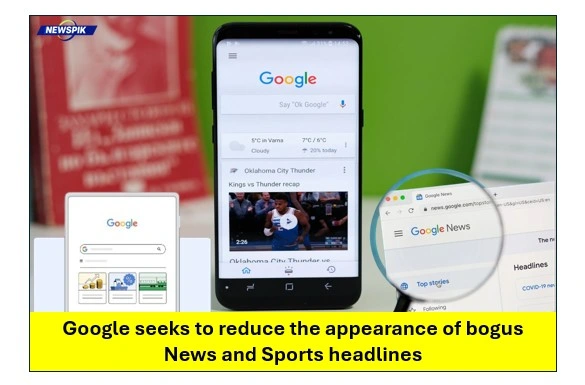

In the hyperkinetic universe of online media, a fraction of a second is all it takes for an ill-advised headline to become irrevocably viral. We’ve all read them: “Star Player Traded in Blockbuster Deal” or “Breaking: Election Results Overturned,” before clicking to find a page that’s just one long series of vague guesses (or made-up news). Come January 2026, Google has had enough.
The search engine giant has announced it will be launching a vanguard project to improve its ranking systems, which takes aim at “bogus” news and sports stories. The company has taken this step in response to a flood of sensational clickbait that has been playing games with Google’s “Top Stories” and “News” carousels, often misleading millions into thinking events have occurred when they haven’t even been talked about.
The “Prediction” Problem: Rumor vs Fact
The trigger for this most recent crackdown was a phenomenon that is rampant in sports. Dozens of niche sites began using “prediction” tags buried in the article while still employing definitive, news-style headlines for search results. But if the headline reader was a fan of, say, their favorite NFL or Premier League team, they may have seen the light-catching headline “X-Player Signs $100M Contract” and clicked through only to realize that what looked like an article was in fact just mass-voiced fantasy or even AI-generated speculation.
Google’s Rajan Patel – who is its VP of Engineering for Search – has acknowledged quite openly that the “prediction” stories have become a chance for Google to better itself.
Inside the “2026 Core Refresh”
This amalgamation is part of a larger effort to redesign our algorithms, called the 2026 Core Refresh. This update, unlike previous ones that targeted overall site speed or mobile-friendliness, is surgical. It takes advantage of state-of-the-the-art Large Language Models (LLMs) to detect “headline-content mismatch”—the technical term for when a headline makes a promise it fails to deliver in the article.
What does this mean for the average user?
- Fake Tag Takedown: Sites with “News” categories but also publish articles that are largely speculative in nature may be graded harsher as well.
- Authoritativeness Over Engagement: Google is throwing its weight back behind established outlets and verified journalists, especially during “breaking news” windows when misinformation tends to spread most quickly.
- The “Three Dot” Transparency: The “About this result” feature is being expanded so users can see at a glance if a source has a history of publishing accurate news or if it’s a “speculative” domain.
The Fallout for Sports and Politics
This crackdown is not happening by chance. The headline hijacking potential is only going to be more real in 2026 as new global elections and international sporting tournaments loom. Sports headlines may also serve as a “test-bed” for bad actors to experiment which clickbait tactics might slip through filters before applying those tactics to more sensitive political or financial subjects.
The future of the “information gateway”
E ven as Google’s detractors claim that the changes could choke off smaller, independent creators, the company insists its aim is accuracy rather than censorship. The 2026 Core Refresh intent is to support “E-E-A-T” (Experience, Expertise, Authoritativeness and Trustworthiness). If you’re a sports blogger penning an op-ed Google doesn’t want to suppress your voice — so long as the headline of your take isn’t implying that it’s a cold hard fact.
During a time when AI can output thousands of news articles in a second, we need the search giant to be more than an echo chamber. By focusing on cutting deceptive headlines first, the tech giant is gambling that users may come to value reliability over the thrill of an outrageous but ultimately empty click.

A versatile writer mainly works on trending news, daily updates from politics, business, crime, current affairs and entertainment.