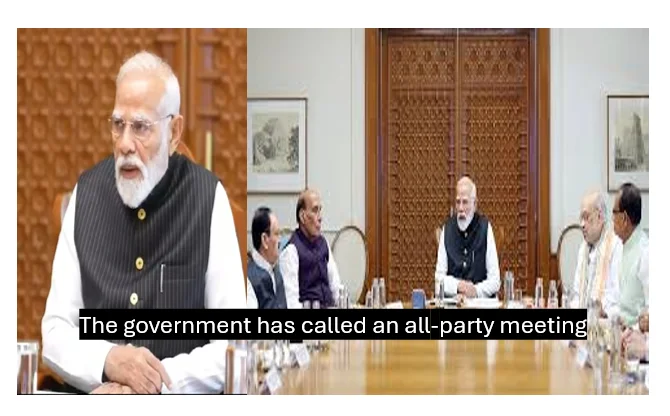

The Indian government has officially called an all-party conference to deliberate on the multifaceted effect of the ongoing conflict in West Asia thereby giving signals of taking the situation in the Middle East seriously. The meeting, which is set to take place later this week in the national capital, is expected to create a political consensus that has been uncommon in India on the diplomatic, economic, and humanitarian response of India to a crisis that is creeping closer to its national borders than many expected.
As the war reaches a more unstable stage in early 2026, the spillover effects are no longer in the news headlines. They are experienced in the kitchen table, the petrol pump and in the phone calls of thousands of Indian families whose relatives work in the Gulf that are nervous. It is no mere political exercise but the seeking of a national heart-beat in a world of shocks.
Beyond the Boardrooms: The Human Price of Geopolitics
Although analysts tend to refer to the concept of strategic depth and the presence of maritime corridors, the move by the government to take all political stakeholders to the table is based on a far more human reality. The relationship of India with West Asia is gut-wrenching. Having a population of more than nine million Indian nationals living and working in the region, be it the high-rises of Dubai or the oil fields of Kuwait, any upsurge is a direct menace to the lives and livelihood of our compatriots.
The meeting is to focus on the three pillars of Human-First:
- The Safety of the Diaspora: Making sure that evacuation plans, in the style of Operation Ganga or Vande Bharat, are in place so that at a moment’s notice, in case the conflict intensifies.
- The Remittance Lifeline: The Gulf is the source of steady income of millions of households in Kerala, Tamil Nadu and Uttar Pradesh. These families are threatened by a long war that can affect their economic stability.
- The Energy Buffer: As the oil companies promise the people of constant supply, the government does not want any Indian household to be affected by the disruption in the global supply chain because of which the cost of living will skyrocket.
The current situation of speaking with one voice is an Indian tradition in cases of international crisis, a top government official in the ministry of External Affairs ( MEA ) remarked. This gathering was concerning the fact that all the representatives who represent the parties, irrespective of their color, were briefed on the steps being taken to safeguard Indian lives and interests.
Read also: India is on the forefront in fighting transnational corruption
Walking the Diplomatic Tightrope
India has always been a delicate balance in West Asia balancing well with Israel and at the same time developing strong strategic relations with Arab countries and Iran. It is the greatest challenge that this multi-aligned approach has ever been through.
The all-party meeting will be an avenue through which the government will inform the opposition leaders about the peace-first diplomacy of India. The Minister of External Affairs will outline the top-level contacts with the leaders of the regions, and India wants to receive an urgent de-escalation and a new negotiation table will be discussed.
Read also: Asian airlines raise fares as West Asia conflict drives fuel costs
The Economic Shield: When it is the Common Man who is Protected
The economy is probably the most urgent internal issue of the meeting. Although the global oil prices could be physically available, the war price, which is passed on to domestic prices, can generate inflation in the country. The Finance Ministry and the Ministry of Petroleum are ready to give out a roadmap to the all-party delegation on the manner in which they intend to protect the Indian consumer.
A Call to National Solidarity
The very optics of an all-party meeting creates a strong message not only to the domestic audience, but to the world. It demonstrates that it is not a divided house when it comes to national security and the welfare of its citizens in foreign countries.
The mood in the circles of influence is that of the wary readiness. It has been realized that the West Asian war is no longer a fire seen in the distance, we are feeling its heat through the up and down markets and the anxieties of the immigrant laborer. The government is seeking to go beyond the partisan politics and establish a National Shield by engaging the opposition.

A versatile writer mainly works on trending news, daily updates from politics, business, crime, current affairs and entertainment.