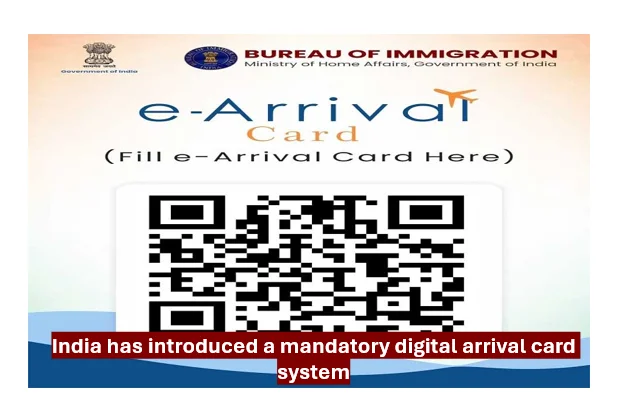

From April 1, 2026, India will have a big change in how people move. Before landing, all foreign visitors to the country will now have to fill out a digital entry card. The old paper forms were given out on planes or filled out at the airport. This new method takes its place.
To make things run faster and better, the government has decided to eliminate all paper forms. After the limit, travellers who don’t complete the digital form may have to wait longer to fly or to arrive.
Who Needs to Fill Out the Net Form?
The new rule mostly affects people from other countries and Overseas Citizens of India cards who come into the country. This includes tourists, business travellers, students, and other people from other countries who come to visit.
People who are from India do not need to fill out the digital landing card. However, this form must now be filled out by most foreign visitors before they can enter India.
Airlines may also help make sure the rule is followed. Before getting on their flight to India, passengers might be asked to show proof that they have paid. This step is being taken to make sure that the rules are followed and to cut down on problems after landing.
The online process is simple and quick
It is intended that the digital entry card be easy to use. It has to be filled out by travellers within a certain amount of time before they arrive, usually up to 72 hours before they land in India.
The form asks for general information like the person’s visa number, flight information, contact information, the reason for the visit, and the person’s address while they are in India. There aren’t any hard steps or documents to share, which makes the process easy for travellers.
When a person sends in the form, they get proof, which is usually a QR code. When you get to the airport, you can show this code to customs officials to quickly confirm your identity.
Better and faster airport travel
One major goal of this method is to cut down on airport wait times. Immigration officers can handle visits more quickly and easily if they get passenger information ahead of time.
At busy airports, there are often long lines at the customs desks. The new computer method is supposed to make a big difference in how people are treated. Early tests of the system have shown that it can make things go faster and clear up more quickly.
The digital version is also more accurate as visitors enter the information themselves instead of having it typed in by hand. This makes the method more dependable and cuts down on mistakes.
Read also: MC expands digital parking with cost-effective passes
As part of India’s push for digital
India wants to update its travel and customs processes in a bigger way, and the digital entry card is part of that plan. The system was first put in place in October 2025 and has been slowly expanded since then. It will soon be fully required.
A lot of countries around the world are switching to digital entry methods that work the same way. India is now following suit. The goal is to make things run more smoothly for travellers, make things more efficient, and make them safer.
Officials have also told people that they should only fill out the form on official sites. Travellers should be wary of any third party websites that try to charge them extra money when the service is free.
Important Things for Travellers to Know
People who are going to India after April 1 need to remember to fill out the digital landing card before they leave. They might cause delays at the airport or even problems during boarding if they don’t.
Also, it’s important to remember that this method doesn’t get rid of the need for visas. As things stand, travellers must still have legal visas or other necessary travel papers with them.
Moving to a digital landing card is a big step toward making India’s travel system better as a whole. It cuts down on paperwork, speeds up airport procedures, and makes the country more in line with travel trends around the world. It means that travellers will be able to enter India more easily and without any problems.

I am a versatile content writer from the MP region, covering politics, business, crime, current affairs, entertainment, video games, and sports with clear insights, engaging analysis, and timely, reader-focused updates.









