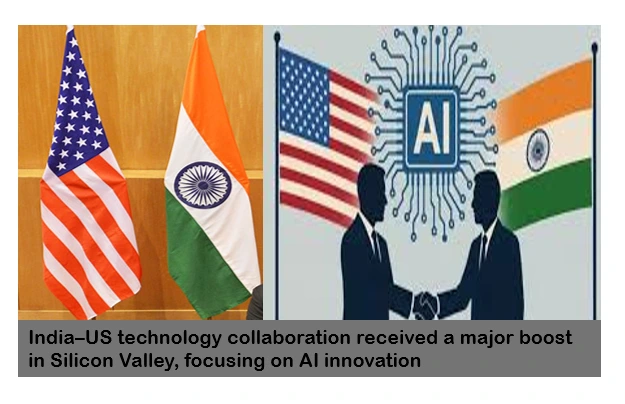

The air in Silicon Valley has often buzzed with the making of life-altering wishes, the building of astronomical fortunes and the bootstrap start-up dreams that have fed a hundred petty Wall Street panics, but over the past year it’s begun to embody (alongside those ethereal things) an entirely new and different sound: The strategic cadence of international diplomacy. The “Tech Corridor” between the United States and India has come a long way from the days of plain vanilla outsourcing in the 1990s. In 2026, we are observing the emergence of a new monolithic AI superpower bloc.
As high-ranking officials from New Delhi engage with the titans of Mountain View and Cupertino, the story has changed. It’s no longer simply about “talent exchange”; it’s about joint intellectual property, secure supply chains and the ethical guardrails of the future.
The iCET story: from policy to practice
The Initiative on Critical and Emerging Technology (iCET) is the engine driving this growth. What started out as high-altitude policy has solidified into a set of concrete, high-stakes projects. Leadership from the two countries worked to deepen cooperation in three specific “Frontier” areas during recent summits in Silicon Valley:
Sovereign AI and Compute Power
India’s mission “AI for All” Needs Major Computational Capabilities. The US-bases chip giants aren’t just peddling hardware in India, they are co-developing data centers too —in Indian turf. This “Compute Sovereignty” means India can now train models on its own unique and diverse data sets – which run into hundreds of languages and dialects- using American-designed hardware.
The Semiconductor Handshake
The fragile nature of global supply chains has been something of a hard lesson for both countries. India has become the preferred “plus-one” in Silicon Valley’s “China Plus One” playbook now. You are going to assembly to true fabrication. U.S. firms are pouring billions into Indian talent pipelines to create the next generation of 2nm and 3nm chips that have “Designed in California, Made In Gujarat,” written on their schematics.
India-US trade deal will be signed off : Expected by Mid-March
Key Storm: Protectionism Vs Partnership
It isn’t all smooth sailing. They are still at odds over data localization laws and digital trade taxes. While US companies are generally calling for “free-flow” of data, the Indian government has been insistent on storing Indian data within the country’s borders.
The principle here in 2026, however, is that these are “family disputes” and not “civilizational rifts.” The geopolitics of a solid India–US tech alliance are far stronger than petty trade war tensions.
Nvidia CEO Says Big Tech AI Spending Is Appropriate and Sustainable
Conclusion: A Partnership of Equals
The story of India as a “junior partner” to the US tech industry is dead. Silicon Valley now sees India as a co-creator and an important market. As A.I. rewrites the rules of the global economy, the role played by the Golden Gate Bridge and Gateway of India is increasingly becoming World’s Most Important Infrastructure.
This is more than a government or corporate deal; it’s a collaboration between two cultures that share an optimism that innovation can — most of the time, but not always — make the world a better place. The Silicon Valley AI push is just the opening salvo of a far deeper, longer story to come about shared destiny.

A versatile writer mainly works on trending news, daily updates from politics, business, crime, current affairs and entertainment.