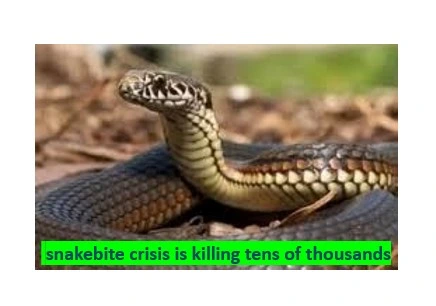

In the peaceful, gentle buzz of rural India, where the monsoon rains are spread like an emerald quilt across the earth and the air smells like wet soil, a hunter with no voice slinks through fields of tall grass. For millions of farmers and day laborers, the landscape’s beauty has long been darkened by a deep, ancient fear. While the world has its eyes on high-profile diseases like Ebola, avian flu and SARS and on deadly urban plagues like tuberculosis, a “poor man’s disease” is smoldering away at unspectacular deaths that suggest a national emergency lurking in plain sight.
India is the world’s snakebite capital. There are about 1.2 million deaths every year due to snakebite globally and India is estimated to have nearly half of them. Approximately 58,000 to 64,000 Indians are killed by envenomation each year. By way of comparison, that is more than 10 times the numbers killed by tigers, leopards and elephants combined.
The Big Four: Encounter with the Enemies
In order to understand the crisis, you have first to meet the denizens of the undergrowth. India is host to (nearly 300 species) of different species of snakes, but for most part it destroys only four – the “Big Four”—responsible for causing the most serious snakebites and deaths.
The Spectacled Cobra -Mythologically iconic and worshipped as much feared animal, the cobra is commonly sighted near human habitat where it hunts for rodents. Its venom is neurotoxic and causes muscle paralysis, which eventually shuts down the respiratory system.
Why the Toll was So High: A Perfect Storm
This high death rate isn’t just a biological fluke; it reflects a complex interplay between ecology, sociology and an overburdened rural health care infrastructure.
The Conflict of Habitat
India is an agrarian economy. While urban sprawl sweeps away wild spaces and intensive farming increases, the distinction between “human space” and “snake space” has become less clear. Farmers who walk through paddy fields barefoot or reach into dark sheds for tools are at greatest risk. In many respects, snakebites are a hazard of poverty.
The Economic Aftershock: The Vicious Cycle of Poverty
A snakebite is almost never just a medical disaster; it’s also a financial one. The great majority of victims are the breadwinners of their families and generally between the ages of 15 and 50.
When a farmer is bitten, the family is caught in a bind. If the victim dies, the family loses its financial support. Even if the victim recovers from a “dry bite” or less severe spp. bites, the expense of transportation, time in hospital and lost wages may equal several months’ income. Survivors of Russell’s Viper bites frequently develop chronic kidney disease or require amputations, which means they can no longer go back to the fields. That leaves families taking out high-interest loans from local moneylenders, locking them into a cycle of debt that spans decades.
Science and Solutions: Moving Forward
It is a haunting crisis, but it is not irresolvable. Awareness and innovation are the two key factors driving the current era of “Bite Back.”
Standardizing Antivenom
Currently, the Indian antivenom preparation is “polyvalent,” made from venom largely obtained from a single region (Tamil Nadu). However, studies have shown that a Cobra’s venom in West Bengal has a chemical composition different from one in Rajasthan. This “regional variation” makes the medicine not universally effective across the country. Today, scientists are developing “Next-Gen” antivenoms that are purer and more potent, as well as region-specific.
The “Million Death Study” and Its Data
Snakebites were underreported for many years because they happen in distant villages. Efforts such as the Million Death Study have forced realisation of the extent of the tragedy on to the government. The Indian government in 2024 announced a National Action Plan for Prevention and Control of Snakebite, with the goal of cutting deaths by half by 2030.
Grassroots Education
Non-profits and “Snake rescuers” are on the forefront. Simple lifesavers “What they learn are the basic things that safe lives.
- With a Torch: Walking with a light in the night stops snake from being stepped upon.
- Sleeping Under Nets: A humble mosquito net works wonders at keeping the Krait at bay.
- The “Right” First Aid: From “cut and suck” the wound (which is dangerous) to immobilization and rapid transport.
A Call for Empathy
India’s snakebite crisis is a stark example of global health inequity. We exist in the age of mRNA vaccines and robotic surgery, but tens of thousands who might have been saved from something that has had a known cure for over 100 years are dead.
Addressing this crisis will take more than just vials of medicine; it will require a change in how we value rural lives. It is for ambulances on paved roads, electricity in clinics and the demolition of myths by means of a proper education. The snake is not a villain, the farmer is not a statistic. Both are struggling to survive in a changing world.
By pulling the “Silent Shadow” into public space, we will be able to ensure that it is only the next monsoon season of water and not an avoidable one of loss.

A versatile writer mainly works on trending news, daily updates from politics, business, crime, current affairs and entertainment.