
The Tapovan in Nashik, a sweeping green lung and cradle of spiritual ecology along the sacred Godavari River, is now the site of an intense, citizen-led conservational battle. Locally called the “forest of meditation” for its link with the Ramayana epic and Lord Rama’s vanvaas, Tapovan is a critical natural buffer to an exploding city.
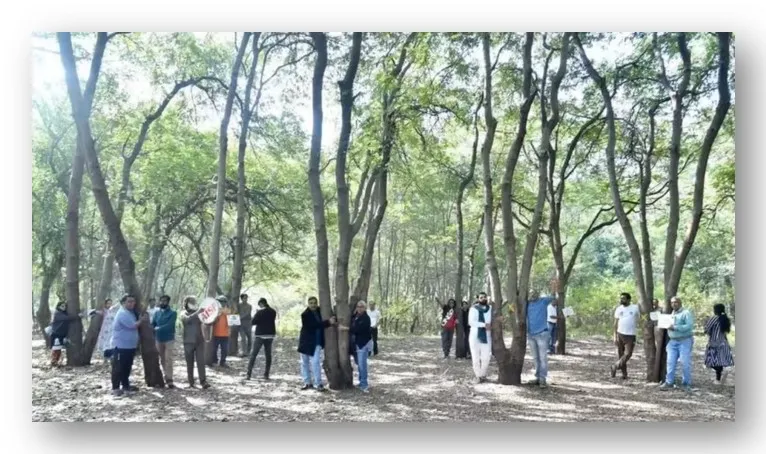
An existential crisis has been looming large over the tract with the Nashik Municipal Corporation (NMC) announcing a plan to axe a whopping number of trees, initially pegged at over 1,700 or so, in order to clear space for an expanded Sadhugram (village for monks) before the 2026-27 Simhastha Kumbh Mela.
The citizens of Nashik, in turn, went ‘all out’ and mounted a muscular multi-pronged protest that used social media, legal action and symbolic grass-roots resistance to make the authorities back down considerably.
read more: Deepavali inscribed on UNESCO’s Intangible Cultural Heritage list
The revival of the Chipko Andolan
The symbol of Tapovan movement became the non-violent, symbolic bailout of trees or “Chipko-style””-protest.
Hugging the Trees: Inspired by the 1970s Chipko Andolan movement, a group – including residents, environmentalists and activists – came together to literally hug the yellow-marked trees in order to prevent them from being axed. Such direct, emotional action had instantly created viral visuals that helped garner attention to the imminent threat faced by Tapovan’s centuries-old banyan, tamarind and peepal trees — which contribute to its dense vegetation.
Broad Mobilization The demonstrations quickly expanded well beyond the traditional activist circles. Domestic workers, organized through unions, also took a day off work — no small financial sacrifice — to be part of the protests, saying trees amount to their “natural Air conditioners” and they’re imperative for sustaining oxygen supply in the city, a reality made painful lesson during COVID-19. Birdwatching clubs and nature enthusiasts hosting large bird-watching sessions in Tapovan, specifically to spotlight the area’s biodiversity — which includes 52 recorded bird species — in an effort to reinforce what would be lost ecologically if trees were felled.
The Tactic: Legal, Political and Digital Pressure
Citizens’ strategy was holistic, melding the physical presence with extreme political and legal pressure:
Mass objections and hearings : In the days after it was announced — citizens challenged over 900 official objections to the NMC plan, demanding transparency in decision reflecting legal logic behind tree-cutting. These protests led the government to hold public hearings and negotiate with protesters.
Exposing commercial intent Activists who have led the charge such as Devang Jani provided documents, for example, which suggested that once the temporary Kumbh Mela was over, the site would be transformed into a permanent commercial Meetings, Incentives, Conferences and Exhibitions (MICE) Hub on a Public-Private Partnership basis. This disclosure jolted public opinion, turning the problem from that of a Mela-preparation into a possible land-grab that would wipe out forever the last green lung of the city.
Political Escalation and Judicial Intervention: The movement was able to force the hands of both local and national political leaders. Shiv Sena (UBT) MP Rajabhau Waje raised the matter in Zero Hour in Lok Sabha, seeking intervention by the central government. Simultaneously, other stakeholders flagged the protests and a PIL (Public Interest Litigation) was filed in the Bombay High Court demanding an immediate interim stay against felling.
The outcry, which has been prolonged as well as multi-faceted, succeeding in what can be considered a major victory: the NMC was forced to change its stance announcing that it would only remove trees under 10 years old and shrubs while pledging to translocate any of the remaining revalent trees under expert-guidance. In addition, the authorities vowed to add 15,000 new native trees, each 15 feet high, throughout Nashik. This entire saga is an incredible story of how organized citizens can use the power of their voice, science and law to protect their environmental patrimony and cultural heritage from short-sighted developers.

A versatile writer mainly works on trending news, daily updates from politics, business, crime, current affairs and entertainment.









