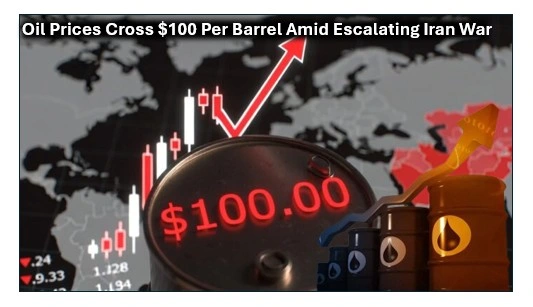

The computer reading on the screen of a BP station in suburban Chicago flickered, stabilizing at a price that made a person feel that he had entered a harder-boiled, old-fashioned time: 4.15 per gallon of regular gas. That figure does not just mean the difference between a full and a light grocery cart to Maria Jimenez, a freelance courier who uses her Honda Civic of 2019 to arrive at the house and pay rent.
It has gone up twenty cents since Friday, I watched it go, I said and leaned against the cold metal of the pump. You read the news about the Middle East and it is a million miles away. And then you go down here you have the war in your pocketbook.
The Chokepoint of the World
The operation of this price explosion is mainly the effective closure of the Strait of Hormuz. The small passageway is sometimes referred to as the jugular vein of the world, and usually serves 20 percent of the global oil output each day. After the Iranian nuclear and military targets were attacked by joint military attacks on February 28, the Iranian Revolutionary Guard Corps (IRGC) responded with a so-called maritime blockade, through swarms of high-speed vessels and naval mines.
What has happened is a logistical run-around. The gulf of Oman or the Persian Gulf is currently holding hundreds of huge tankers, some of whom carry more than two million barrels of crude apiece, and cannot or will not take the risk of the transit.
It is a doomsday scenario to the energy markets, according to Elena Vance, a senior analyst with the Global Energy Institute. It is not merely a drop in supply that we are looking at, we are looking at a 20-million-barrel-per-day hole in the world economy. You can not switch a light in Texas or Norway and fix that.
Read also: Shadows over the Strait: The US-Israel Joint Offensive and the Shifting
A Human Cost Beyond the Pump
Whereas the headlines are obsessed with the glowing red figures of the Bloomberg Terminal, the humanizing reality is the darkened Tehran streets and the silent worry of shipping centres such as Singapore.
Reports by residents in Tehran after attacks on the Shahran oil refinery and various fuel depots of scenes of apocalypse black smoke and frantic queues of people seeking basic goods. The current Iranian leadership led by Mojtaba Khamenei has indicated that they are ready to engage in a war of attrition that would lead to a doubling of prices once again in case the West goes on with the offensive.
An IRGC spokesperson threatened to keep this game going, over the weekend, telling them to be able to afford oil at $200.
The waves are extending even to the most stable parts of the world. Analysts in the UK are also concerned that energy bills that have already become a political liability will rise by 15 per cent in the coming month. The demand in India and China, which are the largest oil importers in the world, is threatening to collapse after the economic rebounds after winter, and governments are looking at fuels rationing.
The Political Gamble
The current president, Donald Trump, who is in charge of the military campaign, has been firm in his policy of maximum pressure. Through a series of posts in his social media on Sunday, he contended that the economic suffering is a short term cost to be able to get rid of a long term nuclear menace.
Yet the hope that the conflict will end in a matter of weeks, as opposed to months, which the administration is expressing is not being received well by the key participants in the world of global trade. The shipping giants such as Maersk and Hapag-Lloyd have already halted any shipping passing the area, rerouting their vessels around the Cape of Good Hope, which is a 12-day trip that means 12 days of transport in every movement and millions of fuel dollars spent on the route.

A versatile writer mainly works on trending news, daily updates from politics, business, crime, current affairs and entertainment.