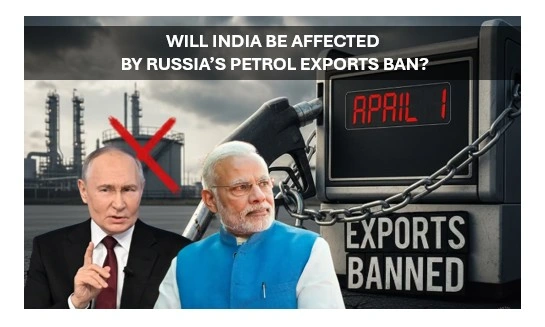

From April 1 to July 31 of 2026, Russia will temporarily prohibit the exportation of gasoline (also referred to as petrol) in order to achieve the following objectives:
- To ensure an adequate supply of fuel for consumption by Russians.
- To control the continually increasing prices being paid by Russians for fuel.
- To manage the volatility resulting from ongoing risk factors related to the conflict in the Middle East and disruptions at refineries.
Last year, due to fuel shortages experienced in some regions, Russia instituted similar restrictions on fuel exports.
Impact on Global Markets
Despite being a major exporter of refined fuels around the world, Russia’s gasoline exports account for only a small percentage of the total exports of gasoline worldwide (approximately 117,000 barrels per day).
Nevertheless, this ban could:
- Tighten the global fuel supply; particularly in Europe and certain areas of Asia, where demand will be very high for gasoline after the ban, therefore.
- Place upward pressure on the price of gasoline.
- Lead to an increase in price volatility in an energy market that is already highly volatile due to geopolitical issues.
However, while the impact of the Russian ban could be relatively severe, the impact of the ban will likely be moderate in comparison to the total impact of crude oil; which is the most widely traded globally commodity.
Will India Be Affected by The Russian Ban?
1. Limited Direct Dependence on Russian Gasoline
Most of the crude oil imported into India is crude oil; India processes the crude oil it imports into gasoline and does not have to purchase a large volume of gasoline exported from Russia. Therefore:
- The ban on gasoline exports has a minimal impact, directly.
- Moreover, India is not highly dependent on Russia for the importation of gasoline.
2. Strong Domestic Buffers
India has: Adequate fuel reserves
- 60 days worth of crude supply secured;
- 40+ country diversified sourcing;
- Short-term disruptions have lessened the risk of supply disruption.
3. Possible indirect price impact
However, there is an indirect risk that:
- Global fuel price will go up slightly;
- India’s import cost of crude oil will increase;
- The government may need to adjust taxes or subsidize costs (similar to recent duty decreases).
Read more: Russia Profits as Global Economies Reel Under Iran War Pressure
Why India is relatively safe?
India’s energy strategy has improved resiliency through:
- Diversification (less reliance on the Middle East and Russia):
- Strong refining ability (India is the world’s net exporter of petroleum products);
- Policy flexibility to manage retail fuel prices.
- Russia’s ban on petrol exports poses less of a threat to India than it does a signal to the global market.
- No short-term supply crisis in India;
- No medium-term supply threat (oil market trends could put upward pressure on retail fuel prices).
Also read: Central government Announces Duty Cut on Fuel, Export Taxes
Summary:
India has an adequate amount of crude oil reserves and a diversified sourcing strategy which places India in a position to withstand short-term disruptions in the oil market. Should tensions increase globally, it will be the totality of these factors affecting prospective oil market supply that will assess the impact on India.

A versatile writer mainly works on trending news, daily updates from politics, business, crime, current affairs and entertainment.