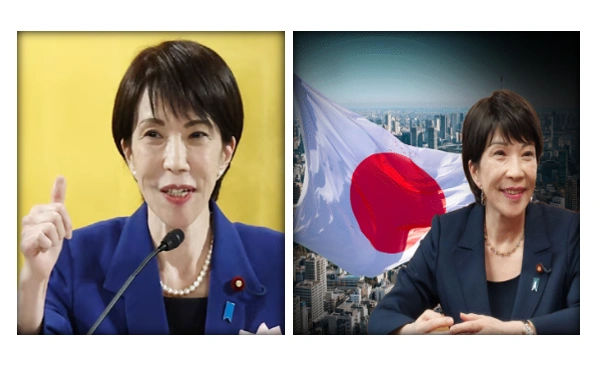

It has the political class of a more stable and predictable country than Japan, where party transitions have also been slow to come but in which the Liberal Democratic Party’s monolithic dominance remains solid even today, buzzing with enthusiasm not seen in quite some time. At the heart of this earthquake is Sanae Takaichi. If the current surge holds and grassroots excitement doesn’t abate, we are not just watching a possible appointment of Japan’s first female Prime Minister; we are experiencing what analysts have described as Japan’s biggest election victory since World War 2.
This is not just a new leadership. It is a profound reset of the national identity with the wider world.
The Takaichi Phenomenon: Breaking through the Glass Ceiling
For years the discussion about Takaichi seemed to revolve almost entirely around her sex. Though her becoming the first woman to lead the energy-dependent world’s fourth-largest economy is unquestionably historic, Takaichi’s rise is about something much more powerful than identity politics. She has plugged into an underlying demand among Japanese voters for some muscle-flexing, economic sense and a break from the pussyfoot “wait-and-see” diplomacy of the past 10 years.
Whereas many of her predecessors made their way up the ranks through quiet consensus and backroom factional deals, Takaichi has built a brand on conviction. Her fans don’t just see a politician; they see a “conviction leader” à la Margaret Thatcher, an association that she encourages.
Why This Victory is Different?
And what makes this assumed victory “the biggest” isn’t just the margin of the vote, but with greater importance and impact, in politics or history’s dictionaries, the mandate itself that it brings. Takaichi has campaigned on a platform of “an evolution rather than an inheritance” from the policies of Abe, who died in September, with more emphasis on technological sovereignty and domestic resilience.
- Security Autonomy: She’s a key advocate for a Japan that can defend itself and doesn’t have to keep glancing over its shoulder to see if it has approval from outside.
- Economic Patriotism: Her push for “strategic indispensability” — to make Japan’s tech sector indispensable around the world in a way that secures the island nation’s economic future through innovation.
Breaking the Factional Mold
In history the LDP has operated as a jungle of “tribes” and factions. You typically won by playing a game of musical chairs, promising votes to faction leaders in exchange for cabinet seats. Yet Takaichi has had the capacity to by-pass much of this “old guard” machinery by going directly to rank-and-file party members and public.
She is catching on like a prairie fire at the grass roots. In the digital age, she’s found a voice on social media and public forums that makes her rivals seem like relics of another time. By humanizing herself — sharing her love of heavy metal and her travails as a woman in a male-heavy Diet — she has seemed to put the rarefied halls of Nagatacho and the average citizen in Osaka or on Hokkaido within reach.
The Geopolitical Ripple Effect
The world is awaiting this election with bated breath. A Takaichi landslide would rob East Asia of its status quo. She makes no apologies on regional security. She considers it an accolade that she has been able to achieve the defense of Japan not merely as a policy objective but also as a moral imperative.
A Fresh Approach to Regional Stability
You can be sure that with a Takaichi administration would come:
- Heightened Defense Expenses: Expanding this far beyond the 1% of GDP and bringing about with an Elite Self-Defense Army.
- Unflagging Alliances: She retains the US-Japan Security Treaty, but aspires to a more “equal” partnership that sees Japan playing a leading role in maintaining stability in the Indo-Pacific.
- Stronger Economic Security: Tightening technology exports controls to maintain Japan’s superiority in semiconductors and AI.
This “greatest win” would give her the political space to roll out constitutional reforms stalled for decades. Succeed, and the very definition of Japan’s pacifist position may be updated to keep pace with 21st century realities.
Economic Renewal: The “Sanaenomics” Factor
While the security stuff makes a splash, the kitchen-table issues is what’s going to win it for her. Japan has suffered from deflation and stagnant wage growth for a generation. Takaichi’s economic plan is bold, even radical by the LDP’s conservative standards.
Japan Visa Makes Multi-Country Travel Easier for Indian Tourists

I am a versatile content writer from the MP region, covering politics, business, crime, current affairs, entertainment, video games, and sports with clear insights, engaging analysis, and timely, reader-focused updates.