Australia has just rolled out a world-first, sweeping ban preventing children under the age of 16 from creating or maintaining accounts on major social media platforms like TikTok, Instagram, Facebook, and YouTube. The legislation, which imposes hefty fines on platforms for non-compliance, is heralded by the government as a necessary shield against cyberbullying, predatory algorithms, and the youth mental health crisis.
Yet, in a monumental oversight that has parents and child safety advocates scratching their heads, a significant segment of the youth digital landscape remains untouched: online gaming platforms.
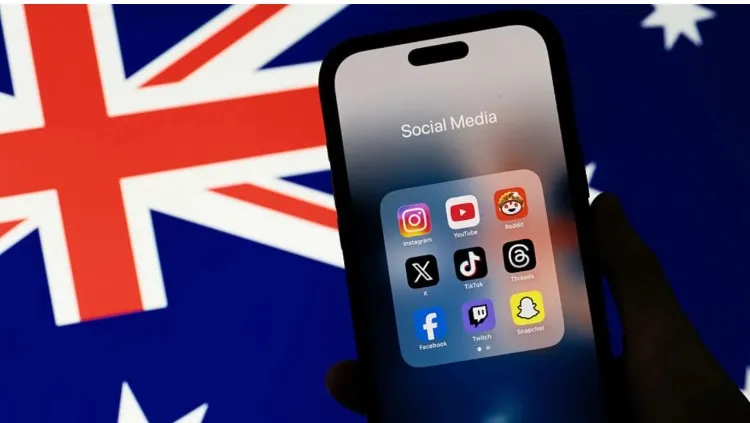
While popular streaming sites like Twitch and Kick have been included in the ban due to their function as content-sharing and social interaction hubs, platforms whose “primary purpose” is online gaming—like Roblox, Minecraft, Steam, and much of Discord’s core community structure—are explicitly excluded under the subsidiary legislative rules.
This gaping regulatory hole has created an immediate “digital double standard,” leaving experts to question whether the law is merely shifting the problem rather than solving it.
The Technicality That Saved Gaming
The reason for the exclusion lies in the highly specific legal definition of an “age-restricted social media platform” under the Online Safety Amendment (Social Media Minimum Age) Act 2024. To be included, a service must meet three criteria, with the government’s focus being on platforms where the “sole purpose, or significant purpose is to enable online social interaction” and which allow “end-users to post material” and “link to, or interact with, some or all of the other end-users.”
The Australian government, advised by the eSafety Commissioner, made a clear decision to exempt several categories:
- Messaging, email, voice calling, or video calling services (e.g., WhatsApp, Messenger).
- Education and health services (e.g., Google Classroom).
- Online games.
By creating a blanket exemption for services whose primary function is defined as gaming, the government managed to avoid the immediate, complex task of regulating massive, globally popular digital worlds like Roblox. These platforms, while arguably functioning as de facto social networks with massive user-generated content (UGC) ecosystems, have traditionally been viewed through a different lens than Meta or TikTok.
Why This Exemption Is a Time Bomb
The distinction between a “social media platform” and an “online game” has become virtually meaningless in the modern digital world. Platforms like Roblox and Fortnite are not just games; they are immersive social spaces where:
- Unstructured UGC is Rampant: Roblox’s entire model is built on user-generated content. This environment hosts the exact same moderation challenges and risks of exposure to unvetted, harmful content that the government cites for banning TikTok.
- Real-Time Social Interaction is Core: Children spend time on these platforms to hang out with friends, voice chat, and communicate privately via direct messaging—the very interactions the law aims to regulate on traditional social media.
- Predatory Algorithms Exist: While not focused on optimizing content feeds for screen time, gaming platforms use powerful design features (loot boxes, in-game currency, aggressive microtransactions) that exploit psychological vulnerabilities in minors, an equivalent financial and psychological risk.
Critics argue that this exclusion is less of a principled stance and more of a “tactical omission” designed to simplify the initial legislative rollout. By excluding the gaming sector, the government bought itself time, avoiding simultaneous compliance clashes with both Silicon Valley giants and the equally powerful gaming industry.
The Future: The Ban Will Expand
This reprieve for the gaming industry is almost certainly temporary. The government has already flagged a comprehensive review of the legislation within two years, with a specific mandate to consider extending the minimum age requirement to online games.
In the meantime, a massive disparity in youth protection exists:
| Platform Type | Primary Policy Focus | Age-Assurance Mandate (Australia) |
| Traditional Social Media | Content Curation & Algorithmic Harms | Mandatory, strict age verification (e.g., ID scans, biometrics) |
| Online Gaming Platforms | Content Classification (M, MA 15+) | Voluntary (Platforms like Roblox are only now moving toward verification) |
The final message is clear: the law has created a massive regulatory fault line. Australian youth who have been kicked off Instagram are now potentially flocking to Discord and Roblox, moving from one highly social, unmoderated space to another. The gaming world has a two-year window to clean up its act, or face the inevitable: a future where a unified minimum age is mandated for all interactive digital social services.

I am a passionate content writer from the Chandigarh–Panchkula region. I am curious and love exploring diverse topics. At DailyBarta.in, I primarily write about video games and sports, bringing readers fresh insights, engaging analysis, and easy-to-understand breakdowns of the latest trends.