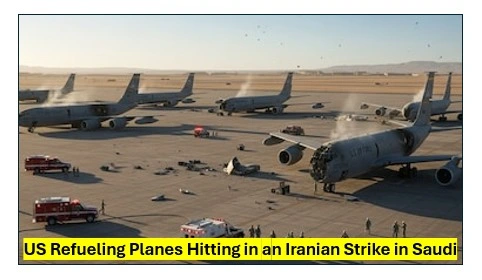

Tension continues to be high between the U.S., Iran and their respective allies throughout the region; evidence of this has been especially clear with reports stating that some of the U.S. Air Force aerial refuelling aircraft at the Prince Sultan Airbase in Saudi Arabia were damaged by Iranian missile strikes in response to both air assaults on Iran by the U.S. and Israel and a triggered (pyrotechnic) response by Iran to the attacks. This attack also demonstrates an increasing scope to what could ultimately be considered part of the 2026 Middle East war following the start of U.S. and Israeli airstrikes on Iranian targets in late February.
Iran has retaliated against U.S. military actions previously by attacking military bases and infrastructure throughout the Gulf region where U.S. forces are based.
According to U.S. media reports based on reports from U.S. officials, five U.S. Air Force aerial refueling aircraft were struck by the Iranian missile attack on the Prince Sultan Air Base. The aircraft were on the ground and sustained no total damage, but are being repaired; and there were no injuries suffered due to this incident.
This missile incident illustrates the vulnerability of the large logistics-type aircraft at forward bases within the Gulf that operate under heavy operational tempo situations.
Strategic Importance of Refuelling Aircraft
Boeing KC-135 Stratotankers have been essential for long-range air operations because they provide fuel in-flight, thereby allowing fighter jets, bombers and reconnaissance aircraft to stay airborne longer.
They have been critical components supporting U.S. air operations against Iranian targets from Prince Sultan Air Base. Without in-flight refuelling aircraft will have to operate closer to their targets and/or reduce their time of operation. Any loss of one of these aircraft will create logistical issues in the continuing ability to conduct air operations in this region.
Iranian Retaliation
This missile strike is part of Iran’s extensive campaign of targeting military and energy facilities throughout the Gulf since the start of the conflict. Iran has targeted and struck Saudi oil facilities, airports, and military installations using Iranian missiles and unmanned aerial vehicles (UAVs). Saudi Arabian air defence systems have intercepted many of these Iranian missiles and UAVs. However, prior to this missile strike many of these previous missile and UAV attacks have experienced little damage, or no causalities at all.
The attacks on U.S. military bases around the world indicate pressure from these strikes being placed on those nations harboring U.S. troops as well as complicating the logistics necessary for U.S. and coalition partners to conduct aerial operations.
Read more: Iran hits the biggest oil refinery complex in UAE
U.S. Tanker Aircraft/Related Incidents
There are two other recent incidents involving U.S. tanker aircraft in the area. The first was an accident between two KC-135s (tanker aircraft) in western Iraq where one tanker crashed resulting in all six aircrew on board perishing. The other KC-135 had to return to base with significant damage but safely.
U.S. officials confirmed neither tanker sustained damage during combat; however, the incident serves as a reminder of the dangers of conducting heavy aerial operations in combat zones.
Also read: Middle East Tensions Disrupt Air Travel: Dubai–India Flights Resume
Regional Conflict/Air Attack on U.S. Military Assets
The air-to-air strikes on U.S. aircraft within Saudi Arabia signify that the regional conflict is growing in scope, affecting countries other than just Iran. By conducting air strikes on U.S. military capabilities located throughout the region providing support to the coalition, Iran is showing its ability to threaten regional logistical centers and conflict with the coalition.
The event can potentially lead to a redeployment of military now by Washington and its allies as well as to the dispersal of valuable military resource(s) (such as high-value aircraft) to multiple bases to mitigate risks associated with this situation. Continued airstrikes against U.S. military personnel and property throughout Gulf Region may further heighten tension and potentially cause a larger regional conflict.
If there is an ongoing cycle of offensive and defensive operations between the two parties, the Middle East conflict will escalate and affect the military balance of power, energy markets, and global security.

I am a versatile content writer from the MP region, covering politics, business, crime, current affairs, entertainment, video games, and sports with clear insights, engaging analysis, and timely, reader-focused updates.









