The Delhi government announced a new rule that would allow at least 50 percent of the employees of both government and private offices to work at home as the Capital endures one of the highest levels of air pollution reported in the season.
The order follows due to the fact that the Air Quality Index (AQI) of the city stays in the category of severe, which is why the authorities are extending the emergency operations within the Graded Response Action Plan (GRAP-IV).
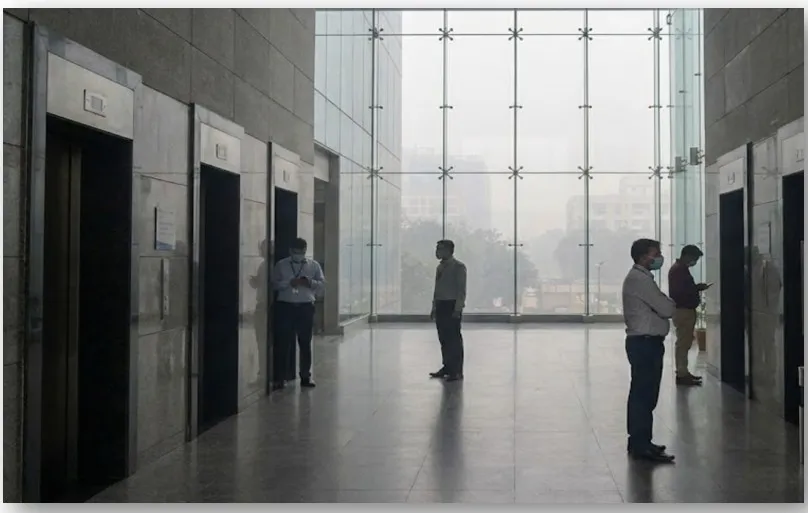
Severe AQI Triggers Stronger Restrictions
In the two days, the AQI in Delhi has ranged between 450, which is over 30 times the limit set by the World Health Organization as safe. Low visibility, high concentrations of PM2.5, and toxic haze have raised concerns of respiratory health, especially among the young and the elderly with underlying conditions.
Authorities reported that because of the upgrading to GRAP-IV, working in offices all day long is now compulsory for half of the employees, which has decreased the number of daily movements on the road, and is trying to reduce the amount of pollution caused by vehicles, which is one of the biggest sources of pollution in Delhi.
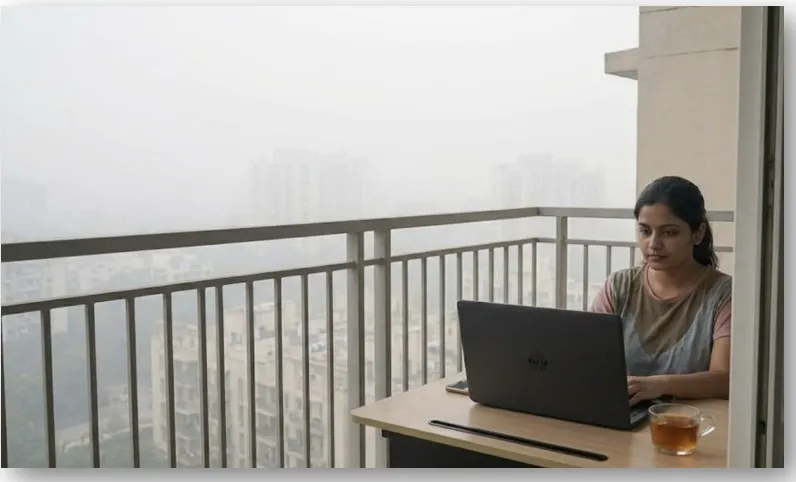
Government, Private Sector Directed to Comply
All government departments in Delhi were instructed to make half of their employees work remotely till further notice. The same has been recommended with regard to private offices, with the flexibility being exercised to cover essential and front-line positions.
The labour and environment departments will be working together to ensure compliance, and failure would be accompanied by either financial fines or suspension notices, officials added. Employers, too, have been asked not to plan any in-person meetings and to limit physical interaction to only emergent issues.
Schools, Construction and Transport Also Restricted
The mandate of working from home is added to a group of emergency curbs already in place. Schools have gone online with a number of grades, construction work has been stopped and even the trucks with old diesel engines have been banned from entering the Capital.
Frequencies in the fleet of public transport have been instructed to curb the use of personal vehicles in the prime time. Ride-sharing and carpooling have also been promoted, but authorities acknowledge that transport capacity is already strained.
Hospitals have also reported an increase in the number of patients who complain of coughing, breathlessness, burning eyes, and flare-ups of asthma conditions, particularly kids and outdoor workers. Health recommendations have changed and now encourage residents not to engage in outdoor activities, to travel minimally, and to wear respiratory masks in case of necessity.
Workplace Impact and Economic Concerns
The industry groups opine that the new requirement will assist in protecting the health of the workers, but noted that it will have implications on productivity, the delivery services and technology logistics. Although remote work systems are stronger than ever, some sectors are apprehensive about being affected by operational disruptions if the restrictions are prolonged.
Retail, hospitality, and transport industries are some of the sectors that are already indicating the falling footfall and are highly activity-dependent. Business organizations, on the other hand, claim that short-term inconvenience is worth the extraordinary environmental circumstances.
Relief Measures Under Review
According to the meteorologists, the smog layer might not disappear until the wind patterns are altered in the latter part of the week. The authorities are organizing air patrols, gathering crop-burning data, and conducting vehicle inspections, and can adjust the measures in case of AQI improvement.
The officials indicate that the protection of public health is the main priority at the moment. As the pollution rates can be discussed as worse than ever, another hard week will be spent in Delhi, where people have to adapt their workplaces, schools, and daily lives to the circumstances in which the toxic air becomes the dominant factor.

A versatile writer mainly works on trending news, daily updates from politics, business, crime, current affairs and entertainment.