
A Blinkit delivery worker, after a long day on the job, made a movie about his earnings. This has caused a lot of people to start discussing the pay and working conditions in India’s gig economy. Thapliyal Ji, the delivery person, only earned Rs 763 after 28 trips in a 15-hour job. He showed clips and pictures from his Blinkit pay app to prove it.
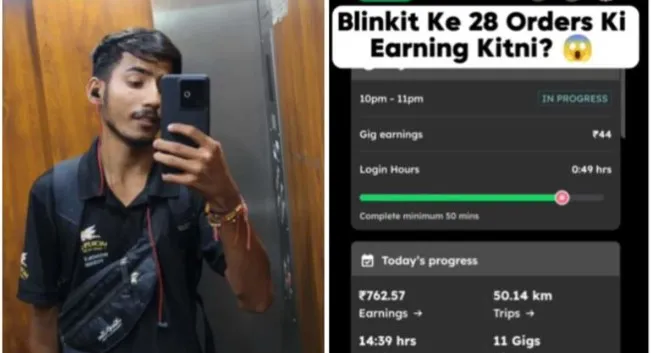
The video went viral this week, getting responses from people on all kinds of social media.
Thapliyal’s movie showed his total earnings for the day and how much he made from each delivery. His last order of the day only got him Rs 15.83, and he made about Rs 52 per hour. These numbers brought back talks about how quick‑commerce platforms pay their delivery partners and if the current model is workable for workers who are putting in long hours on the road.
Social Media- Opportunity or Exploitation?
The famous video and pictures made a lot of people talk on social media. A lot of people said the low pay was an example of taking advantage of employees who do not require to be paid much. People who posted on the post thought that companies in the job economy, like Blinkit, should make sure their workers are paid fairly, particularly as delivery employees have tight schedules.
Some people who supported the delivery worker said that customers should give their delivery partners more tips to help make up for the money they lose on days when not many orders are placed. Others attacked the business model as a whole, saying that the transport fees customers pay and the fees companies take do not always lead to fair pay for workers.
But some people on social media said that daily wages can change a lot. Thapliyal later shared more videos of himself showing days with higher earnings, including one where he claimed to have made Rs 1,1,202 after bringing 32 items in 11 hours. In those videos, he stressed that the amount of money someone makes depends on how many orders there are and what benefits are offered. He suggested that it is possible to make more money when there are lots of orders and delivery bonuses are provided.
The talk highlights e-commerce’s biggest problem
Customers want speedy delivery, while workers face uncertain income and tough conditions. Troubles with the freelance economy are shown in the content. Many people are still talking about labor rights and worker safety in India’s gig economy, so the current salary picture is popular.
Blinkit and other delivery services pay their workers based on how much work they do. This means that riders get paid for each order they bring instead of getting a set hourly rate or a fixed base pay. This means that riders are paid for each order they deliver rather than getting a set amount of money for each hour they work or a fixed minimum pay. They want to set base pay levels, make sure workers understand how to earn bonuses, and create better systems to help workers. The issue has also been compared to other problems in the gig sector, like stories of strikes and protests by delivery riders in different parts of the country who want better pay and working conditions. Thapliyal’s post getting viral, brought back public interest in how workers are treated and paid, which has led to questions about whether the fast growth of online delivery services is harming the people who make that speed possible.

A versatile writer mainly works on trending news, daily updates from politics, business, crime, current affairs and entertainment.









