Indian Railways has announced a countrywide increase in ticket prices to take effect on 26 December, a move that constitutes one of the most extensive fare changes in recent years. It is likely to bring about an extra 600 crore per year worth of revenue, allowing the national transporter to deal with the rising operational expenses and to do the infrastructure upgrades.
Increase in Fares to Cut across the Board
The updated fares will include passenger, express, mail, and superfast trains. According to officials, the percentage change will depend on each type of class and each type of distance, but the most significant effect will be on the middle and long-distance routes. There are no predictions of the suburban and local trains, which would lead to alterations in their fares.
The revision is done after reviewing the expenditure patterns in the two previous financial years. A factor identified as one of the drivers was cost, which included fuel and rolling stock maintenance as well as station modernisation and safety technology.
Railway Complaints of the Increasing Costs and Modernisation Requirements
Top officials mentioned that the Railways had not increased their fares in some years, even in the face of high inflation in terms of input costs. Significant electrification efforts, Vande Bharat developments, and station redevelopment have been a financial burden.
Internal estimates show that fuel costs alone have increased drastically over the last 18 months, and the costs of repairs, spare parts, and security requirements are adding to the rising expenditure.
It is believed that the increase in fares will result in a revenue surge that would cover the daily operations, deficit reduction, and allow the company to maintain continuous passenger services upgrades.
Passenger Response Mixed, Concerns with Affordability
The announcement has received mixed reactions among the passenger associations. Some were resigned to the fact that the services should be improved, but others were concerned that the growth might be most damaging to daily travellers and low-income long-distance commuters.
Railways were requested to provide a concurrent increase in punctuality, cleanliness, quality of catering, and comfort of seats by the representatives. There have also been calls for greater transparency in the use of the extra revenue.
Nevertheless, according to the officials, even after the adjustment, the fare structure is significantly lower compared to other major economies.
Mounting Seasonal Rush and Demand Surge
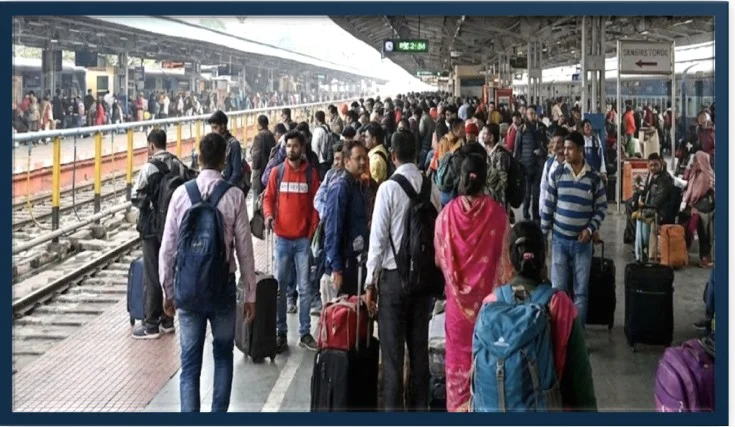
The fare adjustment is in time when travel is at its highest activity, and the end-of-year festivals and winter holidays are spurring traffic along the north east routes, especially.
The load factors at Northern Railway and East Central Railway areas are already increasing past 90%. As the fare change coincided with a period of high demand, some analysts expect bookings to decline slightly but stabilise as passengers adapt to the new structure.
Target Performance on Long-term Service
The Railways have stated that the fare increase should be considered along with the general service reforms. High-speed trains, modernised trains, increased AC capacity, digital ticketing effectiveness, and station modernisation will be the primary objectives by 2026.
The authorities also stated that safety would be prioritized, with funding for track renewal, signalling upgrades, and anti-collision devices.
With Railways at the beginning of a year of significant growth and restructuring, the fare rise is a significant financial rebalancing. Although the passengers might experience the strain at first, the transporter claims that investing currently will result in an increased level of reliability, comfort, and speed on the network over the coming years.

A versatile writer mainly works on trending news, daily updates from politics, business, crime, current affairs and entertainment.