With Bangladesh about to organize its national elections in February, the increasing anti-India sentiment and a sudden outburst of political and communal violence will result in an alarming worry about the stability of the democratic process.
Diplomatic sources and political analysts caution that the growing hostile environment may make it difficult to plan security, turnout, and the management of the election in the next few weeks.
Increasing Incidents of Anti-India Sentiment
The political environment in recent months has been formed by the protests of large scale, anti-India slogans, and an influx of false information about New Delhi. Opposition forces have linked India to political meddling in the sections, whereas pro-governmental circles have accused foreign propaganda of being involved in destabilizing the nation.
The perceived contribution of India towards assisting previous Awami League governments remains a divisive issue. As Prime Minister Sheikh Hasina again features in the election story, people have become greatly angry at foreign affairs, especially at the role of New Delhi.
The diplomats at Dhaka state that the temperature of the public mood has changed more even than in the other election periods and online strategies show that the anti-India rhetoric is spreading among the political circles and among young people in the city and the civil society.
Violence is Rising, and It Elicits Security Concern
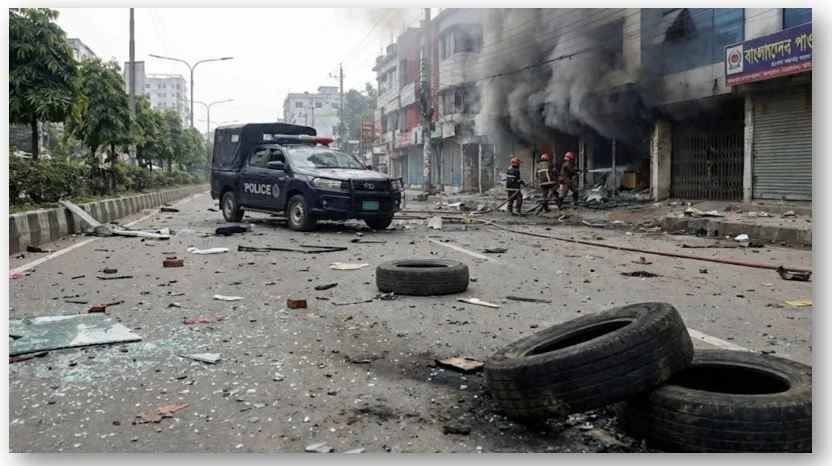
There have been several reports of arson, confrontations, vandalism, targeted murders and attacks on religious minorities by several districts, leading security agencies to re-issue alerts. A number of the ruling party and opposition leaders have urged people to calm down, but fights are still increasing.
According to the election officials, more volatility may make the voters unwilling to vote, particularly in rural areas where polling stations have been the target of violence in the past. The human rights organizations are alarmed that the conflict zone is spreading and its effects are felt around the borders.
Other than the political friction, communal grievances, economic hardship and unemployment are contributing towards the unrest. This mix has made it more uncertain than past election years, this is the opinion of the observers, and this makes one question the capacity of the government to keep the order.
Influence to India-Bangladesh Relations
This is being closely monitored by New Delhi, more so following India’s decision to temporarily shut its visa application centre in Dhaka on grounds of insecurity. Indian officials insisted that this was a precautionary measure, but the action immediately triggered a debate within the region about bilateral relations.
This is because with cross-border trade, security cooperation, and migration flows are closely interconnected; hence, any disturbance in the Bangladesh electoral environment might affect the eastern states of India, especially West Bengal, Assam, Tripura, and Meghalaya. According to analysts, New Delhi might adopt a low-profile stance over the next few weeks to avoid further fueling sentiment.
The Indian government has maintained official contact through diplomatic consultations. However, it would not make any comment on the Bangladesh local electoral process unless the interests of citizens of India are directly affected.
Will Violence Stall the February Polls?
Experts remain divided. There is an opinion that the electoral system in Bangladesh has endured such phases of unrest and that it will progress despite the opposition. Some caution that becoming even more anti-India, coupled with political polarisation, may drive the crisis into even more perilous waters.
A lot will be determined by how authorities handle the next few weeks, whether the violence will intensify or level off, whether political discourses will pick up again, and whether the security agencies will exercise self-control.
As of today, Bangladesh has its mind set on it. However, with all this tension on the deck and emotions running high, the February polls are turning out to be one of the most turbulent in recent times, and the issue of people directing their anger towards India is becoming one of the important factors in the current political scene.

A versatile writer mainly works on trending news, daily updates from politics, business, crime, current affairs and entertainment.