
Canberra is the center of global attention right now. Countries including France, Malaysia, Indonesia and New Zealand are tracking the eSafety Commission’s every step. And if Australia can make a billion-dollar company like Google or Meta accountable for a A$49.5 million fine, it is globally transformative power shift.
But if the investigation shows that these companies will have been able to point to technicalities and claim they are above the law, then what here is described as a “world-leading” ban could become a cautionary tale about how far sovereign law can go in a borderless online world.
What Happens Next?
The eSafety Commission is still collecting evidence and has until mid-2026 to make a final decision on penalties.
Fines: systemic breaches up to $49.5 million AUD
Compliance audits: Platforms might be required to open their “black box” algorithms to government inspectors.
The Reputational Damage: For companies facing condemnation in the US and EU as bad corporate citizens, a formal finding of failure to comply in Australia would be yet another huge dent in their efforts at rebranding themselves as “family friendly.”
Towards Digital Maturity
Australia’s investigation is not merely about age checks; it’s a fundamental reconsideration of how we must engage with the digital world. Unfortunately, social media has long acted like a utility — water or electricity — that children can independently self navigate. The government’s view: Instead of social media being like a park, it is more like a superhighway: It needs some sort of licensing, a certain level of maturity and strict enforcement of the rules.
The “Freeze” as a Reflection of Economic Anxiety
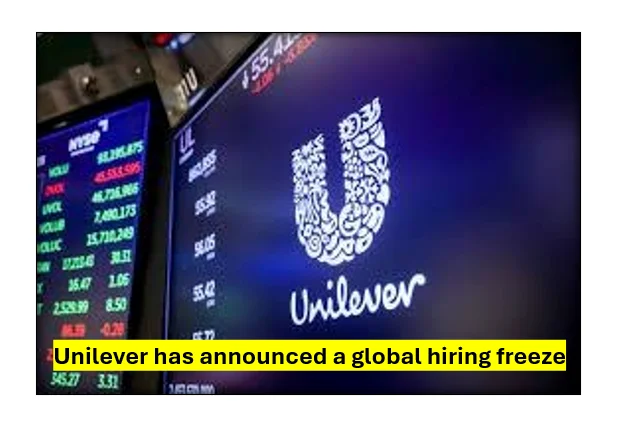
But the global hiring freeze is rarely an embargo merely on the conflict at hand. It is frequently a “canary in the coal mine” of wider economic anxiety. By referencing the West Asia crisis, Unilever is admitting this period of predictable global growth has been supplanted by an age of “perma-crisis.”
Read also: Global Supply Chains Under Siege: War Sends Shockwaves
The Strategic Pivot
Unilever had already been seeking to trim the fat under its new “Growth Action Plan.” The firm also recently announced plans to spin off its ice cream business (which includes Ben & Jerry’s and Magnum) and cuts of about 7,500 office-based jobs worldwide. This latest freeze, induced by the instability in the Middle East, only hastens a transformation already underway.
- Shielding the Core: The freeze is intended to safeguard the company’s margins as it becomes less able to predict raw materials costs.
- The Regional Slump The Regional Slump: Localized boycotts in markets such as Indonesia and the Middle East, combined with footfall declines tied to geopolitical sentiment, have only worsened what might be more troubling regional revenue streams for Unilever.
- Internal mobility: Rather than hire externally, the company is doubling down on “internal talent marketplaces,” filling critical vacancies internally rather than bringing in new blood.
The Human Toll: How It Plays Out in Boardrooms and Breakrooms
If the stock market treats “headcount optimization” with a clinical thumbs up, internally it’s a much different story; hiring freezes are profoundly dislocative to organizational culture. For Unilever’s 128,000 employees, the news is a mix of relief (that their own jobs are safe — for now) and “survivor’s guilt” and more work.
If a seat in a team is left vacant and cannot be filled, the work doesn’t disappear, it just gets redistributed. That kind of “AI burnout” and “brain fry” we see in tech is also mirrored in the FMCG sector as managers try to do more with less. The “human-in-the-loop” of these systems is getting worn thin, attempting to keep the speed of a global behemoth whilst the engine room has less hands than it needs.
Read also: LPG Shortage Could Impact Celebrity Restaurants Nationwide
A Culture of Caution
There is the intangible subtraction of “fresh energy.” Hiring freezes can frequently dampen the incoming Gen Z talent — the exact demographic Unilever should be trying to make sense of to keep its brands relevant. Without the relentless churn of fresh perspectives, there’s a danger that culture becomes myopic — more focused on weathering the storm than creating what comes next.
Surviving the 2026 “New Normal”
Unilever’s dilemma is an example of the “Butterfly Effect” of 21st-century business. A disruption in a shipping lane, or an unfortunate escalation of violence within a single corridor can completely alter the life trajectory of both a job seeker on the other side of the planet.
This isn’t simply a Unilever story; it’s a global trend. We are witnessing a change in that companies were hiring on “potential,” and they are now only hiring for “critical necessity.” Upended is the “luxury” of expansion, replaced by the “necessity” of resilience.

I am a versatile content writer from the MP region, covering politics, business, crime, current affairs, entertainment, video games, and sports with clear insights, engaging analysis, and timely, reader-focused updates.