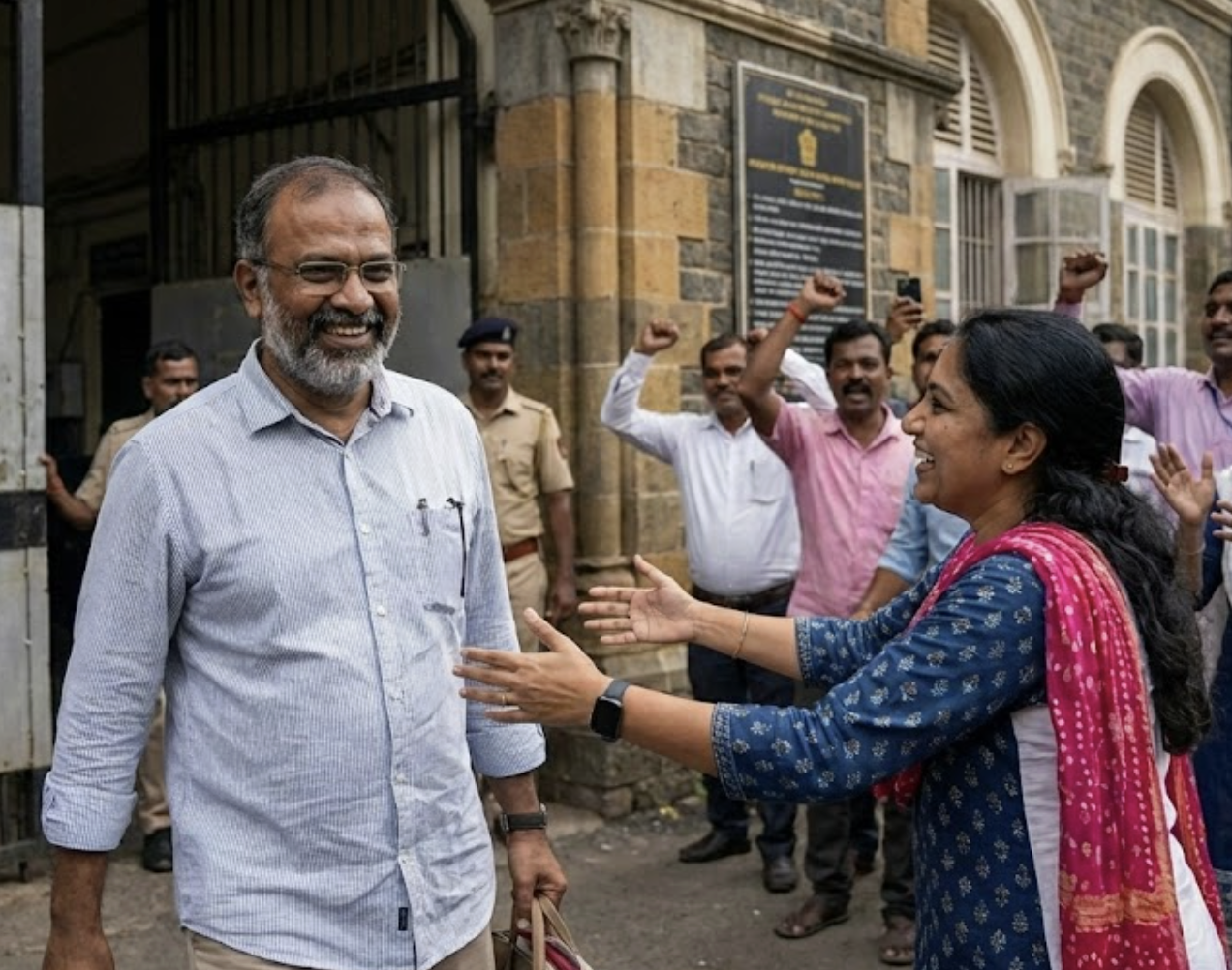

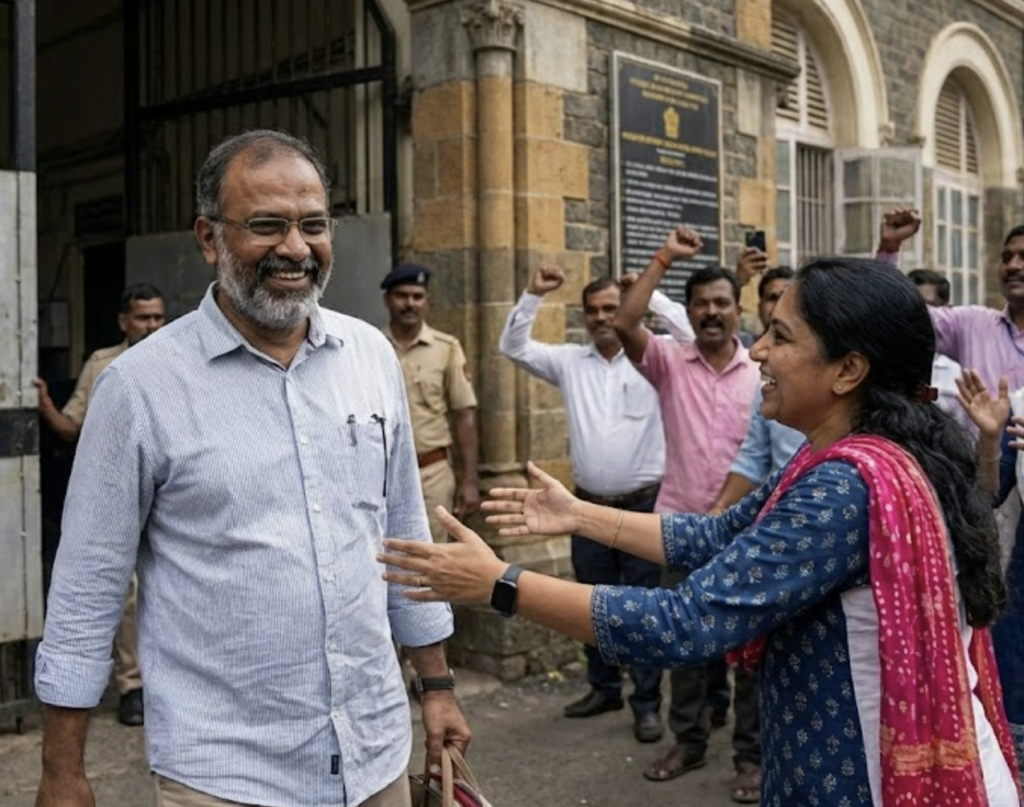
On Tuesday, the Bombay High Court bailed Hany Babu, an associate professor at Delhi University and among the accused in the Bhima Koregaon-Elgar Parishad case, and ended his five years of imprisonment. The ruling of the case was that the defendant had no justification to be detained any longer, at this point of the trial, which has been characterized by delays and slow progress.
In July 2020, Babu was arrested under the Unlawful Activities (Prevention) Act (UAPA) as allegedly belonging to banned Maoist groups and joining a conspiracy in a 2018 violence at Bhima Koregaon in Maharashtra. He has always rejected the accusations.
Court Says Prolonged Detention Cannot Replace Trial.
A court of first instance judiciary noted that the trial was very sluggish and there were many accused and witnesses, so the accused could not be held in custody without any serious action on the case. The bench has highlighted that indefinite pre-trial detention is not possible, particularly when the prosecution fails to show the manifestation of clear and imminent threats of the accused.
The court further observed that most of the co-accused held in the same positions had been bailed by the higher courts, and this was used to bolster the argument that judicial treatment should be treated equally.
Also read:
- Mamata Banerjee Annoyed With MLA Over Babri Mosque Proposal:
- Parliament approves Manipur GST Bill 2025
- Aadhaar Just Won’t Do Now
Strict Bail Conditions Imposed
While granting bail, the Bombay High Court imposed strict conditions:
- Babu must surrender his passport
- He must remain within the jurisdiction unless permitted by the court.
- He cannot contact witnesses or interfere with the investigation.
- He must report periodically to the police.
The court also cautioned that on breach of the terms and conditions, bail may be canceled immediately.
Lawyers of Babu said they were relieved and described the order as a long-awaited remedy, noting that the prosecution was based on disputed digital evidence, a point that other forensic experts have criticized during the last several years.
NIA Expected to Challenge the Order
The handling agency, the National Investigation Agency (NIA), is likely to appeal the bail order to the Supreme Court. The investigative agency has insisted that Babu belonged to a larger Maoist group and aided in activities that were detrimental to national security.
Officials suggested that it could request a stay of the order to avoid any harmful effect on the ongoing case. The NIA has already presented the argument that the freeing of the accused will interfere with the witness statements and the trial.

Case Marked by Delays, Health Concerns, and Rights Debates
The case of Hany Babu’s detention has been under heavy scrutiny by the government and the press; academicians, civil rights organizations, and even foreign observers have taken notice of the extended jail time without trial. The case about health, prison conditions, and misuse of the UAPA has been brought to attention by advocacy groups on numerous occasions.
Babu previously applied for medical bail temporarily after being infected with an eye infection in jail, which brought wider questions regarding access to medical care for undertrial prisoners.
Even the Bhima Koregaon case has been criticized, with claims of discrepancies in digital evidence and of malware interference found by independent cyber experts. But the NIA has continuously ruled out these allegations.
A Significant Moment in a Long and Complex Case
The bail order is a significant change in the case of Bhima Koregaon, which is among the most high-profile and contentious cases in recent years. Almost all the accused are intellectuals, activists, or academics, which causes much discussion on the dissent, national security, and the extension of the UAPA.
Although Tuesday’s order does not exonerate Babu of charges, it is a significant turning point in years of court stalling. His legal team remarks that the next step is to prepare for the trial; however, there is no certainty about the timeline, as there are still appeals and a large amount of evidence to be considered.
According to rights groups, the order highlights the role of the judiciary in safeguarding individual freedom, particularly when a case takes years under strict anti-terror legislation.

I craft sharp movie reviews and trend analysis, known for deep research, clear insights, and compelling storytelling across the latest in film and pop culture.









