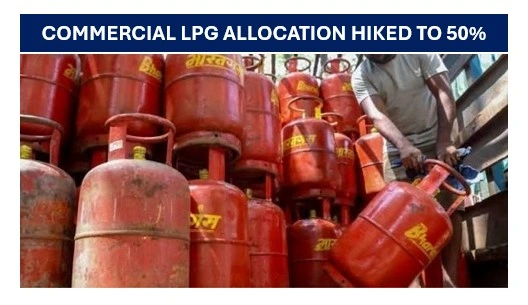

India will be changing the way it allocates commercial liquefied petroleum gas (LPG) for the upcoming fiscal year. The new allocation will give an added increase from 33.33% to 50% of the total consumption of LPG to the commercial sector.
As a result of increased business activity and demand for LPG in both the commercial and industrial sectors, the government has decided to increase from 33.33% to 50% allocation of LPG to the commercial sector. The Government of India intends to provide stability in overall supply so that businesses that use LPG daily will have consistent means of accessing it.
This increase in allocation should provide relief to those sectors that rely on consistently available supplies of LPG, such as the hospitality, food service, and manufacturing industries. Restaurant owners and catering businesses have been dealing with sporadic shortages of LPG over the past several months, so the increased allocation should enable those businesses to stabilize both supply and the cost of LPG.
Industry representatives have lauded the government’s decision to increase the commercial LPG allocation due to the increase in operating expenses that many companies have experienced due to ongoing supply issues. Thus, the increase in the commercial LPG allocation will help companies control operating expenses while providing exceptional levels of service to their customers.
Balancing Domestic and Commercial Needs
Authorities have reinforced their commitment to ensuring that domestic LPG consumers are provided preferential treatment by boosting commercial LPG allocations. The supply of household cooking gas is still very sensitive and when distributing the total volume of LPG allocated to the market, the government will ensure that residential consumers are not negatively affected by this process.
There are ongoing challenges to find the right balance between domestic and commercial LPG demand, according to energy analysts. Increasing the amount of LPG allocated to commercial users while ensuring that there is sufficient household LPG supply requires thorough planning, especially in areas with high consumption levels.
Potential Impact on Prices and Supply Chain
An increase in the allocation of household and commercial LPG could also have an impact on how LPG pricing might be affected. For example: increased commercial supply could moderate price fluctuations in regions where demand is concentrated, especially cities. However, analysts point out that the price of global oil and importation costs are still the major determining factors for final pricing.
Distributors and suppliers will be updating their logistics to accommodate these revised allocations, including changes in delivery schedules and inventory management, to allow for a smoother transition in distribution of LPG across the various sectors.
Read also: India’s LPG Production Increases by 25% Following Government
Economic Context Behind the Decision
The government’s actions support broader goals related to enhancing economic activity as well as reducing potential operational burdens on businesses due to the current state of recovery and growth in different industries which have led to rising levels of energy consumption causing additional pressure to be placed on the current supply chain infrastructure to accommodate these increases.
An increase in supplies of LPG will help facilitate commercial activities by sending a clear message that the government supports enterprise development while concurrently ensuring that access to energy remains constant. It also represents a component of a larger strategy on fuel security given the increased volatility of global energy markets.
Read more: LPG Supply Stable Across India as Government Cracks Down on Hoarding
Looking Forward
There will be a direct link between how effective this initiative proves to be in terms of implementation and how readily supply chain providers can adjust their operations for those types of changes in an efficient or timely manner (if at all). All parties involved with this new initiative will be watching closely to see if the additional allocation translates into actual results such as maintaining stable pricing and having a steady supply of fuel available.
If successful, the government will have established a precedent to continue changing fuel allocation policy based upon evolving economic conditions and applicable demand across multiple sectors.

I am a versatile content writer from the MP region, covering politics, business, crime, current affairs, entertainment, video games, and sports with clear insights, engaging analysis, and timely, reader-focused updates.