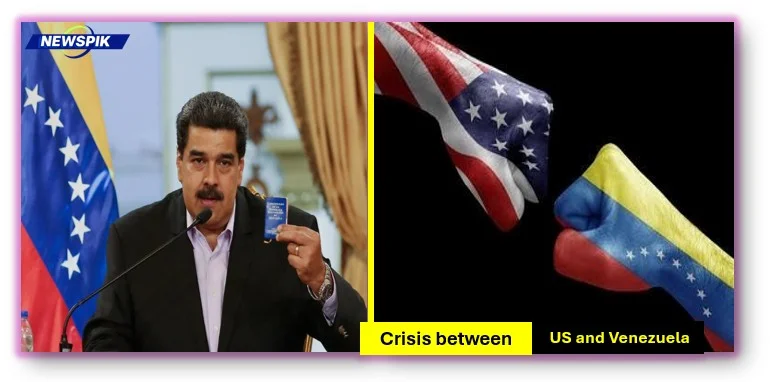

The tensions between the United States and Venezuela have continued to escalate in recent weeks, leading to the intervention of the Spanish government as a mediator in a bid to avert further diplomatic and economic repercussions. The current Venezuelan crisis, which has its roots in the longstanding political differences between the countries, has once again seen the United States and Venezuela on opposite sides, while the Spanish are increasingly emerging as a link between the two.
The core issue surrounding this crisis is allegations made by the US government against Venezuela for its lack of commitment to democratic and human rights during former talks. US officials have indicated a harder line in negotiations with hints directed at reintroducing and furthering sanctions in connection with oil and finance in Venezuela. This move aims to encourage President Maduro’s administration to adopt political changes and free and fair election policies; however, Caracas defends its claim with assertions stating that sanctions are aggravating humanitarian needs and violating sovereignty.
Venezuela’s authorities have dealt with the situation quite aggressively, accusing the U.S. authorities of economic war and interfering in its politics. Venezuela’s official media and high-ranking government representatives have also presented Washington’s stance as a desire to control Venezuela’s natural resources and its domestic politics. This has caused international observers in the region to be concerned that economic instability might ensue in a country which already faces challenges in its infrastructure and high inflation rates, among other factors.
In light of these developments, Spain has proven to be a significant mediator. Capitalizing on its deep-rooted relations with Latin America, as well as its membership within the European Union, Spain has made efforts to reinitiate communication channels that have reached a dead end elsewhere. Spanish envoys have allegedly conducted private consultations with representatives of the U.S. government as well as Venezuela, promoting confidence-building measures such as step-by-step sanctions relief as a basis for political assurances.
Influence of Spain in the war
Spain’s presence in Venezuela is no accident. It has strong economic, cultural, and political ties with the country, including a large Spaniard expatriate community. Spain also has strong relations with the US government and exerts strong influence over the European Union’s policy towards Latin America. Simultaneously, Spain has close strategic ties with Washington and is also an important force in influencing the European Union’s policy on Latin America. This allows Spain to become a credible, if somewhat nervous, broker.
The European officials are generally supportive of the mediation role played by Spain, which finds dialogue preferable to isolation. Inside the European Union, countries are concerned about the potential impact of the U.S. and Venezuela potentially finding themselves in a showdown once again. It is expected to affect migration rates to countries close to the region and Europe. Venezuela is home to the second-largest proven oil reserves in the world.
For America, the Spanish role provides a testing of diplomatic alternatives without showing leniency towards its ideals. An American official made it clear that while a compromise will include certain actions by Caracas, like admitting international observers, liberating political prisoners, and electoral authorities’ reform, sanctions will always continue to be a means rather than a goal.
As far as the Venezuelan Capital, Caracas, is concerned, the response to Spain’s mediation effort has been cautiously positive. For Venezuela, dialogue is welcome in principle, but it must respect the country’s political order and not come under the pressure of foreign influence. For the opposition in Venezuela, there are divided sentiments on the mediation effort, which could be a means to relink negotiations, but could also legitimize the status quo.
Bottom line:
As the talks continue behind closed doors, the outcome hangs in the balance. The success of Spain will depend on its ability to walk the tight line between the dual demands and the ability to be taken seriously by both. The one thing that seems clear at present is that this crisis has reaffirmed the limits of unilateral pressure and that diplomacy has its relevance. Spain may help to establish a transition from conflict to compromise that would impact the U.S. and Venezuela relationship as well as conflict resolution in general.

A versatile writer mainly works on trending news, daily updates from politics, business, crime, current affairs and entertainment.