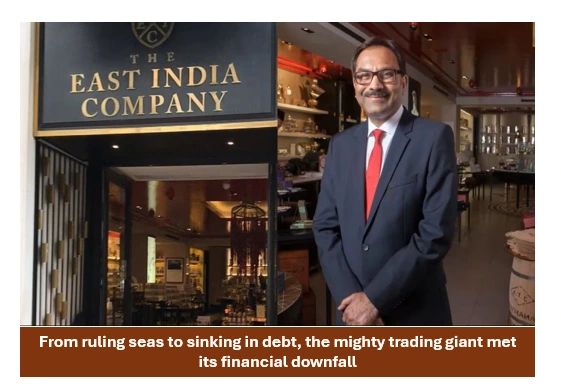

The East India Company, which once had a monopoly on trade between Europe and Asia for more than two centuries, is now declaring itself bankrupt, bringing to an end the era of British trade dominance.
History of the company
Founded in 1600 by Queen Elizabeth I, it was originally a trading company but eventually evolved into a military and political power. When it was at its height, the East India Company controlled large areas of land in the Indian subcontinent and had an army larger than many European nations combined.
Beginning as a trading company for spices, silk, tea, and textiles, the East India Company continued expanding after its victory at the Battle of Plassey (1757) which allowed it to gain control of all revenues from Bengal and also made it into a territorial company.
Ultimately, the rapid growth of the East India Company became an enormous liability, placing numerous administrative burdens on the company, increasing military expenses, exposing a high level of corruption, and diminishing the company’s ability to compete on a global scale—all of which had negative ramifications on the company’s financial performance. The company’s continued involvement in wars and elsewhere resulted in the company being overextended to the point of being unable to sustain itself financially due to its level of debts.
In addition to the many global events affecting the company’s profitability, there were also large fluctuations in the global marketplace and increased competition from other European nations; accordingly, the level of trust and confidence in the company’s investors eroded considerably, resulting in a significant decline in the value of company stocks.
Prior to 1873, the government of Great Britain intervened due to the company’s financial difficulties by enacting regulation acts (legislative measures) that established standards for the regulation of public companies and companies that represented great potential for abuse as the East India Company was exhibiting in India. Despite the passage of legislation to address issues associated with the company, the company’s high levels of debt and significant operational inefficiencies persisted.
Observers have noted that the dual nature of the company (as both a corporation and a sovereign power) was difficult to maintain, as the company had a responsibility to shareholders that was in direct conflict with the burden of governing millions of subjects located abroad.
As the company continued to lack sufficient liquidity and new investment, its eventual bankruptcy became too inevitable to ignore.
The Economic and Political Tremors from this Bankruptcy
The Impact of British Bankruptcies will result in wide-ranging economic consequences. In the UK, thousands of investors and employees will lose large amounts of money. Insurance markets and trading partners whose businesses rely on the company’s shipping activities may be disrupted as well.
In India, uncertainty will be created around governance and operations in countries governed by the British East India Company. Analysts suggest that the British Crown will take over these countries directly, in order to stabilize the region and protect its imperial interests.
The East India Company – an imperial institution – has a mixed legacy, a sharply contrasting history. There are important questions to ask about corporate accountability and unchecked expansion as a consequence of the collapse. Economists contend that this case represents both the dangers of a merger between private profit and a strong governmental presence.
Read also: Bankrupt Pakistan sells its national airline under IMF pressure
The End of an Era
The East India Company was Britain’s pre-eminent commercial entity for over 250 years connecting the East and the West via trade; it changed the nature of global trade via its policy changes; it affected how people lived their lives in South Asia and around the world.
The bankruptcy of the East India Company is one of the most consequential corporate collapses in contemporary history – an example of the consequences of over-promotion, excessive borrowing, and the inherent limitations of doing business within the confines of a larger political/economic framework/empire.

A versatile writer mainly works on trending news, daily updates from politics, business, crime, current affairs and entertainment.