
The center says LPG supply is steady even though there is pressure. Increases measures to protect fuel security as problems in the Strait of Hormuz and unrest in West Asia affect trade around the world.
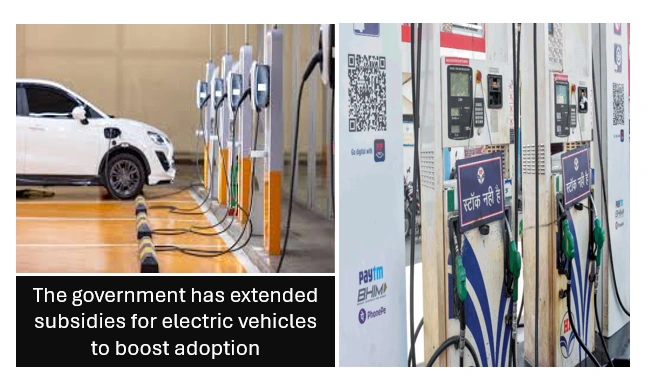
The government has extended incentives on electric two-wheelers until July of this year and on electric three-wheelers until March 2028. The goal is to encourage more people to buy and make these vehicles in India, where there is a shortage of energy due to the war in West Asia.
Hanif Qureshi briefing on the conflict in West Asia
“The end date for subsidies on electric three-wheelers has been pushed back two years, to March 2028. The end date for subsidies on electric two-wheelers has also been pushed back, to July 2026,” Hanif Qureshi, Additional Secretary (Ministry of Heavy Industries), told reporters Monday at an inter-ministerial.
He said there are enough funds to meet the needs of both two-wheelers and three-wheelers who need subsidies
Because of problems in the supply chain, the government has also widened the deadlines for making trucks and buses under the Phased Manufacturing Program (PMP) by six months. The new due date is September 1, 2026.
The staged production scheme is used to figure out how much to subsidise different types of electric cars. It supports the making of cars in the country. “Because of problems in the supply chain caused by the crisis in West Asia, PMP rules for trucks and buses have been loosened for six months now,” Qureshi said.
Qureshi said that the government is in touch with industry groups and the energy office about getting LPG to companies that make car parts.
“No serious shortage of LPG was reported by companies that make parts for cars.” In fact, March numbers for car production show a 15–16 percent rise, Qureshi said. He also said that businesses have been told to switch to better fuels like electric heaters and natural gas.
Mukesh Mangal and Sujata Sharma Diversifies India’s Energy Sources
Mukesh Mangal, Additional Secretary, Ministry of Ports, Shipping and Waterways, talked about the effects of US President Donald Trump’s plan to close the Strait of Hormuz. He said, “We are working with the Ministry of External Affairs to get our ships back.” It will come back as soon as it is safe for our ships to leave the Strait of Hormuz.
The Indian-flagged ship Jag Vikram crossed the Strait of Hormuz on Saturday. It was carrying 20,400 metric tonnes of LPG and 24 sailors. It should get to the port of Kandla in Gujarat on April 14.
Since the war started, this is the ninth ship with an Indian flag that has crossed the Strait of Hormuz and arrived in India. On the western side of Hormuz, fifteen ships with Indian flags are still there. These include LNG and LPG carriers, crude oil tanks, and container ships.
After peace talks between the US and Iran, which were facilitated by Pakistan, failed, Brent oil prices went over $100 per barrel on Monday. Trump also announced that the US would close the Strait of Hormuz.
Later, though, the US Central Command said it would “not impede” ships going to and from places outside of Iran through the Strait of Hormuz.
In terms of energy, Sujata Sharma, Joint Secretary (Ministry of Petroleum and Natural Gas), said that India continues to get its oil from a number of different places.
India now gets crude oil from more than 40 countries, and the amount of LNG it gets stays the same. She said that industrial LPG supply has reached 70% because LPG ships have been booked ahead of time.
Sharma said, “But there is pressure on LPG, so people have been asked over and over to switch to other energy sources like PNG and electric cook stoves.”
Sharma said that even though Nayara Energy will be closed for repairs starting April 9, production of LPG in India will stay steady at about 45,000 metric tonnes per day.
The amount of commercial LPG available is still 70% of what it was before the crisis. Since March 14, 18,900 tonnes have been sold. In addition, 21 states are now getting an extra 10% of industrial LPG, which was a condition of getting PNG connected.
To make sure there is enough fuel in the country, the government also raised export taxes on diesel on Saturday from Rs 21.5 per litre to Rs 55.5 per litre and on aircraft turbine fuel from Rs 29.5 per litre to Rs 42 per litre.
Read also: As Trump’s US Embargo Begins, Iran Warns of Retaliation Across the Region
The goal is to reduce exports and shift fuel sources to meet domestic demand
When asked about foreign contact, Randhir Jaiswal, a spokesman for the Ministry of External Affairs, said, “As directed by the Prime Minister, we are stepping up our efforts to reach out to Gulf countries.”
He also said that on April 11th and 12th, External Affairs Minister S. Jaishankar went to the UAE and met the country’s leaders. There, he conveyed the prime minister’s wishes and thanked them for looking out for the well-being of the Indian community.

I am a versatile content writer from the MP region, covering politics, business, crime, current affairs, entertainment, video games, and sports with clear insights, engaging analysis, and timely, reader-focused updates.









