India and New Zealand declared that a historic Free Trade Agreement (FTA) was over, and this was a major move towards enhancing bilateral economic relations between the two nations. The agreement, which was reached months after the negotiations, is what officials are terming as one of the fastest and most inclusive trade deals ever done by India with a developed economy.
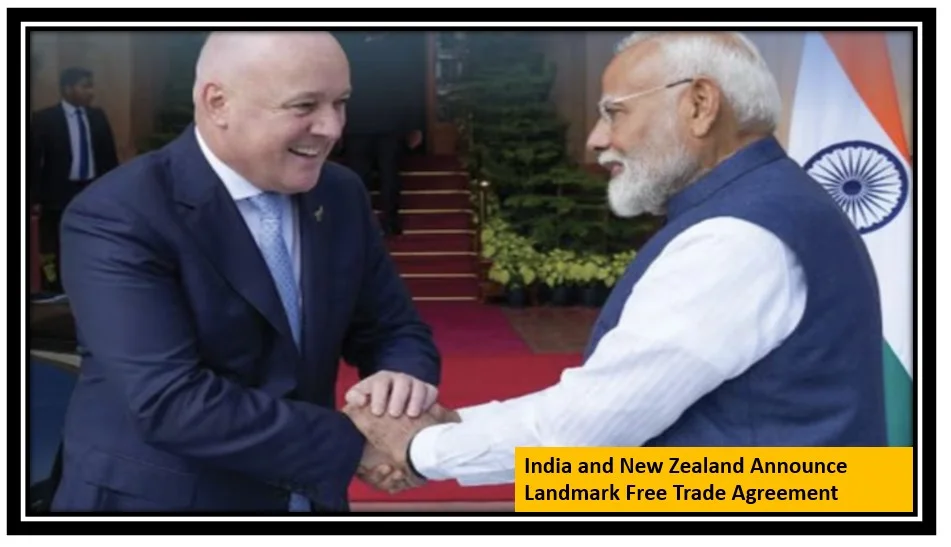
The announcement came after a phone call between the Prime Ministers, Narendra Modi and Christopher Luxon, in which both leaders celebrated the end of the negotiation process and emphasized that the agreement will open new opportunities for businesses, professionals, farmers, and investors on both sides.
At the Center of Tariff Cuts and Market Access
The Ministry of Commerce and Industry of India stated that the FTA will allow India to export to New Zealand and gain access to the market at zero tariffs, and India has agreed to liberalize tariffs on approximately 95 percent of bilateral trade. This will see the trade flows greatly increase, and the cost of the exporters and importers in both countries will be very low.
New Zealand Prime Minister Christopher Luxon indicated that the deal will provide Kiwi companies with access to the huge Indian consumer market. He said India is among the rapidly developing economies in the globe, and the deal has provided an opportunity to the 1.4 billion consumers.
Comprehensive Goods, Service and Investment
The FTA is an extensive agreement that encompasses trade in goods and services, investment, customs, endorsement collaboration, as well as the movement of professionals. New Zealand has provided entry points in some of the most important areas of the market, such as information technology, professional services, tourism, financial services, and education in the sphere of services.
Mobility is a significant aspect of the agreement, as it is intended to create opportunities for Indian students and professionals. These involve work options after the study, a temporary job visa, and easier recognition of qualifications in some specific areas.
Investment-Agriculture Cooperation Boost
New Zealand has also expressed its desire to make investments totaling up to 20 billion dollars in India within the next 15 years, officials said. The investments will be centered on priority domains including infrastructure, renewable energy, food processing and technologically advanced manufacturing.
FTA also involves cooperation systems in agriculture, with schemes aimed at promoting productivity and developing centres of excellence in other products such as apples, kiwifruit, and honey. The government made it clear that some sensitive areas have been excluded from tariff obligations to protect domestic interests.
India Calls It a People-Centric Trade Pact
Commerce Minister Piyush Goyal told us that the arrangement is meant to open up opportunities across various sectors of the economy. According to him, this Free Trade Agreement is about people-centered trade and the creation of opportunities to farmers, entrepreneurs, students, and professionals.
Commerce Secretary Rajesh Agrawal termed the agreement as a new generation trade arrangement that would strike a balance between the cut-down tariffs and long-term objectives of the agreement, like investments, talent mobility, and agricultural cooperation.
Next Steps and Strategic Importance
India-New Zealand FTA negotiations began in March 2025 and concluded after five rounds, held in person and online. The rate at which negotiations are taking place points to the new initiative India has undertaken to increase the trading relationship with its reliable and trusted partners in the world.
The two leaders concurred that they would be actively involved in the implementation of the agreement and also seek further cooperation in defence, education, tourism, and people-to-people interaction. On its part, the FTA is likely to radically transform bilateral trade relations and strengthen India as a major economic power in the Indo-Pacific region upon ratification.

A versatile writer mainly works on trending news, daily updates from politics, business, crime, current affairs and entertainment.