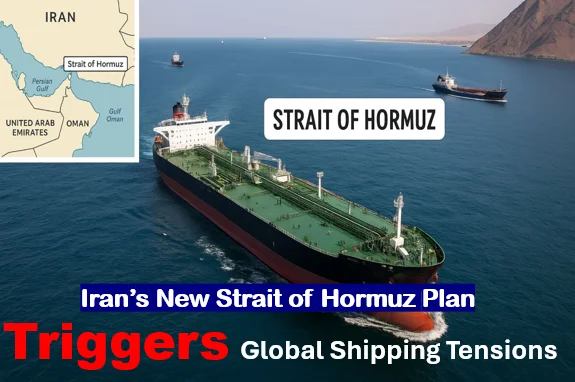

The latest Iranian plan to create a managed shipping route in the Strait of Hormuz has raised new concerns in the energy and trade markets worldwide. Reports say that the plan includes special travel arrangements for ships that follow Iranian rules. Ships that don’t follow the rules could have to pay more, wait longer, or be looked at more closely.
The Strait of Hormuz is still one of the world’s busiest sea routes. Every day, it carries a huge amount of oil and gas exports. Any changes to how ships move through the narrow strait have an immediate effect on fuel prices, the cost of goods, and trade between countries.
Iran’s plan comes at a time when tensions are growing in the Gulf, where military action and worries about safety have already messed up shipping lines. The new system could change how foreign cargo ships work in the corridor, which is strategically important.
Iran warns foreign ships that they will be closely watched
Reports say the Iranian government is planning a method to make it easier for ships to pass through the strait, provided they follow Tehran’s rules. When ships don’t follow the suggested rules, they might have to pay extra fees for travel or be watched more closely.
Reports say that Iran is also working with a brand new marine authority whose job it is to keep an eye on tracking and control the movement of ships in the area. It looks like the plan’s goal is to give Tehran more control over one of the world’s biggest energy lines.
Officials in Iran have long said that the country has a right to control traffic in the Strait of Hormuz because of its location and security worries in the area. This new move shows that Tehran is trying harder to gain greater control over marine operations at a time of high global uncertainty.
But a number of international observers and marine experts have questioned whether it is possible to charge ships fees to transit foreign waters. More and more people are worried that the plan could violate long standing global rules on freedom of travel.
Read also: Reports say Iran is proposing a temporary deal under a new Hormuz plan
New Pressures on the World’s Shipping Industry
Shipping companies already have a hard time with the higher operating risks in the Gulf. Global shipping companies are under more financial pressure than ever because of longer alternative routes, higher insurance rates, and higher security costs.
A lot of cargo ships and oil trucks are said to have started changing their tracks to escape problems in the Strait of Hormuz. These detours are making journey times longer and using more fuel, which could finally have an effect on prices for everyone around the world.
Uncertainty has also caused changes in the energy and freight markets. Analysts say that transport costs could go up a lot in many businesses if Iran officially starts toll systems or stricter shipping controls.
Asian countries that import energy are especially at risk because many of them depend on oil and gas sources going through the strait being continuous. Any big problem could have an impact on networks for fuel delivery, shipping, and making things.
Shipping experts think that if things keep getting worse in the region, companies may soon have to change their trade lines and transportation plans.
Military activity makes things less stable in the region
The suggested cargo system comes at a time when armed concerns are rising between Iran, Western countries, and their friends in the area. In the past few months, naval actions to keep an eye on the Gulf have become more intense. Several events involving commercial ships have caused foreign shipping companies to become very worried.
Reports say that Iran has asked foreign ships going through the strait to work together more, especially when there is a lot of unrest in the area. During past conflicts in the area, ships have been seized, navigation warnings have been issued, and sea traffic has been temporarily halted.
Read also: Trump’s feuds with friends may outlive the Iran conflict
Why the world needs to care about the Strait of Hormuz
People think that the Strait of Hormuz is one of the world’s most strategically important waterways. Every day, a big part of the world’s oil exports go through the tight tunnel. This makes it an important part of the global energy supply chain.
A lot of Gulf countries rely on the strait to send oil and natural gas to markets around the world. Any trouble in the area can quickly affect stock markets, supply lines, and fuel prices around the world.
The most recent events have brought back worries about the Middle East’s long term unrest and how it might affect trade between countries. Experts say that even small limits or higher shipping costs could change the way things are shipped around the world for years to come.
The international shipping industry is still on high alert for now, as countries and business owners keep a close eye on what Iran does next in the Strait of Hormuz.

A versatile writer mainly works on trending news, daily updates from politics, business, crime, current affairs and entertainment.