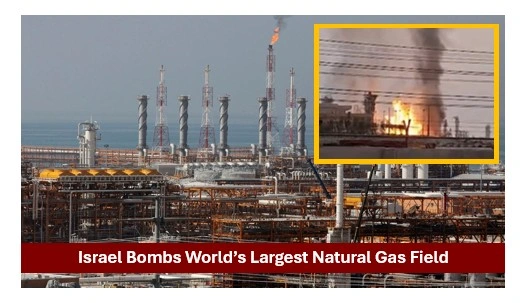

Following an Israeli bombing of Iran’s South Pars Gas Field (the world’s largest natural gas reserve) on 18 March 2026, tensions between these two countries have escalated and expanded into the energy sector, following a sustained and long-term state of conflict.
Israeli airstrikes targeted gas processing infrastructure and petrochemical facilities near the southern Iranian port city of Asaluyeh, which led to the destruction of property and resulted in at least three major fires in various parts of the complex. As a result, crews from local fire departments rushed to the sites to put out the fires.
In addition to this being the first time in history that there has been Israeli direct targeting of a natural gas field as a component part of the evolving conflict between Israel and Iran, there are fears that this escalation may create greater conflict throughout the region as well.
Significance of South Pars to Iran
The significance of this energy field to the Iranian regime is immense; it provides approximately 70% of Iran’s domestic supply of natural gas and generates substantial income for Iran through energy exports. In addition, this giant complex includes dozens of production phases and contains pipeline tie-ins to domestic and international markets. Disruption within the east field could result in immediate ramifications for Iran’s economy and regional energy.
Damage & Immediate Effects
Reports have stated there has been damage to a few processing facilities and pipelines as a result of this attack. Iranian authorities have stated that several refineries have stopped operations until further notice, and some regions of the field have been shut down to prevent fire from expanding.
There were initially no reports of casualties, but the incident has caused a partial stop in production. The production issue has affected all regional energy flows, particularly gas delivered from Iran to Iraq, that uses Iran’s gas for power generation.
The energy markets reacted to the news immediately. Oil prices rose quickly, reaching $108–$110 per barrel due to the worry of further supply interruptions in the Gulf Region.
Iran Threatens Retaliation
Iran responded forcefully to this act, saying that energy infrastructures located in the Gulf could also be affected by this act of military aggression. Iranian officials stated that targets might include infrastructure in Saudi Arabia, United Arab Emirates and Qatar.
The global energy market continues to be in disarray with this alert, as this is a major source of crude oil or natural gas from the world’s most significant oil refineries and gas processing plants, while experts believe that retaliation may lead to an “energy war” by affecting the energy supply chain and the network supporting it.
Also read: Iran hits the biggest oil refinery complex in UAE
Global Response
The attack has caused various nations & observers from the world over to voice their disapproval of the incident. Qatar has condemned the attack, describing it as “a dangerous and irresponsible escalation”. Many members of the international community have voiced support for their allies in the Persian Gulf, whereas Russia has warned that targeting energy infrastructure close to highly sensitive areas, such as sites populated with Nuclear facilities, will add to instability in the region. According to some reports, The US was notified prior to this operation, and Israeli Military Authorities were said to be involved in its planning prior to this operation.
The increasing involvement of countries outside of the region has caused fears that this conflict could lead to a broader regional conflict.
Read more: Huge fire rages at Tehran oil depot after Israeli attack
Global Energy Security at Risk
According to experts, this attack could have a dramatic impact on global energy supply. The Persian Gulf has long been home to large reserves of oil and gas, and any disruption in its production can have a substantial effect on the world market.
Given the current level of tension in the Middle East, it is highly significant that the world’s largest oil producer has been attacked in what appears to be an attempt to initiate / escalate economic warfare. If there are additional attacks against oil or gas production facilities, the entire global economy will be compromised by supply disruptions and increased fuel costs.
The attack on the South Pars gas fields demonstrates how fast the conflict between Israel and Iran is moving from traditional military targets (i.e. nations within the region) to include the global energy supply chains. As diplomatic solutions continue to fail, many analysts are beginning to see the need for countries around the world to reconsider their characteristics and energy dependency.

I am a versatile content writer from the MP region, covering politics, business, crime, current affairs, entertainment, video games, and sports with clear insights, engaging analysis, and timely, reader-focused updates.