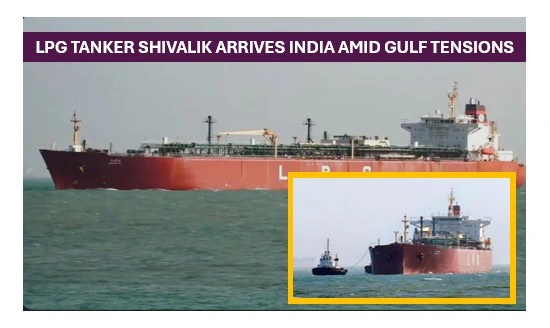

India has received a key shipment of liquefied petroleum gas (LPG) on the tanker Shivalik, which safely navigated its way from the Strait of Hormuz to India. The Indian-registered LPG carrier, carrying 1000s of tonnes of cooking gas, represents an important step for India’s security of energy and for its domestic supply chain for LPG and is significant considering the ongoing geopolitical tensions impacting all energy routes throughout West Asia.
By being allowed to sail through the strategically important Strait of Hormuz with two other Indian ships, the Shivalik was able to make a vital contribution towards ensuring that critical LPG imports continue to flow into homes across India.
Safe passage through Strait of Hormuz
The Shivalik was able to navigate through the Strait of Hormuz, which is one of the most critical maritime chokepoints globally, as it relates to the trade of oil and gas. Also, approximately 20% of the world’s petroleum supply flows through the narrow waterway that connects the Persian Gulf with global consumer markets. Due to ongoing tensions in the region, there have been numerous disruptions in the ability for ships to safely transit through this critical waterway, causing uncertainty for the global energy community.
While this is quite difficult, there have been multiple reports indicating that one Indian-flagged oil tanker has completed the passage as planned through this area and is now continuing its journey to India. There were no incidents reported during transit and many ships were still stranded at the time due to increased security.
This also has diplomatic implications for India. The Government of India worked at a high level to coordinate with the Governing Body of Iran to allow Indian vessels to travel safely through this waterway during a difficult time of conflict in this area.
Read more: Ship travelling to India attacked in Strait of Hormuz
Larger LPG Supply Deliveries to India
There are other Indian-flagged LPG (Liquefied Petroleum Gas) carriers (tanks for transporting LPG) headed to India. Another Indian ship, the Nanda Devi, is expected to arrive shortly with a similar load of LPG. These two vessels are part of a coordinated effort to assist India with obtaining more LPG for its citizens.
India relies on the Middle East and other nations to supply 90% of its LPG needs, and any disruption to the Strait of Hormuz will have an immediate and negative impact on energy access and pricing for Indian citizens.
By providing LPG supplies to Indian citizens, the two Indian-flagged oil tanker vessels will help to lessen consumer fears regarding future supply shortages and support the Government of India in maintaining an adequate supply of LPG for its households.
Importance for India’s Energy Security
Energy analysts believe that the arrival of Shivalik demonstrates the fragility of global supply chains in light of geopolitical instability. Currently, many countries (e.g., India) are maintaining close monitoring of their shipping routes due to existing tensions in West Asia, as well as seeking out diplomatic channels to facilitate their imports uninterrupted.
Read more: LPG Supply Stable Across India as Government Cracks Down on Hoarding
Strategic LPG Shipment Reaches Indian Shores
India consumes many tonnes of LPG daily, mostly for cooking purposes using government welfare programs and also by having commercially available gas cylinders, which restaurants and businesses utilize for their operations. Therefore, ensuring ongoing stability in the supply of LPG to consumers is a high priority for policymakers.
By successfully completing its maiden voyage, Shivalik exemplifies the increasingly important role of Indian-flagged vessels transporting strategic energy commodities. To limit reliance on international carriers, as well as to increase their management of energy logistics, Indian state-owned shipping companies have been expanding their fleets.
Indian government officials have been reviewing their monitoring of energy shipments within the Gulf region. During an inter-ministerial briefing recently, officials reviewed the status of LPG shipments, shipping routes with regards to safety of Indian-flagged vessels operating in West Asia.
India’s gas and energy authority has reiterated the focus on ensuring security of supply of Liquefied Petroleum Gas (LPG) in domestic markets as a high priority, especially when international uncertainties can occur.
Read also: Oil Tanker Carrying 15 Indians Struck Off Oman Coast, Crew Evacuated
Future Outlook
At this point, as the Shivalik has safely reached India and another tanker will follow shortly thereafter, immediate stocks of LPG will not be under the same level of stress. However, events occurring in the Gulf region continue to evolve and therefore require ongoing scrutiny regarding energy transportation through the Strait of Hormuz.
This incident illustrates how geopolitical shifts well beyond the geographic limits of India can directly affect India’s energy security and daily household requirements. As the situation in the Middle East continues to be characterized by unresolved tensions, the need for energy planners in India to establish safe sea transport routes as well as alternative supply locations will continue to create major challenges.

I am a versatile content writer from the MP region, covering politics, business, crime, current affairs, entertainment, video games, and sports with clear insights, engaging analysis, and timely, reader-focused updates.