A lot of people are interested in and talking about the social media post of a man who found old Unit Trust of India (UTI) share papers from the 1990s. The person said that he found actual papers about UTIs that were worth about Rs 20,000 when they were created many years ago. The finding quickly caught the attention of people on the internet, many of whom started talking about how much the investment would be worth today.
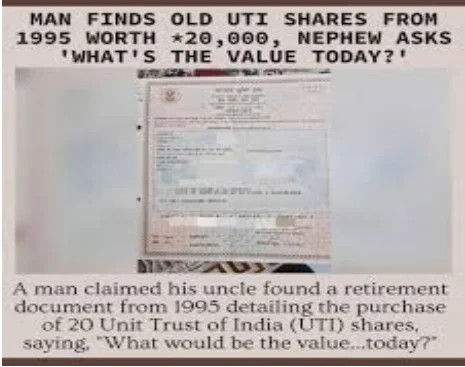
The post struck a chord with a lot of people who remembered how families bought government-backed financial products like UTI plans in the 1990s. Back then, people thought these kinds of purchases would take a long time to pay off.
Surprise Finding: Reactions from Netizens
As the post became more popular, people on social media filled the comments with feelings from memories to wonder about money. A lot of people on the internet said that purchases from the 1990s, especially in well-known companies like UTI, could have grown a lot over time because of compounding and returned profits.
A number of users said that the current value of the shares would be much higher if they were still operating and properly kept. Some even said that the investment could now be worth several lakhs, based on the exact plan, returns, and changes to the investment over time.
The talk made people want to look at old papers they have at home, and users told each other stories about bonds, shares, and certificates that have been sitting around for years, not being used.
A look at UTI Shares and how they grow
In the 1990s, people valued the Unit Trust of India more than any other place to put their money. A lot of middle-class families put money into UTI plans to make sure they have a safe future. Over the years, UTI changed in a number of ways, such as when it reorganised, and some of its plans were handed over to other organisations.
Online financial experts said that the value of old shares relies on many things, like the type of plan, whether returns were kept, and whether the owner updated their records after the rules changed. To get a true reading of a physical certificate’s present value, it often needs to be dematerialised.
Reminder About Investing for the Long Term
The post went global and brought back discussions about long-term investment and financial knowledge. It showed how small purchases from decades ago can grow a lot over time if they aren’t changed. At the same time, it was also a lesson on how important it is to keep track of your finances and know how your investments are set up.
A lot of people suggested checking with formal registers or financial experts to get the true value of old investments instead of just using online figures. The event has made people more interested in old financial assets and how much they could be worth now.

I am a versatile content writer from the MP region, covering politics, business, crime, current affairs, entertainment, video games, and sports with clear insights, engaging analysis, and timely, reader-focused updates.