For the millions of Mumbaikars who depend on the city’s rapidly expanding Metro network, the daily fight was frequently waged not just on packed coaches but also in snaking lines at the station ticket windows. That boring rite of passage is about to be a thing of the past. In a significant step towards seamless digital mobility, the Mumbai Metropolitan Region Development Authority (MMRDA) and the Maha Mumbai Metro Operation Corporation Limited (MMMOCL), today announced QR-code ticketing integration for some key metro lines through over 14 of India’s most popular mobile applications.
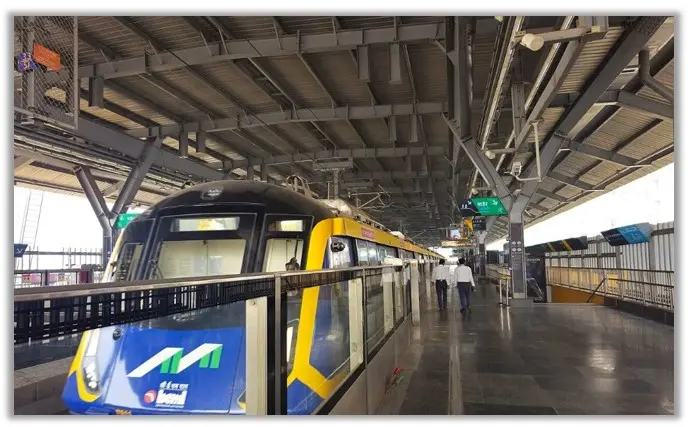
This massive transformation which is aided by a collaboration with the Open Network for Digital Commerce (ONDC), stands at an inflection point in city’s digital transformation drive. What this means: The 2A (Dahisar to Andheri West) and 7 (Gundavali to Dahisar East) Metro lines, which currently see about 3.5 lakh commuters every day, can now go digital and get their tickets on an app used for other modes of travel, booking or paying bills altogether.
How the ONDC can make a difference: One Ticket In the Digital Worlds
The real importance of this action is that it puts ONDC to use. He explained that”Think of ONDC as a common digital platform that will enable services to be ‘discovered’ and transacted upon by any application on either the buyer or seller side, without the need for that app to be owned by any one player”. Prior to this integration, customers traveling on Lines 2A and 7 were mostly using the official ‘Mumbai One’ app or a private WhatsApp booking channel.
With ONDC, all of a sudden a combination of third-party apps becomes Metro’s very own ticketing terminals. There are a few common platforms which you can intigrate with, this list seems to be constantly expanding but already includes the following:
Booking and Rail Apps: Confirmtkt, EaseMyTrip, Ixigo Trains, RedBus, RedRail, Yatri Railways*, Tripozo.
Utility and Payments Apps: Navi UPI, Vodafone Idea, WhatsApp (through Pelocal), and OneTicket.
Moreover, officials have stated that players including Paytm, Uber and Rapido are also set to come on board the network soon. This multi-app strategy offer commuters the unprecedented convenience of using a digital booking channel that they desire, either a rail focused app for multi-modal travel or UPI APP for single-use ticket.
Commuting Simplified: Efficient Solutions for Today and Tomorrow
The commuters in Mumbai are the immediate beneficiary of this reduction of physical queue at ticket counters and vending machines. Commuters can easily scan to pass through at entry and exit gates of the AFC (Automated Fare Collection) by buying QR code tickets on their phone, thus avoiding queuing up in stations.
This simplification is not merely a matter of convenience; it’s strategic necessity. With district over 37 km of additional network on Line 2B And Line 9 about to launch, the Mumbai Metro network is set for a big jump in ridership. A digital expansion is crucial if the system is going to be scaled up in a cost-effective way, an official said. Dealing with a future where millions of people could use the network regularly demands automation at the point-of-sale level, and the QR-based, multi-app system is able to offer that sort of scalability.
This will also complementing the National goal of SDEP (Strengthening of Digital Eco System & Enablement Promotion) under Digital India initiative. It makes transport easy to use across the country’s wider digital economy, the payment process is simple and effective with end-to-end journey planning.
A Step on the Road to Integrated Mobility
Although rolled out in Metro Lines 2A and 7, the new facility is a precursor to seamless mobility in entire Mumbai Metropolitan Region (MMR). The Mumbai One mobility app already showed what booking tickets across different modes of public transport looks like, and the ONDC integration can turbocharge it.
As the system evolves, the plan is to enable a user to book a single QR ticket that takes them through one local bus service, two different metro lines (which are operated by separate corporations — say, Line 1 and 2A/7, or future Line 3), maybe even ending with a ferry connection. The integration of digital ticketing across this sprawling network isn’t simply a technological modernization; it’s a vote for an integrated, commuter-friendly future in one the most populous cities on earth.

A versatile writer mainly works on trending news, daily updates from politics, business, crime, current affairs and entertainment.