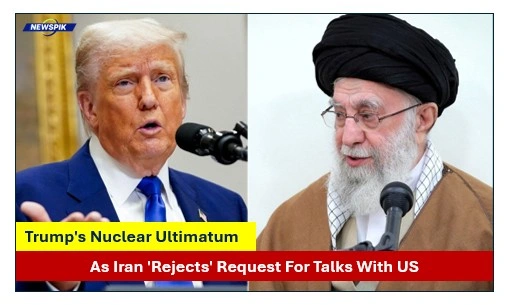

Welcome to the hot house that is the Middle East in January 2026. It’s a high-risk, maximalist gambit that echoes the twister “maximum pressure” strategy of his first term with a very different kind of kineticism: President Donald Trump has delivered an all-or-nothing nuclear ultimatum to the Islamic Republic of Iran. With the “massive armada” of USS Abraham Lincoln strike group now on station in regional waters, the world is now witnessing a very dangerous game — one with everyone in it playing chicken even though neither side wants to blink.
On Wednesday, the President went on social media with a message that was half invitation, half threat. He called on Tehran to “Come to the Table” for talks on a new, longer-term ban on nuclear weapons, saying the window remains open for diplomacy but is closing fast. “Time is short,” Trump said, a stark allusion to Operation Midnight Hammer — the June 2025 U.S.-Israeli blows that disabled Iranian nuclear plants. “This is not the next attack, this will be far worse!
The “Armada” and the Ultimatum
This exciting crescendo is the arrival of a naval force, which Trump assured us was bigger than the one that recently docked to mark Maduro’s final days in power. This carrier strike group is not simply a symbolic deterrent, but rather from the standpoint of the White House it is an ominous sign that anyone resisting U.S. demands will have to face the risk of all-out war in Iran.
The essential demands of the Trump administration are uncompromising:
- Zero Enrichment: A complete prohibition on domestic enrichment of uranium.
- Dismantlement – Divestiture: Delivery of all HEU on hand to a third country.
- Missile Restrictions: Tight controls on Iran’s ballistic missile program, which the United States sees as the primary means of delivering any potential warheads.
- Regional De-escalation: The end of patronship to proxy groups throughout the “Axis of Resistance.”
But the administration had directed its ire previously at the recent crackdown by the Iranian government on domestic protesters — which rights groups say has cost more than 6,200 lives — and bellicose rhetoric veered back to the nuclear file. If anything, it has reported on leaks from the White House indicating that Iran’s present internal instability is assessed as a window of maximum vulnerability for imposing a “strategic surrender.”
Trump’s ‘armada’ in Indian Ocean; airlines go on alert amid Iran strike fears
Tehran’s Calculated Rejection
The reaction from the streets of Tehran and the corridors of the Foreign Ministry has been one of indignant defiance. The American overtures were promptly rebuffed by Foreign Minister Abbas Araghchi, who declared that “diplomacy cannot be conducted through military threat.”
Iran’s regime is in a tough ‘Catch-22’. To negotiate under the shadow of an American carrier group would be read as a domestic capitulation, potentially empowering the very protesters whom the regime has spent the past month brutally repressing. Total recalcitrance, on the other hand, invites what could be a military strike not only at centrifuges themselves but at the leadership infrastructure.
But for all the feigned machismo, the Iranian economy is falling apart. Inflation is soaring, and the recent “Internet blackouts” have failed to entirely suppress the demand for reform among young people. The regime’s approach seems to be one of “strategic patience,” looking towards regional neighbours such as Saudi Arabia and Turkey to act as buffers or interlocutors, and hoping that they can avoid a direct confrontation which they are not well positioned to win.
Iran Protests LIVE: Trump calls on Tehran to show protesters humanity amid reports
A Region on the Brink: The World Consequences
The repercussions of this ultimatum are being felt well beyond the Persian Gulf. Crude oil price rose on Wednesday as the WTI jumped with investors pricing in the “war premium.” America’s regional allies, especially Gulf States, now face a predicament. Although they also share Washington’s concerns about a nuclear Iran, they know that any “hot war” would probably include Iranian missiles raining down on their desalination plants and oil terminals.
Turkey’s Foreign Minister Hakan Fidan has already warned that “it is wrong to start the war over again,” and urged Washington to reopen the 2015-style dialogue channels instead of one based on an armada. But the Trump White House appears to have little appetite for the kind of multilateralism that characterized attitudes of the past, or doing anything other than a simple bilateral “deal” that would mirror the present reality: one marked by Iran’s innate weakness.
Trump slaps tariff on Iran’s trade partners. How will it impact India?
The Risk of Miscalculation
The more immediate danger in the days ahead is not so much a conscious decision to go to war, but one side or the other making a miscalculation. With American jets on “readiness drills” just outside Iranian airspace, and an Iranian naval unit reportedly operating near the USS Abraham Lincoln, there is not much room for error.
Trump’s bet is that the Iranian regime fears its own people more than it does American bombs — and that the threat of the latter will bring them to heel, in an effort to save themselves from the former. But if Tehran comes to believe that the U.S. is determined to pursue regime change whether there’s a deal or not, they may conclude that they have nothing left to lose.”
Now, as the sun sets this evening over the Persian Gulf, the shadow cast by American warships is a stark reminder that in an era of “Trump 2.0,” there’s almost no distance left between “maximum pressure” and “maximum conflict.”
Iran warns, US and Israel will be target if Trump administration strikes over protests

A versatile writer mainly works on trending news, daily updates from politics, business, crime, current affairs and entertainment.