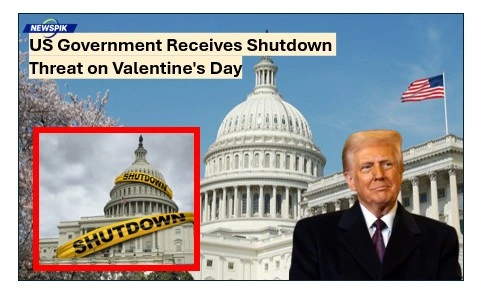

With the looming deadline of Valentine’s Day (February 14), the U.S. federal government is in danger of entering a partial shutdown because of an inability to resolve budgeted disputes in Congress. Prediction markets currently estimate that, as the House of Representatives and Senate remain locked in a stalemate regarding appropriate finances, the possibility of the federal government incurring a partial shutdown as of Saturday, February 15, is over 80 percent.
While most federal government agencies have appropriated for the entire fiscal year, the Department of Homeland Security (DHS) is only funded by a temporary continuing resolution, which expires this coming weekend. Due to this shortfall, potential operational disruptions could result at DHS if there is no new appropriations or continuing resolution.
What Are the Core Issues?
The core disagreement between the two parties revolves around proposed immigration enforcement reforms, which are annexed to the proposed budget for DHS. Senate Democrats have reacted by rejecting a White House offer, claiming it is “inherently incomplete and insufficient.”
They are demanding that enforceable policy changes accompany any agreement, including:
- Requirement of a judicial warrant for certain arrests,
- Limiting certain types of profiling,
- Expanding the use of body cameras by agents, and
- Placing additional restrictions on enforcement methods of implementation as recommended by the President.
The opposition party, Republicans, have claimed that approval of these terms will negatively impact current enforcement policy and practice. Because there was significant disagreement between the two parties during negotiations, they have stalled and therefore DHS has no long-term budget. However, the rest of the federal government has a budget through September.
In the event of a government shutdown, agencies under DHS (including the TSA, FEMA, the Coast Guard and the Secret Service) will still be required to provide certain services but would face numerous operational challenges.
For instance, the TSA and its agents would be required to continue working through a government shutdown without pay (similar to the staffing shortages and low morale experienced by TSA agents during previous shutdowns).
As a result, the operations of both TSA and all other DHS agencies would be hampered due to their lack of funds, and cybersecurity as well as disaster response training could also be delayed, resulting in a longer-term effect on preparedness.
Finally, economists and trading analysts are predicting that there would be broader economic implications if the government shuts down; equity market participants and reports of how traders are reacting to their estimation of whether or not a government shuts down have already begun to display a softer outlook on the US economy.
A prolonged shutdown would likely result in additional pressures on both consumer and business confidence levels as forecasted in the media. However, the impact on individual consumers’ and businesses’ confidence will be dependent upon how long any lapse in funding continues.
Context: Recent Shutdowns and Funding History
The threat of a shutdown isn’t new; there’s already been a brief shutdown during this budget cycle on January 31, 2025 through February 3, 2025, that ended with Congress acting to reopen the majority of the government by passing a temporary funding bill. The National Security Agency does remain on a separate short-term funding track as negotiations surrounding immigration policy continue.
The current backdrop is a 43-day shutdown at the end of 2025 which was the longest shutdown in U.S. history. That shutdown demonstrated the stark political divisions over federal spending, and the unresolved political divisions regarding the respective priorities of both parties remain in place today.
In 2025, the US State Department will take back 95,000 visas
What Could Happen in Congress?
Lawmakers now have limited time to reach an agreement on their funding bills before the Friday deadline to avoid reverting to the automatic 14-day lapse of funding on February 14, 2025. Currently, negotiations are stalled and neither party is prepared to provide more room for movement; therefore, the risk of at least a partial shutdown, particularly at DHS, remains high.
Publicly, the leaders of both parties have expressed their hopes to avoid a shutdown, but neither has announced a potential solution that is close to being achieved.

A versatile writer mainly works on trending news, daily updates from politics, business, crime, current affairs and entertainment.









