Ambuja Cement, ACC, and Orient Cement boards have endorsed a merger that is going to merge three large cement manufacturing groups under the brand name of Ambuja Cement, and will create what Adani Group has termed as a pan-India cement powerhouse.
The restructuring proposed is likely to be done in 12 months, assuming regulatory and shareholder approvals, and is under close scrutiny by the investors in the cement and infrastructure industry.
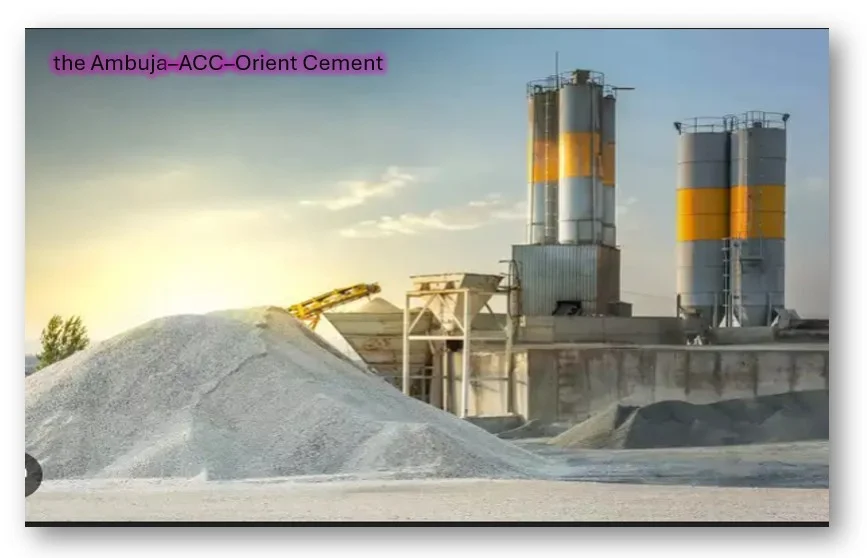
Merger Objective is to form a Pan Indian Cement leader
Ambuja Cements says that the merger would streamline the corporate structure, manufacturing and logistics networks, and the balance sheet. The merger will enable the outfit to stream branding, sales promotion, and overhead expenses, and for more accurate distribution of capital in case of further growth.
The Adani Group is of the opinion that the integration will provide operational synergies through minimization of duplication between plants and the supply chain, thus enhancing margins and leadership in the highly competitive cement market.
Read also:
Ratio of share swap of ACC shareholders
Shareholders of ACC will be eligible to get 328 shares of Ambuja Cement against every 100 shares of ACC under the approved merger scheme. Under the past closing prices, this means that the investors will be given near-par value exchange, but the final valuations will be based on the market movements prior to the record date, which is yet to be announced.
For ACC shareholders, the merger provides access to a more diverse and broader cement platform with greater national presence, thereby limiting earnings volatility in the long run.
Ambuja Shareholders to get Orient Cement Stocks
The shareholders of the Orient Cement will be entitled to 33 shares of the Ambuja Cement for 100 shares of the Orient Cement. This swap would have a small premium at current market prices, given that Ambuja has a more robust balance sheet and a larger market share.
The company also explained that the consideration for the merger will be discharged on an arm’s-length basis and that, upon notification of the record date, eligibility for the share exchange will be determined.
Margin Expansion and Cost Synergies in Focus
Ambuja Cements has stated that the merger will optimise costs by at least 100 per metric tonne through network rationalisation and economies of scale. The merger of the logistics, procurement and administrative functions should lead to economies of scale since the business is expected to be strong.
Analysts observe that these cost economies may substantially enhance margins at a time when cement prices remain vulnerable to input and demand fluctuations in the region.
What It Means to Adani Group Shareholders
To Adani Group shareholders, the merger places the group in a better position in the cement industry which is directly tied to the Indian infrastructure and housing growth story. The merger is an indicator of the long-term intent to concentrate on scale, efficiency and dominance in the market as opposed to disjointed growth.
The ACC and Ambuja brands are likely to survive the merger, given the products’ positioning across market segments. Investors will now monitor regulatory permissions by SEBI, the National Company Law Tribunal, and other regulators, as well as information on schedules and implementation.
When the merger is fully completed, it may become one of the largest mergers in the Indian cement sector in a long time, changing the competitive landscape and strengthening Adani’s interests in the fundamental infrastructure materials industry.

A versatile writer mainly works on trending news, daily updates from politics, business, crime, current affairs and entertainment.