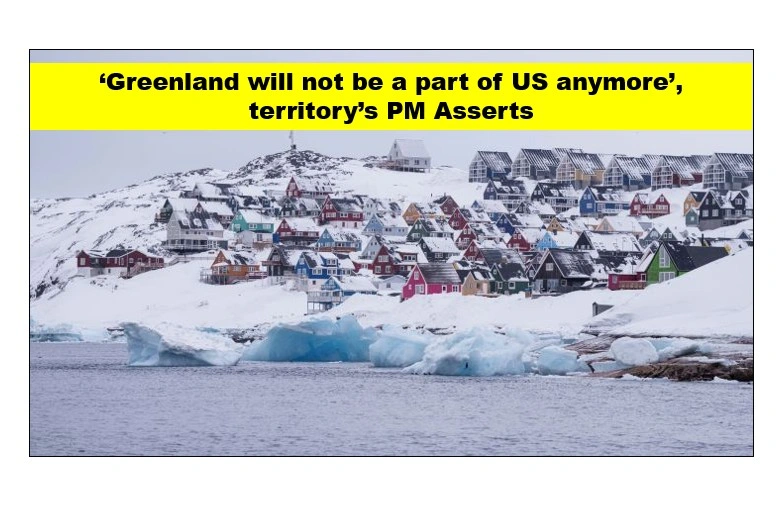

America’s deep freeze is the new hot spot in strategic policy, more volatile and dangerous than even the Middle East. In a rare feat of preemptive legislating, a bipartisan group of lawmakers in the United States has introduced sprawling new legislation with one objective: stopping President Donald Trump from trying to acquire, buy, or annex Greenland.
The bill, officially called the NATO Unity Protection Act, was submitted on January 13, 2026 by Sens. Jeanne Shaheen (D-NH) and Lisa Murkowski (R-AK). It represents a stark, legislative “firewall” against recent rhetoric from the White House suggesting the U.S. would be interested in purchasing the semi-autonomous Danish territory of Greenland from Denmark and potentially using other “means” to secure it — like, as some have joked, after World War II: by force.
A Legislative Shield for Sovereignty
The meat of the bill aims to yank the financial rug out from beneath any future Arctic expedition. By reaching for the “power of the purse,” the Act would specifically prohibit any use of funds made available by the Department of State or Department of Defense to blockade, occupy, or annex any sovereign territory of a NATO member country unless that ally has given their explicit consent.
“NATO is stronger when we are united, trust one another and respect the sovereignty of every member state,” said Senator Shaheen in introducing the resolution.
The bill is not just a symbolic proposal; it comes with several explicit limits:
- 8, 2019 Funding Bans: No federal dollars used on military operations to bring Greenland under control.
- Diplomatic Guardrails: Prohibits the State Department from making or implementing plans to undermine Danish sovereignty.
- NATO Affirmation: Explicitly states that any unauthorized seizure of an ally’s territory would violate the U.N. Charter and the North Atlantic Treaty.
What Trump Wanted for Greenland and What It Means for the US
The “Greenland Annexation” Counter-Movement
The introduction of the NATO Unity Protection Act comes at a time of heightened political tensions on Capitol Hill. Just 24 hours earlier, Rep. Randy Fine (R-FL) had filed the Greenland Annexation and Statehood Act with a competing piece of legislation that would expand presidential power to “do whatever steps necessary” to incorporate Greenland as the 51st state.
Annexation supporters say Greenland is a critical national security asset, necessary for controlling Arctic shipping lines, and another way to try to prevent China or Russia from gaining a bigger upper hand there. But it has set off an international firestorm. In a joint statement from Copenhagen, the Danish Prime Minister’s office and the Greenland Government said that Denmark and Greenland are not for sale, in response to their land being considered as a commodity. “Greenland is not for sale, it’s not to be conquered, it’s not a game you can play with,” the wrote.
Why the Arctic Matters Now
The new sense of urgency in Washington reflects a change in tone by President Trump. And though the notion of “buying” Greenland seemed like a strange headline to an episode in his first term, this 2026 version of the same proposal feels decidedly less subtle. With the recent U.S. military activity in South America and arrest of Nicolás Maduro, our European allies are no longer taking the President’s Arctic rhetoric as hyperbole.”
For Senator Lisa Murkowski, the matter is personal and strategic. Representing Alaska, she knows more than most about the intricacies of Arctic diplomacy.
The geopolitical stakes are staggering. Greenland is also the location of Pituffik Space Base (better known as Thule Air Base), a key link in America’s early-warning system for ballistic missiles. Critics of President Trump’s push argue that trying to take the island would not only break up NATO, but also violate the very agreements that allow the U.S. military to be based there in the first place.
Loud Explosions In Venezuela After Trump Warns Of Ground Strikes
The Battle for the 51st State
And as the bills head to their committees, debate has divided the G.O.P. While some “MAGA” loyalists see the purchase of Greenland as a historic coup of “real estate” diplomacy, traditional hawks and moderate Republicans fear the precedent it sets. They worry that a threat against a NATO ally could bring about the total disintegration of the post-WWII international order.
Meanwhile, the island’s population of about 57,000 residents in Greenland has observed developments there with a combination of defiance and disbelief. Local leaders have stressed that they are a self-governing people with a unique culture and a Nordic-style welfare system — characteristics much of the population fear would be lost under American rule.
The partisan fight in the Senate is likely to be a scorcher. As the 2026 midterms loom, the Greenland flap has provided a test of how far Congress is willing to exercise its control over a President who’s shown an increasing appetite for unilateral action.
Whether the NATO Unity Protection Act can attract sufficient Republican support to overcome a certain presidential veto remains to be seen. But for now, the bill is a clear beacon to the world of at least some part of one branch of American government remaining bound by old rules of international diplomacy.

A versatile writer mainly works on trending news, daily updates from politics, business, crime, current affairs and entertainment.