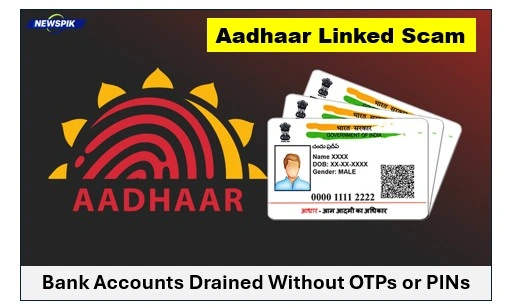

Aadhaar Linked Scam– More and more Indian bank customers are reporting a scary type of scam where money is taken out of their accounts without using debit cards, one-time passwords (OTPs) or personal identification numbers (PINs). Experts in cybersecurity say that the theft is connected to bad use of Aadhaar-enabled banking services, especially the biometric Aadhaar-Enabled Payment System (AePS).
How the Aadhaar Scam Works
AePS lets people use basic banking services with just their Aadhaar number and biometric proof, usually a fingerprint. This is different from regular digital transfers that need more than one layer of security. This method was made to make it easier for people in distant places who don’t have computers or bank cards to get money.
Fraudsters are now taking advantage of this system by using personal data that they stole or got illegally. Once fingerprint authentication is wrongly accepted by devices that have been hacked, thieves can take money out of an account or send money to someone else without telling the account user. A lot of the time, victims don’t realize something is wrong until they see strange charges on their bank accounts.
The reason why OTPs and PINs don’t work
In these situations, OTPs and PINs are not needed because physical proof is the only way that AePS transfer’s work. In other words, once fingerprints are used wrongly, the system still sees the transaction as valid. Biometric data is harder to change than passwords, according to experts, which makes this kind of theft even more dangerous.
Some stories say that thieves take fingerprints with fake or altered biometric tools. Others use scam calls, fake customer service texts, or harmful apps to get information about Aadhaar, which is then used to start transactions that aren’t supposed to happen.
More cases and public worry
A number of victims have talked about their experiences on social media, saying they never gave out OTPs, clicked on sketchy links, or accepted transactions. Even so, small or large amounts were taken out of their accounts fast and they weren’t always told right away.
Crime experts say that these kinds of scams are getting more common as more people connect their Aadhaar numbers to government services and bank accounts. Some groups, like older citizens and people who live in rural areas, are more likely to be hacked because they don’t know much about Aadhaar fingerprint security.
The government issues warnings
Banks and security agencies have told customers that they need to take action right away to protect their Aadhaar linked services. Locking Aadhaar biometrics is one of the most important steps that should be taken. This stops fingerprints from being used for registration unless the user unlocks them themselves.
The government has also told people not to give out their Aadhaar information over the phone, through text messages, or on illegal apps. People who are trying to trick people into giving them personal information often pretend to be from banks or the government and say they need to update or verify the information.
Tips for users on how to stay safe
Experts say that people should check their bank records and transaction reports on a daily basis to catch any strange behavior early. Any loss that wasn’t supposed to happen should be reported right away to the bank and the local hacking officials.
Key preventative steps include locking Aadhaar fingerprints, avoiding biometric registration at strange centers and making sure that financial contacts are real. To make sure they get alerts on time, users are also told to keep their banks’ cell numbers up to date.
A bigger problem for online banking
Aadhaar-linked systems have helped more people get access to banking services, but the recent rise in biometric-based scams shows that we need better protections and more education for everyone. Cyber experts say that to protect users from new risks, ease and safety must be weighed.
As internet banking grows, it’s still important to stay aware and take action. The first thing that can be done to stop financial losses and make sure better access to digital services is to learn how Aadhaar-linked scams work.

I am a versatile content writer from the MP region, covering politics, business, crime, current affairs, entertainment, video games, and sports with clear insights, engaging analysis, and timely, reader-focused updates.