The fast-growing quick-commerce industry in India is about to go through a slowdown as it becomes harder to raise capital and it becomes clearer that this kind of growth can’t go on forever. This is what Blinkit CEO Albinder Dhindsa told Bloomberg.
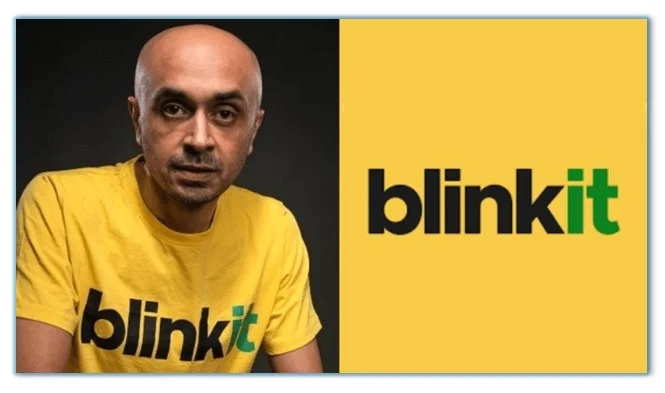
According to the Bloomberg story, Dhindsa said the business’s growth model depends on constant fundraising, which is no longer a viable long-term strategy. He added that companies will soon have to face the fact that they can’t keep incurring huge losses much longer. He told Bloomberg, “When there is too much of this kind of imbalance, corrections happen quickly and without warning.”
It gets harder to find capital as funding needs increase
In the last few years, global investors like SoftBank, Temasek, and Middle Eastern state funds have invested billions in India’s rapid-delivery market, making it the world’s most-watched experiment in 10-minute trade.
Even though demand is rising, investors are no longer as interested. Less than a year after its $1.3 billion IPO, Swiggy is planning to sell $1.1 billion in shares at about the same price as its IPO. The story said that rival Zepto had raised $450 million in preparation for an IPO next year.
A shakeout could change the shape of India’s consumer-tech economy. Businesses will be judged on whether customers still want to buy their products without deals and on whether they have created unique services that can be sold at higher prices.
According to a Bloomberg story, Bernstein experts just named Blinkit, owned by Zomato’s parent company Eternal, as the best long-term candidate because of its performance, better unit economics, and over $2 billion in cash.
But they also said that increased competition could make Blinkit spend a lot of money before it starts making free cash flow. As the company continues to grow into new areas, it is still losing money.
Global giants are rushing into cities, making competition more intense
India is still the only big market where quick trade is growing quickly. This has made Amazon, Flipkart (owned by Walmart), and Reliance Retail interested in the market, thereby increasing competition in the best towns.
But India’s supply lines are broken, its cold-chain capacity is limited, and its buying networks are uneven, which makes doing business much more difficult than in regular e-commerce. Dhindsa thinks that fast trade and regular online selling will come together.
From over 6,000 book titles to home goods like freezers, Blinkit already offers a wide range of products from thousands of third-party sellers.
But he said that the business will only carefully grow areas. If a business niche gives people a “right to win,” it will be based on whether they can fix problems like high return rates or sizing issues, particularly in clothing.
Smaller places have a lot of potential, but supply lines are slow
Blinkit aims to invest in that shift in advance because demand is growing outside metros. But Dhindsa said that non-urban markets face physical bottlenecks rather than demand constraints. Before these markets can make a lot of money, there needs to be a more efficient grouping of dark shops, better buying systems, and stronger cold-chain networks.
Getting more fruits and veggies from local business owners who run gathering companies is an important part of Blinkit’s effort. Dhindsa told Bloomberg that this helps support semi-skilled jobs in stores and encourages more people to return to work in their hometowns.
After years of heavy discounting and fighting for market share, Blinkit is now focused on building a more sustainable model, Dhindsa told Bloomberg. He admitted that earlier stages of the sector made people want more, but hurt the bottom line.
In the interview, he said, “We won’t go after growth just because.” “We will only take actions that are good for the business in the long run.”
As capital costs rise and competition intensifies, Dhindsa thinks the next phase of quick commerce will be marked by consolidation, clearer category choices, and more logical pricing.
In a Bloomberg interview, he said, “The pendulum has already swung once—from scepticism to exuberance.” “Things will be put right.” I can’t say if it will be done in weeks or months.

I craft sharp movie reviews and trend analysis, known for deep research, clear insights, and compelling storytelling across the latest in film and pop culture.