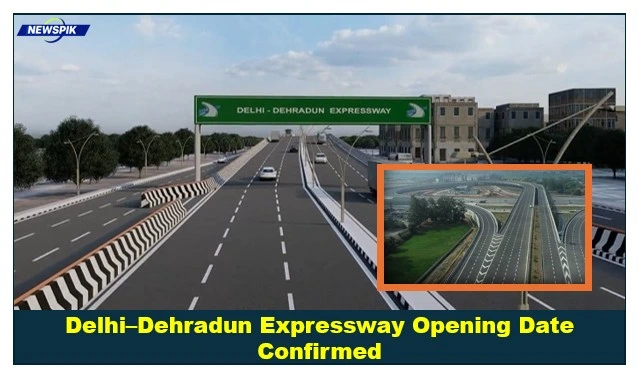

Delhi–Dehradun Expressway: With years of delays and multiple stages of building, the long-awaited Delhi–Dehradun Motorway will finally open in February 2026. Over 98% of the work on the six-lane, access-controlled motorway is done. It is almost finished. We are now putting the finishing touches on things like signs, safety systems, and interchanges. When finished, the project will greatly improve the road connections between the national capital and Uttarakhand.
Longer trips will take less than half as long
One great thing about the new motorway is that it cuts journey time by a lot. The trip between Delhi and Dehradun takes at least six hours at this point, based on traffic. With the motorway in place, journey time should drop to less than three hours, making it much easier for tourists, business visitors, and people who drive to work every day.
Paying tolls and getting a FAS tag
The motorway will be built on a toll system, and there will be several toll booths along the way. If private cars use FASTag yearly passes, the cost per trip could be a lot less. An estimated ₹60 one-way trip across several toll points would be the lowest price. Cars that don’t have a FASTag may have to pay up to ₹500 in tolls for the whole stretch.
Officials have also said that the first part of the motorway, especially from the Akshardham area to the Loni border, will probably not have tolls. This will make it easier for people who live and work in and around Delhi to get to and from work every day. The official announcement of the final toll rates will come closer to the opening date.
Limits on speed and safety measures
As a high-speed highway, the Delhi–Dehradun Motorway puts safety first. Heavy vehicles like trucks and buses will be able to go slower, while cars will be able to go as fast as 100 km/h. To make sure travel is safe and easy, the hallway will have modern safety features like CCTV cameras, traffic tracking systems, and places to call for help in an emergency.
The main parts of the route
The motorway begins near Akshardham in Delhi and goes through important parts of Uttar Pradesh, such as Baghpat, Shamli, and Saharanpur, before ending in Dehradun, Uttarakhand. Built in several stages, the route has raised lanes, service roads, underpasses, and entry-exit ramps to help keep traffic moving and reduce congestion.
Protecting environmentally sensitive areas along the route, especially those close to forests and wildlife areas, has also been a big part of the planning process.
Openings in Parts and Test Runs
The whole motorway won’t open until February 2026, but smaller parts of it are already open for testing and light use. The purpose of these test stretches is to check how traffic moves, the state of the road, and the safety features. Drivers who have used these parts have already said that they make the trip faster and more comfortable.
Effects on the economy and the region
Expected to bring in over 12,00 crore, the Delhi–Dehradun Motorway is going to be very good for the economy. Better connections between Delhi, Uttar Pradesh, and Uttarakhand are likely to bring more tourists to hill stations like Mussoorie and Rishikesh, make it easier for goods to move, and improve trade ties between the three states.
What’s to Come
People are eagerly anticipating the official opening date of one of North India’s most important infrastructure projects. The Delhi–Dehradun Motorway will change the way people drive in the area by making connections faster, safer, and more efficient once it’s fully open.

I am a versatile content writer from the MP region, covering politics, business, crime, current affairs, entertainment, video games, and sports with clear insights, engaging analysis, and timely, reader-focused updates.









