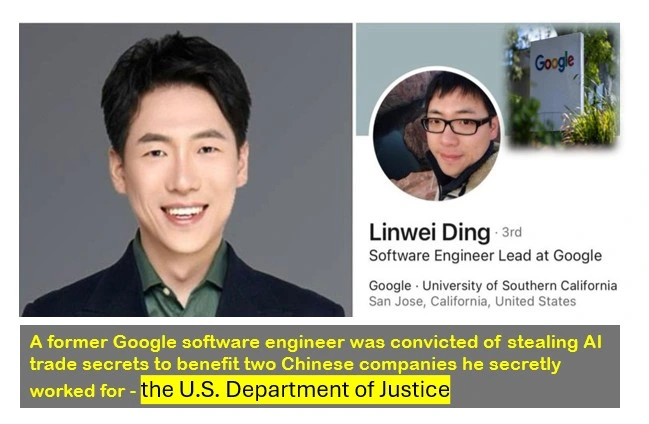

An FBI investigation found that a former Google software engineer stole sensitive trade secrets about artificial intelligence and tried to use them to help Chinese companies. The verdict, which came after an 11-day trial in San Francisco, is one of the most well-known cases of economic espionage involving AI in recent years. It also shows that people in the US are becoming more worried about how to protect important technologies.
What the case is about
The engineer, whose name was Linwei Ding but was also known as Leon Ding, was found guilty of economic espionage and theft of trade secrets on several counts. While working at Google, prosecutors said he illegally got to and copied thousands of pages of private company documents. These papers were about advanced AI infrastructure that is used to train big language models and power computers of the future.
The prosecution says that the stolen information included very private details about special chips, the architecture of high-performance computers, and the software systems that run them. People think that this kind of information is very important for staying ahead in the global race to develop artificial intelligence, especially since many countries and companies are putting a lot of money into this field.
With ties to Chinese businesses, this is a red flag
During the trial, evidence showed that Ding kept in touch with two Chinese tech companies in secret while still working at Google. As it turned out, he was in talks to become a senior leader at one company and had also begun working on his own AI-focused startup in China. Investigators said he broke Google’s rules and trust by not telling them about these connections.
Prosecutors said Ding planned to use the stolen AI knowledge to help China build more advanced computer systems, which could help groups with ties to the Chinese government. He is said to have told potential investors that he could copy and improve on Google’s AI supercomputing abilities, which made US authorities very suspicious.
Why it Matters What Happened
The case was called a serious breach of national and economic security by US officials. AI is becoming more and more seen as a strategic technology that has effects on areas other than the private sector, such as defense, cybersecurity, and world power. The conviction makes it clear that stealing AI-related intellectual property will be taken very seriously.
People also see this case as a warning sign for tech companies operating in highly competitive, politically sensitive fields. It highlights the risks of insider threats, which occur when employees with authorised access to private information use it for their own benefit or to help someone else.
What Comes Next
After being found guilty, Ding is scheduled to return to court for further hearings at which the sentence will be discussed. For each count of economic espionage, you could get a long prison sentence. Theft of trade secrets also carries harsh punishments. The court will decide on the final sentence after looking at federal rules.
Google has worked with the police and reiterated that it has strict security measures in place to protect its private data. The business said it acted quickly when it saw any suspicious behavior and told the police about it.
As governments around the world become more careful about data security and the transfer of technology, this case is likely to change how tech companies improve their internal controls and how authorities handle similar investigations in the future.

A versatile writer mainly works on trending news, daily updates from politics, business, crime, current affairs and entertainment.