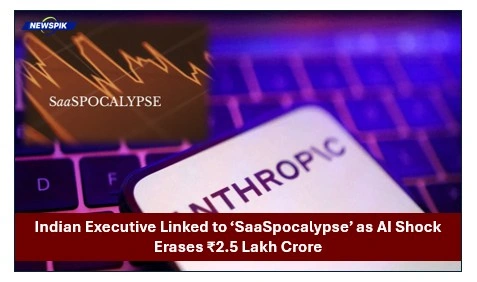

A strong new wave of innovations in artificial intelligence has shaken the stock markets and taken away nearly ₹2.5 lakh crore in value from Indian tech companies. At the centre of the trouble is an executive from India whose work at the US-based AI company Anthropic has sped up tools that investors are afraid could change and threaten the current model for software services.
Analysts have called the sudden drop in the market the “SaaSpocalypse” because they are so worried about the future of software-as-a-service companies and IT outsourcing.
AI that can do difficult tasks for humans
The stock sale happened after better AI features were shown off that should be able to handle a lot more than easy questions. The newest systems are designed to handle complex professional tasks, such as reviewing contracts, organising sales operations, and running data-intensive processes. Previously, this kind of work was done by large teams of engineers and experts.
As a result, investors rethought how much human input businesses might need in the future. Businesses might not need as many standard IT services if they know they can rely on AI bots to work around the clock and for less money. Just the thought of that chance prompted many people to sell their technology counters.
Rahul Patil Comes to Light
A lot of the talk has been about Rahul Patil, the Indian engineer who joined Anthropic last year as Chief Technology Officer. Patil has worked in both India and Silicon Valley and is known for strengthening the company’s business products and for making its AI models run more efficiently at scale.
Some people in the business world have started calling the movement the “Patil effect.” Some people praise his guidance for turning experimental AI systems into real-world tools that can handle business tasks. Others disagree, saying that the very success of this progress has shaken markets that depend on service structures run by people.
Indian stocks in IT companies take a hit
What people on Dalal Street did was quick. Several sessions saw strong drops in the stocks of major IT companies, which dragged down the overall technology index. As buyers tried to figure out how technology might change future deals, it hurt companies that make a lot of money from long-term outsourcing contracts the most.
Experts in the market say that the drop is more due to fear than to actual loss of business. But the sector’s values have long been based on steady growth, and any sign that customers might turn to AI options can quickly change how investors feel.
This worry was made worse by claims from other major tech companies around the world about AI systems that can speed up software transfer, code, and back-office tasks, which were once seen as stable sources of income.
A Call to the Industry to Wake Up
As fear spread, many people warned others to be careful. Some business leaders think that AI will make things more productive instead of getting rid of the need for service companies. They say that businesses will still need integration, control, security, and customisation, which are all things that experienced IT providers can do in new ways instead of going away.
In any case, it’s clear what the markets are saying. With many Indian companies already putting money into automation and creative AI, it may be more important for them to move faster toward high-value products.
For investors, the event shows how quickly new technologies can change what people think will happen. One announcement was enough to make people doubt models that had been used for a long time and wipe out billions of dollars in market value in just a few days.
We still don’t know if the so-called “SaaSpocalypse” is only temporary or if it means a deeper structural shift. But for now, AI has once again shown that it has the power to not only change the way work is done but also to change the way whole businesses make money.

I am a versatile content writer from the MP region, covering politics, business, crime, current affairs, entertainment, video games, and sports with clear insights, engaging analysis, and timely, reader-focused updates.