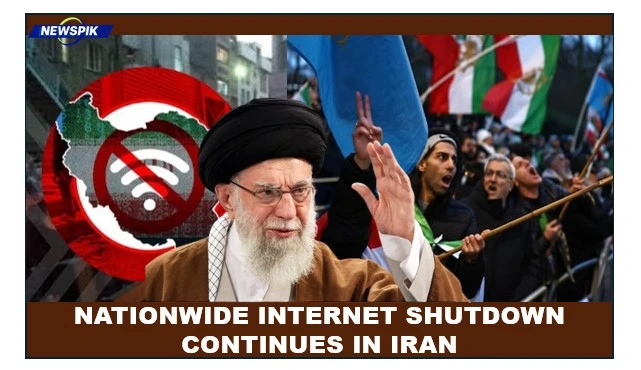

Iran is at a historic juncture in early January 2026. What started out as a provincial plea for help over a collapsing currency and skyrocketing bread prices has become a nationwide protest movement. Today, defiant voices echo in the streets of Tehran, Mashhad and Kermanshah – but the sounds are absent from inside Iran’s borders; instead, a digital silence.
Nation in The Shadows: The Great Digital Silence
According to Access Now, the Iranian government turned off national internet access at precisely 5:50 p.m. local time on January 8, 2026. Connectivity has fallen close to zero, according to network monitors like NetBlocks — one of the most extreme digital blackouts ever in the country.
This is more than a technical glitch; it’s a deliberate strategy. By cutting the digital arteries of the country, authorities have effectively blinded the world to the scope of a harsh crackdown that’s being driven on social media. Relatives are unable to check on loved ones, and activists are wrestling with uploading the raw, unfiltered footage that has historically been their only way to hold security forces responsible.
Digital rights experts say these blackouts in 2026 are more sophisticated than the one that appeared during the “Woman, Life, Freedom” protests of 2022. The state seems to be operating on a “whitelist” system, in which government-run propaganda channels and essential banking services are staying online while the average citizen is plunged into a complete information black hole.
Iran protest sees massive escalation, nationwide internet cut as exiled prince’s war cry
The Spark: From Empty Pockets to Campus Protests
Today’s unrest was sparked when, on December 28, 2025, the Iranian rial plummeted to a record low compared to the US dollar. Shopkeepers in the bazaars of Tehran — a group that has been part of the country’s social fabric for generations — finally started closing up their doors. It was more than protesting policy; they were protesting survival.
But as the demonstrations entered their second week, that chant had changed. The economic gripes were the kindling for a much more fundamental, systemic frustration. Protesters now openly are demanding wholesale change of the regime, with many chanting the name of Crown Prince in exile Reza Pahlavi. The transformation from “we cannot afford food” to chant of “we want freedom” has rocked the political establishment; there are reports about the visible increase in the numbers of units for general security and state ministry for intelligence affairs as well as guards after Gen.
The Crackdown Hits People: A Human Toll
Beyond the statistics — “36 hours of blackout” and “dozens of cities” — lay stories of deep human tragedy. Human rights organizations, such as Amnesty International and the Center for Human Rights in Iran (CHRI), have heard chilling reports of hospitals being stormed by security forces and live ammunition being fired in neighborhoods filled with people.
They were obviously all killed in action,” Schwert said.” Current totals show more than 50 people have died, including children, as a result of the fighting. The actual death toll is most likely much higher, but the internet shutdown makes verifying this almost impossible. In cities such as Sanandaj and Ilam, witnesses have compared the scene to a “war zone,” with the sound of gunfire echoing well into the night.
Global Response and Next Steps
The world is beginning to react, with many Iranians feeling this response is ‘ too little, too late ’. United Stated President Donald Trump has sent tough warnings, saying that it is watching and that Iran should not kill its protesters. The European Union and the United Nations have likewise urged to restore internet access and halt the “disproportionate” use of force.
The energy of the protests is undiminished by the blackout. Residents in Tehran shouted slogans from their rooftops on both the nights of January 9 and 10; no social media had coordinated them, making these weeps of anguish a throwback to the 1979 revolution as well as the Green Movement of 2009.
Iran in ‘big trouble,’ says Trump; threatens strikes again if violence continues
What Happens Next?
The Iranian government finds itself in a paradox: the more it brutalizes its population, the more it alienates the very people whom it must rely on to help keep an economy already under tremendous strain working. The “nofuziyye zaman-e kheyraziyyat” (time risk of the good time godly behaviour) that President Masoud Pezeshkian has suggested some weeks ago by calling for risky economic concessions were largely rejected by a public now disbelieving in state pledges.
And so as we plunge into 2026, the world waits to see whether this movement will reach a critical mass that can catalyze real change or be overtaken by the cycle of silence and repression that has gripped us for the last decade. One thing is clear: even without the power of the internet, the Iranian voice has never been stronger.
I am a versatile content writer from the MP region, covering politics, business, crime, current affairs, entertainment, video games, and sports with clear insights, engaging analysis, and timely, reader-focused updates.