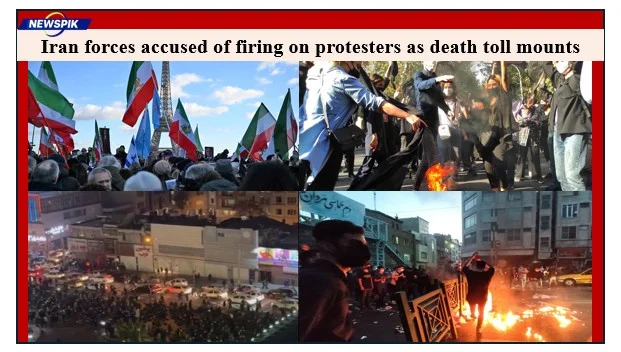

In the shadow of a nationwide digital blackout, the streets of Iran have turned into a macabre theater for what human rights groups call — because few journalists even now are able to report from the country — a “cycle of bloodshed.” Now, as the calendar flips to the second weekend of January 2026, accounts from inside the nation are chilling: with security forces accused of using deadly force against a movement spawned by economic ruin and political despair.
With much of the internet cut off, it is difficult to judge the scope of the carnage, but piecemeal reports that have reached beyond Sudan’s borders paint a picture of a regime that has run out of patience.
The ‘Kill Switch’ and Hardest Day
On January 8, 2026, the state-mandated “kill switch” of Iran knocked the country nearly completely offline. At least that’s how it appeared to monitoring groups, such as NetBlocks: They issued a statement saying mobile data and international phone calls were cut after an exiled opposition figure, Crown Prince Reza Pahlavi, called for mass protests.
Behind this digital iron curtain, the violence has escalated. At least 45 people have been killed by security forces over the past 13 days, says a Norwegian-based NGO, Iran Human Rights (IHR), while two groups - IHR and the US-based Center for Human Rights in Iran (CHRI) – have confirmed details of some of those deaths. Wednesday, Jan. 7 is being called the movement’s deadliest day, with 13 protesters killed in a single 24-hour span.
The tactics described by eyewitnesses are a throwback to the ugly “Bloody November” of 2019:
Direct Fire: “Confirmed video footage, eye-witness accounts and statements of a Revolutionary Guards TV commander in Tehran,” according to HRF reports, depict IRGC full-uniformed members, and Special Police firing military issued rifles and shotguns filled with metal pellets directly into the masses.
Child Victims: At least eight children are among the dead, including 15-year-old Taha Safari from Lorestan and 16-year-old Mohammadreza Karami from Ilam.
Hunting Ammunition: Protesters have circulated pictures of “birdshot” and heavy metal pellets pulled from injuries suffered by demonstrators, alleging that forces treated “human lives like a game.”
New Front in Hospitals: Raids on the Wounded
The most shocking escalation in the 2026 crackdown is that medical facilities are now being systematically attacked. HRW has documented several cases of security forces storming hospitals and seizing wounded demonstrators before they get life-saving treatment.
Siege of Imam Khomeini Hospital
In provinces like Ilam, which is the home of some of the most fierce resistance, security forces were said to have raided the Imam Khomeini Hospital on Jan. 4 and 5. Eyewitnesses reported agents breaking through glass doors, using tear gas inside wards and beating medical personnel who resisted handing over patients.
This has also left the wounded with a terrifying choice. Now many do not go to hospitals at all, afraid that seeking treatment is an express ride to a Revolutionary Court. In one heartbreaking instance, a protester named Mohsen Armak died from his injuries at a livestock farm because his friends were too scared to take him for treatment in a professional medical facility.
The Rhetoric of “Rioters” and No Mercy
The transition from “containment” to “elimination” came after a series of hard-line speeches from the upper echelons of Iran’s leadership. On Jan. 3, Supreme Leader Ali Khamenei publicly referred to the protesters as “rioters” and said they had to be “slapped in the face.”
Shortly after, the country’s chief justice, Gholamhossein Mohseni Ejei, instructed prosecutors not to show “leniency” and to hold speedy trials for those who had been arrested. The official state explanation has shifted to blaming “foreign foes,” namely the United States and Israel, for instigating the unrest. So far more than 2,260 people have been arrested with many put on charges of “moharebeh” (enmity against God) that carries the death penalty.
Trump Warning and International Red Lines
The world is reacting more vehemently than ever before. U.S. President Donald Trump referred to recent military action against the militant group and said if a mass slaughter of protesters continued, the Americans would “hit them very hard.”
This combined international pressure with a domestic economy in which the Rial has crashed through 1.4 million to the dollar has placed the regime in its most fragile position for decades. Unlike the protests of 2022, which were profoundly about social freedoms, the 2026 uprising is both a bread and freedom movement — an clash of empty stomachs and tired hearts that will be much more difficult to quench with empty pledges.
A Nation at a Crossroads
The geography of the protest, while the death toll increases, is a telling one. The harshest repression has taken place in provinces like Lorestan and Ilam, where Kurdish and Luri ethnic minorities live. These regions have always suffered systemic neglect, and so the current unrest is a release valve for decades of simmering complaints.
The digital blackout is imposed to silence the internet, but the sound of gunfire and chants resonate through the Grand Bazaar, telling a story that cannot be concealed by the regime. The question now is whether the increasing cost will grind down the protesters, or resolve that finally tips the balance.
I am a versatile content writer from the MP region, covering politics, business, crime, current affairs, entertainment, video games, and sports with clear insights, engaging analysis, and timely, reader-focused updates.