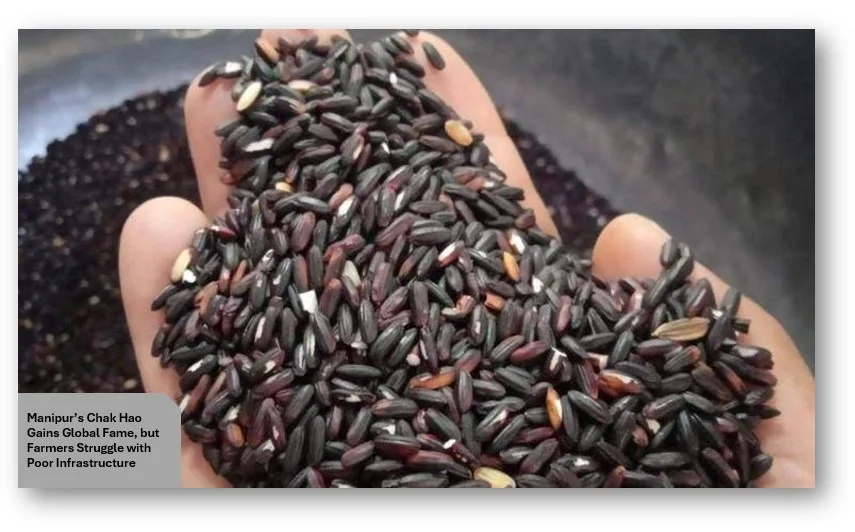

Chak Hao, a traditional black rice from Manipur, has become a world superfood due to its high nutritional value and cultural importance. Rice used to be grown mostly for local consumption and religious purposes. Still, it’s becoming more popular in national and international markets because it smells great and is good for you.
However, farmers in Manipur aren’t able to fully benefit from Chak Hao’s success due to major infrastructure problems, especially in handling and selling.
A Traditional Rice with Modern Demand
Manipur has grown Chak Hao for hundreds of years, and it is an important part of the state’s food culture. It is traditionally served during holidays and other important events. The rice is known for being very dark and tasty.
Over the past few years, Chak Hao has become known as a superfood for its high levels of antioxidants and other healthy nutrients. People in India and other countries who care about their health are now seeking this rice, creating new market opportunities for farmers in Manipur.
Latest published:
- Mumbai’s Next Green Frontier: The Grand Vision for
- How China’s ‘Risky, Dangerous’ Brahmaputra Mega Dam
- Rainfall creates dramatic crimson spectacle on Hormuz
Aims to Encourage Organic Farming
Coordinated planting efforts have helped Chak Hao grow in international markets. A farmer producer group, such as an organic producer company set up through a government program for the North Eastern Region, has worked to improve farming and marketing.
At first, these supplier groups lost a lot of money because they didn’t have any stable buyers and not many people knew about them. Over time, demand grew and Chak Hao farming spread to more areas, especially in Imphal West. Organic methods are now used to produce this rice on hundreds of hectares every year.
Infrastructure gaps constrain farmer income
There aren’t any modern rice-grinding facilities in Manipur, a major problem for farmers as demand grows. This is why Chak Hao is usually sold as seeds rather than as prepared, ready-to-cook rice.
People would rather buy well-processed rice that is all the same quality, so selling rice seeds brings in less money. A farmer can’t fully reach top markets if they don’t have advanced grinding and sorting tools. This also impacts exports, since customers from other countries usually want rice that has been properly ground and packed.
This means that local farmers lose much of the value they could have kept.
Exports Make Sense, But There Are Still Problems
Chak Hao has already found buyers outside of India. For example, he has made deals to sell his unique rice types to Japan. This shows that Chak Hao has a lot of promise as an export item.
But both farmers and government officials agree that it will be hard to increase exports until handling infrastructure is improved. Farmers could make more money and compete in global markets if they had better milling tools and storage facilities.
Have faith in the future
Chak Hao is also affecting local business owners, who are using black rice to make snacks and baked goods with added value. This is helping people in rural areas make a living.
Farmers believe that Chak Hao could become a major economic driver for Manipur if the right infrastructure is provided. This would help the farmland, trade and the local economy.

I am a versatile content writer from the MP region, covering politics, business, crime, current affairs, entertainment, video games, and sports with clear insights, engaging analysis, and timely, reader-focused updates.