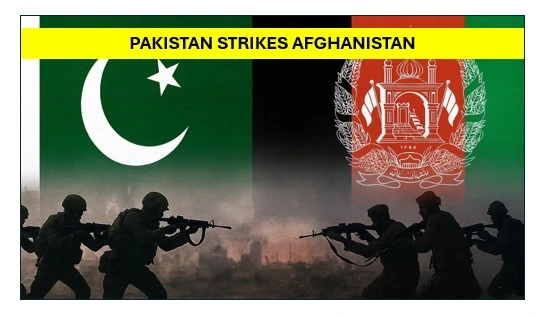

Pakistan has carried out several air strikes against what it claims were militant camps in two eastern provinces of Afghanistan. Islamabad claimed the air strikes on alleged Tehrik-e-Taliban Pakistan (TTP) camps and other extremist groups that have perpetrated suicide bombings and attacks on Pakistan.
Pakistan’s Air Campaign Against Afghanistan
The air strikes reportedly included a hit on a madrassa in Bermal district of Paktika province.
Pakistan has said that these air strikes were in response to a series of suicide bombings and other violent attacks taking place inside Pakistan.
Afghan Civilians and Kabul Condemn the Attacks
Afghan officials have stated that there were multiple civilian deaths and injuries as a result of the air strikes (including women and children) and that they have accused Pakistan of targeting civilians rather than just militants were involved in the incidents.
Dozens of people have died in these strikes and they attenuate the already weak ties between Pakistan and Afghanistan.
Timeline of Militant Attacks on Pakistan
The strikes in Afghanistan occurred in the wake of several other deadly militant attacks in Pakistan:
- February 16 – Bajaur District – Vehicle Bombing Killed: 11 members of the Pakistani security forces and 1 child – Pakistan attributed to TTP.
- On February 21, 2026, a suicide bomber detonated on a convoy transporting security forces in Bannu, killing two soldiers, one being a Lieutenant Colonel.
Militants are becoming increasingly active in Northwest Pakistan contributing to an overall feeling of insecurity throughout the country, which has put considerable pressure on the Government to act.
Read more: US bombs Islamic State targets across Syria after deadly attack
Pakistan’s Justification for its Actions and Broader Security Notions
The Government of Pakistan has stated it holds “substantial evidence” that the groups committing the suicide bombings and attacks on the mosques in Islamabad are being aided and directed by Afghanistan.
The Pakistani Minister of Information stated the measures being taken as a result of recurring violence and terrorist activities will be limited in scale and based on information; however, he stated that these types of actions would be necessary for countering the threats that are coming from across the border.
Diplomatic Fallout and Continued Tensions
After the deadly Bajaur Incident, Pakistan called in an Afghan diplomat to lodge a formal diplomatic protest, claiming that the Afghan rebels (insurgents) had attacked Pakistan and reaffirming its right to defend itself against attacks that occur regardless of the point of origin.
Despite agreements made to observe ceasefires prior to late 2025 and ongoing diplomatic conversations between the two nations, neither Islamabad nor Kabul trusts each other nor is it thought that either country has any faith that the other is responsible for the violence occurring in the area generally and near or on the Durand Line specifically.
Read also:
Regional Context
The conflict reflects long-standing security challenges along the Pakistan-Afghanistan frontier, The recent series of attacks between Pakistan and armed groups based in Afghanistan has sparked new violence on both sides of the border. There have been many deadly attacks on Pakistani military bases, and the government of Pakistan believes that these attacks are being coordinated from within Afghanistan.
In response to these attacks, the military of Pakistan conducted an aerial operation against targets in Afghanistan that were thought to be the source of these attacks. However, Afghan officials claim that many civilians have been killed or wounded by these aerial attacks; therefore, they consider these aerial operations to be a violation of Afghan sovereignty.
This latest round of violence demonstrates a lack of trust and ongoing instability between the two nations.

I am a versatile content writer from the MP region, covering politics, business, crime, current affairs, entertainment, video games, and sports with clear insights, engaging analysis, and timely, reader-focused updates.