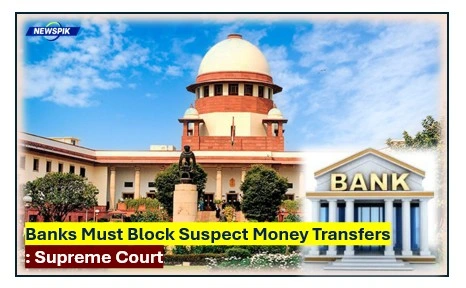

In a day and age when a life-time of saving can disappear with one misplaced OTP, the Supreme Court of India has come up with this game-changing directive that flips the cart and brings onusfulness to bear where it logically must. The message from the Supreme Court is unambiguous: Banks can no longer function as passive channels for capital; they must serve as active gatekeepers.
The Court has filled that gap by affirming the legal and moral responsibility of banks to block “suspicious” financial transactions. This is no mere legal formality, it’s a people focused overhaul created with one purpose in mind and that’s to protect the most vulnerable from an ever-evolving list of cyber-fraud and money laundering.
Beyond the Algorithm: The Role of People in Banking
For decades, the relationship between a bank and its customer was based on what’s known as execution. If a bank customer requested an electronic transfer, it was the bank’s role to execute it as swiftly as possible. Yet the hands-off approach to dealing with AI-driven scams and “mule accounts” has resulted in ruinous losses for retirees, small business owners and ordinary citizens.
The Supreme Court’s intervention is a reminder that banking is the business of trust, not just code. Once a “suspect” transaction crosses a person’s virtual desk, red flags can abound that either a person —or finely tuned system — ought to notice:
- An unexpected, large withdrawal from an account haven’t used in months.
- A number of rapid transfers to off-shore accounts or high-risk jurisdictions.
- Outliers Or transactions that are significantly different from the behavioral profile of a customer.
- The Court suggests that when such red flags arise, “efficiency” must yield to “security.”
The Legal Pivot: Passive to Proactive
At the heart of the Supreme Court’s view is its reading of Prevention of Money Laundering Act (PMLA) and Reserve Bank of India (RBI) “Know Your Customer” guidelines. In the past, banks have been scared to cancel a transaction without a proper police order due to fears that customers would sue for “loss of business” or “breach of contract”. The Supreme Court has now given banks a legal cover to wield that option with determination. Banks are protected from liability if they acted “in good faith” in trying to avert a crime, for example.
What Constitutes a “Suspect” Transfer?
The Court has not given a hard and fast checklist — because fraudsters change up, too — but it has emphasized several indicia:
- Rate of Movement: Move funds across multiple accounts in a matter of minutes (layering).
- Mule Account Activity: Large amounts of funds received in account and immediately withdrawn or converted to cash/crypto.
- Income Mismatch: A student or a daily waged laborer starts getting and passing millions.
The Technology Tug-of-War: Real-Time Monitoring
The banking industry is being forced to comply and, as a result, undergoes a major tech face-lift. That was no longer sufficient, he said, no longer suitable to “look at transactions after the fact.” A need is also emerging for banks to deploy Real-Time Fraud Detection Systems (RTFDS).
These systems employ machine learning to scrutinize thousands of data points — IP addresses, device IDs, geographic location and even how fast someone types — to determine the risk of a transfer. If the risk score is too high, then the transaction will be placed into a “pending” state where it requires human approval (onboarding or compliance proofs, etc.) or waiting in the case of a “cool-off” period.
Challenges and the “Freeze” Controversy
The promise of the ruling is universally praised but it does raise some practical difficulties. Among them is the “accidental freeze.” Those algorithms, when overaggressive, can result in legitimate businesses having their accounts locked during prime payment periods.
Conclusion: The Path Forward
The Supreme Court’s ruling is a potent reminder that technology must work for people, not force people to adapt their lives and protect their privacy in smartphone-augmented solitude. No longer are banks just vaults for our money; they are now the digital bodyguards for our financial identities.
That translates to a safer digital environment for the everyday consumer. For banking, it’s the end of “not my problem” time. However and wherever it ends up, the success of this directive will lie in the ability of banks to apply ever more sophisticated AI side by side with human judgment — that way everyone can be protected while still feeling free.

I am a versatile content writer from the MP region, covering politics, business, crime, current affairs, entertainment, video games, and sports with clear insights, engaging analysis, and timely, reader-focused updates.