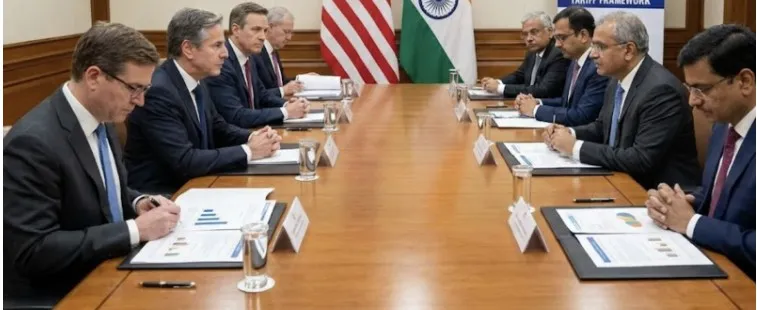
Very close to finalising an initial framework agreement which would help reduce mutual tariffs, Commerce Secretary Rajesh Agrawal said Monday gave an indication that there is real progress in the trade talks between the two strategic partners. Nevertheless, both parties have officials who are not committing to a definite deadline on the completion of the deal.
Six Rounds of Talks Bring Deal Within Reach
Addressing a briefing, Agrawal said that India and the U.S. have reached six rounds of negotiation, both on a wider Bilateral Trade Agreement (BTA), and on a temporary agreement to cut tariffs. He observed that the discussion has been positive and both parties are hopefully involved.
Agrawal did not want to set a time frame for the first framework deal but said they were very close to getting the deal through, noting that it is about substance rather than speed.
U.S. Trade Delegation Visit Signals Momentum
This gained momentum following a delegation by the Deputy U.S. Trade Representative, Rick Switzer, to New Delhi between December 9 and 11. The visit was to discuss the developments on the interim framework and the long-term BTA.
Indian officials said the discussions helped narrow the distance on tariff issues and examined areas where focus can be made on related areas in early convergence. The provisional agreement will help in a trust-building move as long as the substantive deal is being negotiated.
Tariff Relief Crucial for Indian Exports
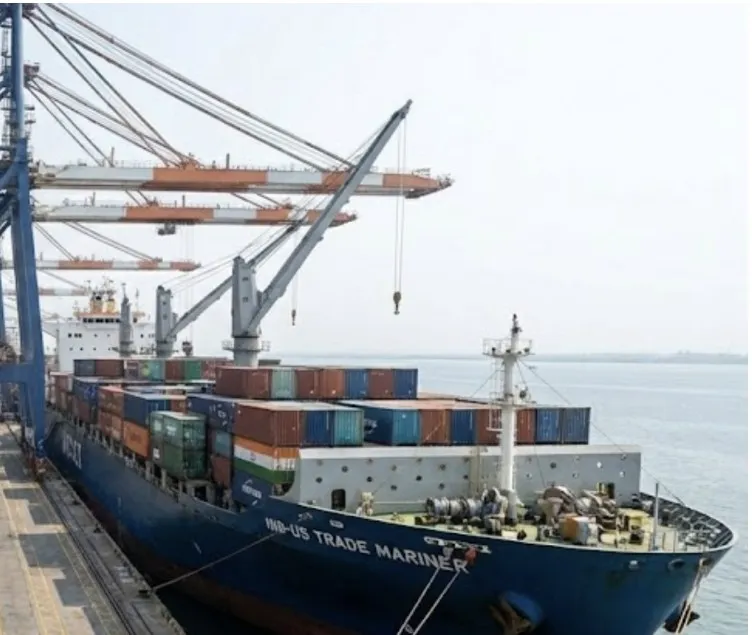
The given framework is important because the Indian exports valued at approximately 48.2 billion are currently under high tariffs in the U.S. Washington initially put a 25 per cent duty in the name of trade imbalance reasons, and another 25 per cent penalty on India based on the buying of Russian crude oil.
The reduction of the reciprocal tariffs would not only give relief to the Indian exporters in the engineering goods sector, textiles, pharmaceuticals, and chemicals, but also alleviate the pressure of cost on the U.S. importers.
Mission 500 Sets Ambitious Trade Target
The BTA negotiations have picked up speed with Prime Minister Narendra Modi announcing in January that the United States and India have a goal of increasing bilateral trade to 500 billion dollars in 2030 (Mission 500). The two leaders had planned to conclude the initial tranche of the trade agreement by fall 2025, which has since been delayed.
The chief economic advisor of India has said that an interim agreement would be reached by March 2026, though the larger deadline remains in place despite the delays.
Trade Ties Remain Strong Despite Frictions
In the fourth consecutive year (202425) of bilateral trade, the U.S. has been the largest trading partner of India with a bilateral trade of 131.84 billion. In India, exports to the U.S. were made of goods worth 86.5 billion dollars, which currently constitute nearly 18 per cent of the total exports of Indian goods.
Agrawal also responded to the complaints of the U.S. authorities about rice exports and denied the accusations of dumping. He indicated that more than 80 per cent of the rice India exports to the U.S. is premium Basmati, which already has high tariffs, and there is not much room to increase taxes.
Outlook: Interim Deal as First Step
Although time constraints are always high on negotiators’ minds, officials on both sides agree that an interim structure deal would help stabilise trade relations and provide a building block towards a comprehensive agreement. Even slight tariff relief would send a very powerful message to markets and exporters amid the global trade uncertainty, analysts say.
In the meantime, India and the U.S seem to be on the same page, reducing trade barriers, although complicated negotiations are being made behind closed doors.

A versatile writer mainly works on trending news, daily updates from politics, business, crime, current affairs and entertainment.