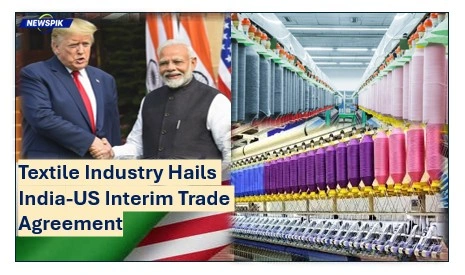

The powerlooms in Tiruppur, Surat and Coimbatore have been whirring to a more cheery tune this week. The Indian textile and apparel industry is in a state of guild-wide relief after the announcement of the India-US Interim Trade Agreement (ITA) on February 7, 2026. For an industry that has been buffeted for the better part of a year in a turbulent “tariff storm,” the new deal is about more than policy fine-tuning — it is something akin to salvation, helping India regain its place of dominance in its biggest foreign market.
Cutting the effective tariff on Indian textile exports to only 18% (from a high of 50%), the deal amounts to resetting the clock on bilateral trade between the two countries. Industry leaders are already hailing it as the start of a “Golden Era” for Indian weaves, one that could turbocharge India’s aspiration to achieve $100 billion in textile exports by 2030.
From ‘Maximum Pressure’ to Market Access
To understand the euphoria in the industry, you need only look back not very far. In mid-2025, New Delhi’s trade relations with Washington ran into a substantial roadblock. The US had raised duties on Indian apparel and some made-ups to almost 50%, invoking the same provision of trade deficits, in line with India’s choices for energy sourcing.
This “tariff wall” had a cooling effect. The order book of micro, small and medium enterprises (MSMEs), the backbone of garment sector in India, came to a standstill as US buyers started exploring other options. The new 18% reciprocal rate — a linchpin of the deal cut between Mr. Modi and the administration of President Donald Trump — serves to dismantle that wall once and for all.
India-US trade deal will be signed off : Expected by Mid-March
The Numbers That Matter
They have also pointed out various other benefits as well in the textiles space, on which the Ministry of Textiles and industry bodies such as Apparel Export Promotion Council (AEPC) sought ease.
- An opportunity worth $118 billion: The US is the world’s largest importer of textiles and garments. The deal unlocks much of this market for Indian-made products.
- The 18% Advantage: India has a lower rate even after moving to an 18% structure than many of its regional peers. Rivals such as China (34%), Vietnam (20%) and Bangladesh (20%) now have to pay more for landing in the US than their Indian counterparts.
- Immediate Order Revival: 28% of Indian textile export registered “wait-and-watch” position on the back of this uncertainty. They have already started to move since the announcement, with orders which were stalled earlier finally kicking in and some experts predict a 25% jump in exports within four months.
India-U.S. trade deal in final stages, it will open up new phase in ties
Fibre-to-Fashion: A Victory for The Entire Value Chain
Unlike other rivals, India has a unique “end-to-end” textile industry ecosystem. We’re not just sewing clothing, we’re growing the cotton, spinning the yarn and weaving the fabric. As Dr. A. Sakthivel, Chairman of AEPC has rightly said ITA is a win for “all – farm to the ramp”.
Impact on Farmers and MSMEs
The demand shock from the US will reverberate all the way back to the fields of cotton in Maharashtra and Gujarat. By opening a steady export outlet for value-added garments the deal provides better price realization to Indian cotton grower.
Also, the garment industry is one of India’s biggest employers of female workers. The increased production capacities to cater for the anticipated 40% year-on-year demand surge will directly generate hundreds of thousands of jobs across rural and semi-urban clusters. For the thousands of small and medium enterprises whose margins are thin, the 32% slashing of duties is also the difference between closing down and scaling up.
Strategic Adjustment: US Cotton and Joint IP
The fine print of the deal suggests a strategic partnership more than just a tariff cut. As a component of the larger framework, India has also indicated it would increase the use of US as a source for intermediate product like High quality American cotton and man-made fibers (MMF).
Conclusion: Weaving a New Destiny
It is not only about numbers on which the post Coronavirus India-US Interim Trade Agreement has been inked, but the very endorsement of India’s credibility as a rising manufacturing hub. And for an industry like textiles that has endured centuries of change, this agreement offers the predictability necessary to invest over time.
As the “Men and Women in Blue” of the Indian textile world get set to dispatch their maiden “post-deal” consignments to New York and Los Angeles, it’s obvious: The thread of partnership between New Delhi and Washington has never run thicker.

I am a versatile content writer from the MP region, covering politics, business, crime, current affairs, entertainment, video games, and sports with clear insights, engaging analysis, and timely, reader-focused updates.









