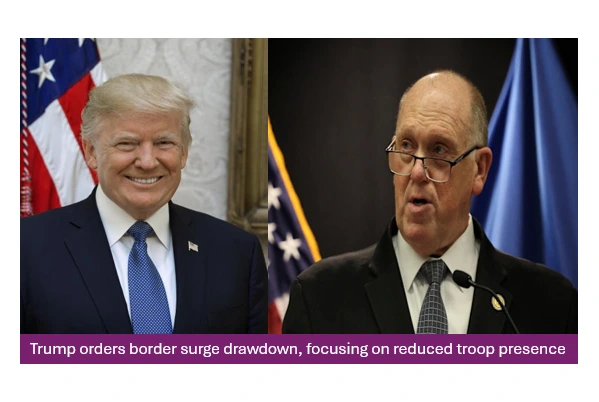

The Trump administration is in the process of wrapping up its large-scale enforcement of immigration laws through the use of federally-funded resources in the Minneapolis — St. Paul area, which is known as Operation Metro Surge. “Border czar” Tom Homan has confirmed that the massive use of ICE and other immigration agents has been reduced, with 1,000 or more agents already removed from Minnesota, and hundreds more scheduled for removal in the coming days. Some of those agents will stay behind as a smaller, temporary force to continue supporting the work still going on and ensuring the remaining personnel are protected.
Homan told CBS’s Face the Nation that the reduced presence of agents in the area is a part of the planned drawdown of the operation, and that enforcement actions (to include the investigation of fraud) will continue, despite the personnel leaving.
So What Changed from Surge to Drawdown?
Operation Metro Surge began in late 2025 and has become the largest single immigration enforcement operation in U.S. history, as a result of hundreds of thousands of ICE, CBP and other government personnel being deployed to target undocumented immigrants for removal from the United States.
However the program became extremely controversial as a direct consequence of:
- The deaths of two American citizens by federal agents during enforcement actions; the deaths of two Americans by federal agents during enforcement actions raised shock and outrage across the country.
- The eruption of mass protests and acts of civil disobedience throughout the Twin Cities, as federal agents conducted their operations.
- Minnesota’s governor and attorney general are among the local officials who have raised concerns over the impact of this operation on their communities and its tactics.
- After the backlash and public safety concerns, Homan proposed that the surge no longer continue; President Trump agreed with this proposal, which marks a significant change of policy by the administration.
What the “small force” will consist of
Even though the drawdown will take place, Homan also made it clear that a “small security force” will stay in Minnesota for now. The purpose for this force will be:
- To provide protection for remaining federal officers from potential threats or violent protests.
- To assist with some targeted investigations; for example, fraud cases related to disturbances caused by protests.
- Homan did not specify how many agents will be in this small security force, but he did emphasize that it will be substantially smaller than the peak troop levels reached during the surge.
What will happen next with regard to the larger enforcement policy?
Although the surge in Minnesota is winding down, the administration continues to assert that strong national immigration enforcement will be maintained. Homan stated that the administration’s plans for mass deportation and other enforcement measures will remain in place throughout the United States, but future city surges will be based on local conditions.
There have been some Department of Homeland Security officials indicating that there are no upcoming large city deployments at this time; instead, the agency is placing more emphasis on enforcing rules against criminal behavior by undocumented immigrants throughout the country.
Supporters’ View
Supporters of the administration state that the decrease in number of federal agents is a tactical, planned strategy to move from a surge to a drawdown as follows:
- The surge’s main objectives of arresting and deterring people from being criminally deported were achieved partially.
- Federal enforcement will continue in Minnesota, but at much lower levels.
- Protests from opponents of the surge include the following:
Local governments, immigration advocates, and civil rights advocates condemn the surge as:
- Too much, not targeted closely enough, or hurtful to the community are some reasons stating why the surge was unnecessary.
- Many people who aren’t citizens of the US, plus their loved ones, have lived with a fear of deportation since 2015 after the surge started.
- Many believe it was politically motivated and that any government involvement was not accountable for legislating new laws related to immigration.
- Several members of Congress have asked for federal investigations (independent) into the conduct of federal law enforcement officers and into police shootings that happened prior (and influenced) to the drawdown taking place.
The MN drawdown shows the tumultuous times that are occurring, and this illustrates President Trump’s administration’s initial direction of establishing higher levels of Enforcement of U.S. Laws on those who cross our borders unlawfully in a very aggressive manner with little concern for those against whom the laws apply as being carried now into the future, will still occur at lower levels than previous. National goals of Immigration Enforcement policy must now share their importance with local concerns associated with the continued enforcement of those policies.

A versatile writer mainly works on trending news, daily updates from politics, business, crime, current affairs and entertainment.