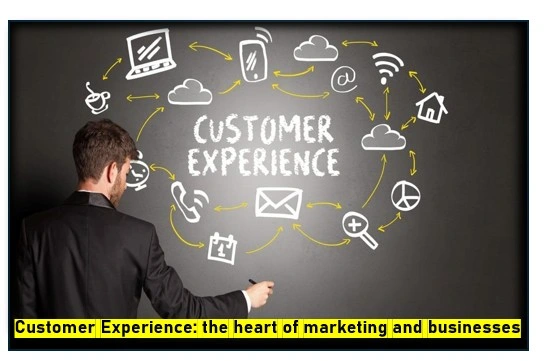

Marketing was once defined by metrics like Reach/Frequency and clever advertisements. Now, it is primarily defined by the emotional connection that customers have with your brand every time they engage with it. With virtually unlimited options for products and services and the ability to receive immediate feedback, customer experience (CX) has established itself as the single most powerful marketing channel available to marketers. The challenge is consistently delivering high-quality experiences at scale.
Why does customer experience outshine traditional marketing?
Advertisements often promise experiences but only actual experiences will determine whether or not those promises were fulfilled. Customers place more trust in actual experiences than in advertising and they will also publicly share both positive and negative experiences with their networks. Positive and negative experiences (via reviews, social media and word of mouth) will spread much more quickly than any form of paid advertising. Thus, whether seamless onboarding or an outstanding support experience, high-quality customer experiences can create more positive economic impact than millions of impressions.
The scaling paradox of CX
A typical pathway to creating an outstanding customer experience is through developing and maintaining personal relationships with customers (e.g., direct emails to customers from founders, founders providing one-to-one customer support, etc.). As companies grow, however, these “human” aspects of building customer relationships tend to disappear. Scaling customer experience does not mean eliminating personalized engagement with customers; rather, it means creating systems that allow organizations to continue creating personalized engagement without relying upon heroics from employees.
Start with a Clear Experience Vision
It’s difficult to scale something that you haven’t defined, and great companies that focus on customer experience (CX) have a clear idea of how they would like their customers to feel (in many cases confident, cared for, empowered, or delighted). This vision should inform all of their product or service decisions, support policies, tone of voice, and internal processes to deliver consistent customer experience (CX) across all channels. When everyone on a CX team shares a common CX north star, it’s much easier to deliver a consistent customer experience.
Enable, Don’t Replace, Humans with Technology
Automation can help CX scale, but only when used properly. AI chatbots, CRM systems and self-service tools should provide a frictionless experience that helps to maintain empathy. Tasks that occur regularly can be automated so that human teams can concentrate on the moments when they have the most impact: when dealing with complex issues; when addressing people with emotions; and when building relationships. The goal isn’t to reduce the number of human interactions but rather to improve the quality of those interactions.
Ethics, Power and Profit: Is it possible for a business to have all of it together?
Focus on Designing for the Moments That Matter
Not all customer touchpoints warrant the same level of investment. Identify the key touchpoints in the customer journey (onboarding, first use, renewal, issue resolution) and obsess about them. Small enhancements at key customer touchpoints will lead to loyalty, advocacy and lower churn. Scaling customer experience requires prioritizing the most important touchpoints, not necessarily trying to create perfect customer experiences at every touchpoint.
Empower Frontline Teams
Frontline staff are the individuals who create and sustain customer experience; therefore, providing them with context, authority and trust is critical to developing an effective customer experience. When rigid scripts and numerous layers of approval are imposed on employees, customer experience becomes stunted. Conversely, having clear guidelines and allowing employees autonomy when serving customers allows them to meet customers’ needs quickly and humanely, regardless of how many customers they serve.
Strategic Entry into Markets—Using a Demat Account to Follow NSE IPO Trends
Metrics That Motivate Customers to Buy
While traditional measures of customer satisfaction, such as CSAT and NPS, may provide limited insight into an organisation’s performance, they are lagging indicators. By adding behavioural signals (repeat purchasing, retention, referrals) to your measured metrics, you can gain clarity on whether your customer experience is truly successful. The most important thing to remember when using customer feedback to guide an organisation’s improvement processes is to close the loop by acting visibly based on feedback received from customers so that they know their opinions are valued.
Using Customer Experience as an Engine for Growth
Once the organisation adopts customer experience as part of its marketing strategy, growth comes naturally. Happy customers are more likely to remain loyal, purchase more and subsequently refer future customers to your brand. Scaling customer experience does not involve increasing an organisation’s volume; rather, it involves creating smarter systems that consistently provide the same level of care, clarity, and consistency throughout an organisation’s growth cycle.
The best type of marketing does not feel like marketing, but rather feels like a business that understands you—every time.

A versatile writer mainly works on trending news, daily updates from politics, business, crime, current affairs and entertainment.