It was made clear to Vijay Mallya by the Bombay High Court that he needs to return to India before the court will hear his cases, questioning his position as a fugitive economic offender and the constitutionality of the Fugitive Economic Offenders Act (FEO Act). He wants the court to think about them while he is away.
Mallya, who is 70, has been living in the UK since 2016. He is wanted in India for fraud and money laundering charges linked to bank loan failures totaling thousands of crores. In early 2019, a special court declared him a Fugitive Economic Offender under the FEO Act. Since then, nothing has changed about his position. To recover money owed to Indian banks, the Enforcement Directorate (ED) and other authorities have been using legal measures, such as asset seizures, to recover it.
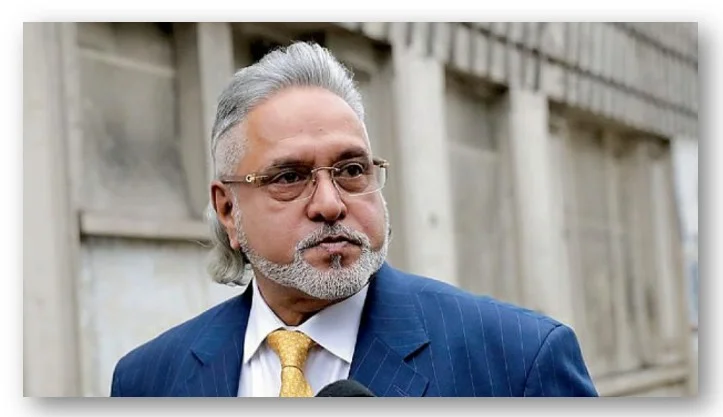
Court Refuses to Hear Plea Without His Presence
The Bombay High Court bench, comprising Chief Justice Shree Chandrashekhar and Justice Gautam Ankhad, asked Mallya’s lawyer to state when the businessman plans to return to India at the most recent hearing. The court made it clear that Mallya will not be able to question the FEO Act or have the order that makes him a runaway reviewed unless he agrees to be tried in India and shows up in person.
The bench said that points about constitutional problems, such as questioning the law’s validity, can’t go forward if the petitioner remains outside India and doesn’t accept the courts’ authority. It told Mallya’s lawyers that he had to be physically present and agree to the court’s authority in order for the plea to go forward.
Amit Desai, a top advocate, is Mallya’s lawyer and pleaded on his behalf at the meeting. The court said that Mallya cannot file two cases at the same time, one challenging the law itself and the other challenging the earlier statement that he was a fugitive, so the businessman has to choose which road to take.
What the Government Says in Court
As lawyers for the central government, Solicitor General Tushar Mehta and Additional Solicitor Generals made a strong case that people who stay abroad to avoid the law shouldn’t be able to use Indian lawyers to fight Indian law while escaping trial. They said the FEO Act was enacted to stop criminals from using the court system in another country to avoid justice.
The government also told the court that the process for extraditing Mallya is well underway and asked the bench not to hear any pleas that would further delay the case. The main goal was to make sure that people on the run face the law instead of hiding behind procedural motions.
What This Means for Mallya’s Case in Court
The next hearing was set for February 12, and the High Court told Mallya to file a document or a clear statement outlining his plans to return. Without this statement, the Court will not move forward with his request to question the validity of the FEO Act. Judges said that returning to court and facing the legal process is important for any future arguments about the law and justice.
The FEO Act allows enforcement agencies to seize the property of people who don’t show up in Indian courts, and Mallya’s assets have been seized as part of ongoing efforts to recover money owed to them. The court’s decision illustrates an important rule of law: someone must consent to the Indian courts’ authority before seeking the adjudication of their rights and legal battles.

I am a versatile content writer from the MP region, covering politics, business, crime, current affairs, entertainment, video games, and sports with clear insights, engaging analysis, and timely, reader-focused updates.